
Best Sterling Silver Chains Wholesale Buying Guide
You're reviewing a wholesale order, and the assortment looks attractive on screen. Then the first customer returns a kinked chain, another complains about tarnish, and a pendant sale falls through because the chain you stocked can't carry the weight. That's how a small buying mistake turns into reduced margin, disappointed customers, and inventory that sits unsold.
The best sterling silver chains aren't one universal style. They're the chains that match a customer's intended use, pendant weight, wearing frequency, comfort expectations, and price point. For a boutique, that means building a disciplined mix of dependable everyday links, delicate layering pieces, and statement styles that create a higher-ticket option without filling the stockroom with slow movers.
This guide takes a wholesale buyer's view. You'll learn how to assess the 925 standard, compare chain construction, match gauge to use, inspect finish quality, set realistic care expectations, and source at prices that leave room for profitable retail pricing. Style matters, but specifications decide whether the customer comes back or returns the product.
Introduction Why Your Chain Assortment Makes or Breaks Sales
A boutique owner usually doesn't lose money because a chain is unattractive. The problem is mismatch. A fine cable chain may look excellent beside a lightweight charm, but it's a poor choice for a substantial pendant. A polished snake chain can photograph beautifully, yet customers may return it after it kinks from rough handling. A bold Cuban link may attract attention online while remaining too expensive or dramatic for the majority of your regular shoppers.
Chains are high-utility products because they solve several buying occasions at once. Customers buy them as standalone accessories, pendant foundations, layering pieces, gifts, and replacements for chains they already own. That flexibility gives you more merchandising opportunities than a single-purpose jewelry item, but only if your assortment covers different levels of visual weight and durability.
A weak assortment creates predictable friction:
- Breakage returns: Thin construction and stressed clasps fail when customers pair them with unsuitable pendants.
- Tarnish complaints: Shoppers may interpret normal surface oxidation as defective quality if your product pages and care cards say nothing about maintenance.
- Missed attachment sales: A customer who buys a pendant but can't find a suitable chain may leave with only the lower-margin item.
- Dead inventory: Trend-driven styles can occupy cash that would work harder in proven cable, box, curb, or Figaro links.
Wholesale rule: Stock chains by customer use-case first, then by fashion story. A beautiful style that fails under its intended use is an expensive return waiting to happen.
Your buying decisions should answer four questions. Is the chain sterling silver? Can its geometry handle the expected wear? Does its length and thickness suit the pendants you sell? Does its landed cost support the retail position your customers accept?
The rest of this guide uses those filters to build a practical assortment. You'll see why the 925 composition matters, how eight major chain types differ, which specifications protect durability, and where sourcing decisions affect cash flow.
What Makes Sterling Silver Chains Truly Sterling
Sterling silver means 925 parts per thousand silver. The composition is 92.5% pure silver and 7.5% alloy metals, commonly copper in jewelry chains. Pure silver has the look customers want, but it's too soft for a chain that must flex, carry a pendant, and withstand repeated movement. The alloy acts like structural reinforcement, adding hardness while preserving silver's recognizable luster. The history of sterling silver and the 925 standard traces formal English regulation to 1300, when Edward I required wrought silver to be assayed and marked before sale.
Think of the alloy as a practical compromise. Silver supplies the color, reflectivity, and precious-metal content. Copper and other harder metals help links retain their shape, allow clasps and jump rings to function, and reduce the distortion that pure silver would experience during daily wear.
Why the hallmark matters to retailers
The 925 mark gives you a basic quality checkpoint and gives your sales staff a simple explanation for customers. It confirms the stated silver standard, but it doesn't tell you everything about the product. A stamp doesn't guarantee a particular link geometry, clasp strength, plating process, nickel content, or finish consistency.
That distinction protects your reputation. A chain can carry a valid 925 hallmark and still be too delicate for a heavy pendant or unsuitable for a customer with a strong metal sensitivity. Treat the hallmark as the starting point of receiving inspection, not the complete quality assessment. For a concise customer-facing explanation, you can also direct shoppers to this guide to what 925 sterling silver means.
The composition customers are actually buying
The 925 standard remains the benchmark across major markets because it balances appearance and practical wearability. Industry guidance describes 925 sterling silver alloyed with copper as roughly 60 to 70 HV in annealed form, with work-hardening increasing resistance to link deformation and stretch during wear. This alloy overview connects the material recipe to the performance buyers notice: a chain that feels substantial, moves cleanly, and doesn't immediately lose its shape.
That still doesn't make every 925 chain equal. A fine, tightly made chain may outperform a poorly finished heavier one in comfort, while a sturdy link can handle more stress than a delicate design made from the same alloy. Composition establishes the material category. Geometry, wire thickness, soldering, clasp construction, and finishing determine the retail experience.
Most Popular Sterling Silver Chain Types and How to Choose
The right chain type depends on the role it plays in your assortment. Don't buy eight styles in one narrow width and call the collection complete. Give each link a job, then use width, length, and finish to create price and styling variations.
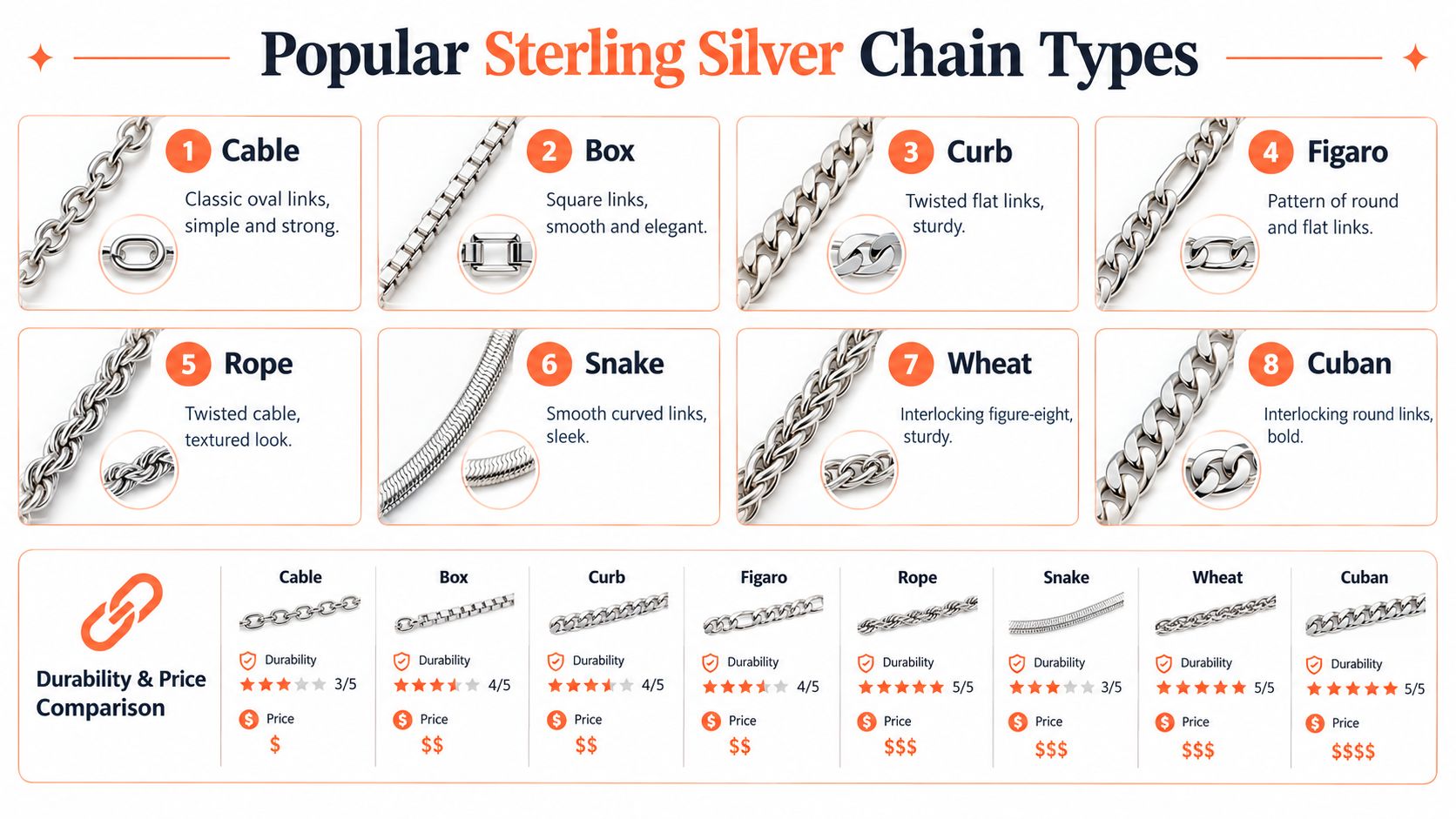
Cable chains use classic oval links and remain the safest pendant companion. They're easy to explain, familiar to customers, and suitable for minimalist wear. Their drawback is visual simplicity, so merchandise them beside pendants and charms rather than relying on the chain alone to create excitement.
Box chains use square links that create a smooth, structured look. They suit customers who prefer clean lines and work well with pendants that need a stable support. Their compact profile can feel more refined than a basic cable chain, which gives you room for a stronger price position when the finish is clean.
Curb chains use twisted, flattened links that sit close to the body. They're sturdy, easy to style alone, and effective for men's everyday assortments or customers who want a chain with more presence. Figaro chains combine round and flat links in a recognizable pattern, giving you a classic alternative to a uniform curb or cable design.
Rope chains twist multiple elements into a textured, light-catching surface. They read as more decorative and substantial, making them useful for statement customers and heavier pendants. The added visual complexity can support a higher price, but inspect the ends and clasp carefully because intricate construction raises the importance of consistent finishing.
Snake chains have smooth, curved links and a sleek, fluid drape. They're strong visual sellers in polished product photography, especially for modern or minimalist collections. They're less forgiving of sharp bends, so position them as refined fashion pieces and include clear storage guidance.
Wheat chains use interlocking figure-eight construction and offer a textured, sturdy appearance. Cuban links use interlocking round links and deliver the boldest profile in this group. Both are useful for customers who want a standalone statement, but Cuban styles require especially careful width and cost selection because the fashion impact rises quickly with size.
| Chain Type | Look and Feel | Strength and Best For |
|---|---|---|
| Cable | Classic oval links, familiar and versatile | Reliable pendant base and entry-level staple |
| Box | Square links, smooth and elegant | Structured look, everyday pendants |
| Curb | Twisted flat links, close-laying | Sturdy daily wear and masculine styling |
| Figaro | Round and flat link pattern | Classic fashion alternative and gifting |
| Rope | Twisted, textured, reflective | Statement wear and substantial pendants |
| Snake | Smooth, sleek, fluid | Minimalist styling, handle with care |
| Wheat | Interlocking figure-eight texture | Durable standalone and pendant option |
| Cuban | Bold interlocking links | Statement customers and higher-ticket styling |
For most boutiques, start with cable, box, curb, and Figaro as the dependable core. Add rope or wheat when your customer base supports more texture, then use snake and Cuban links selectively to cover sleek and statement demand without overloading your inventory.
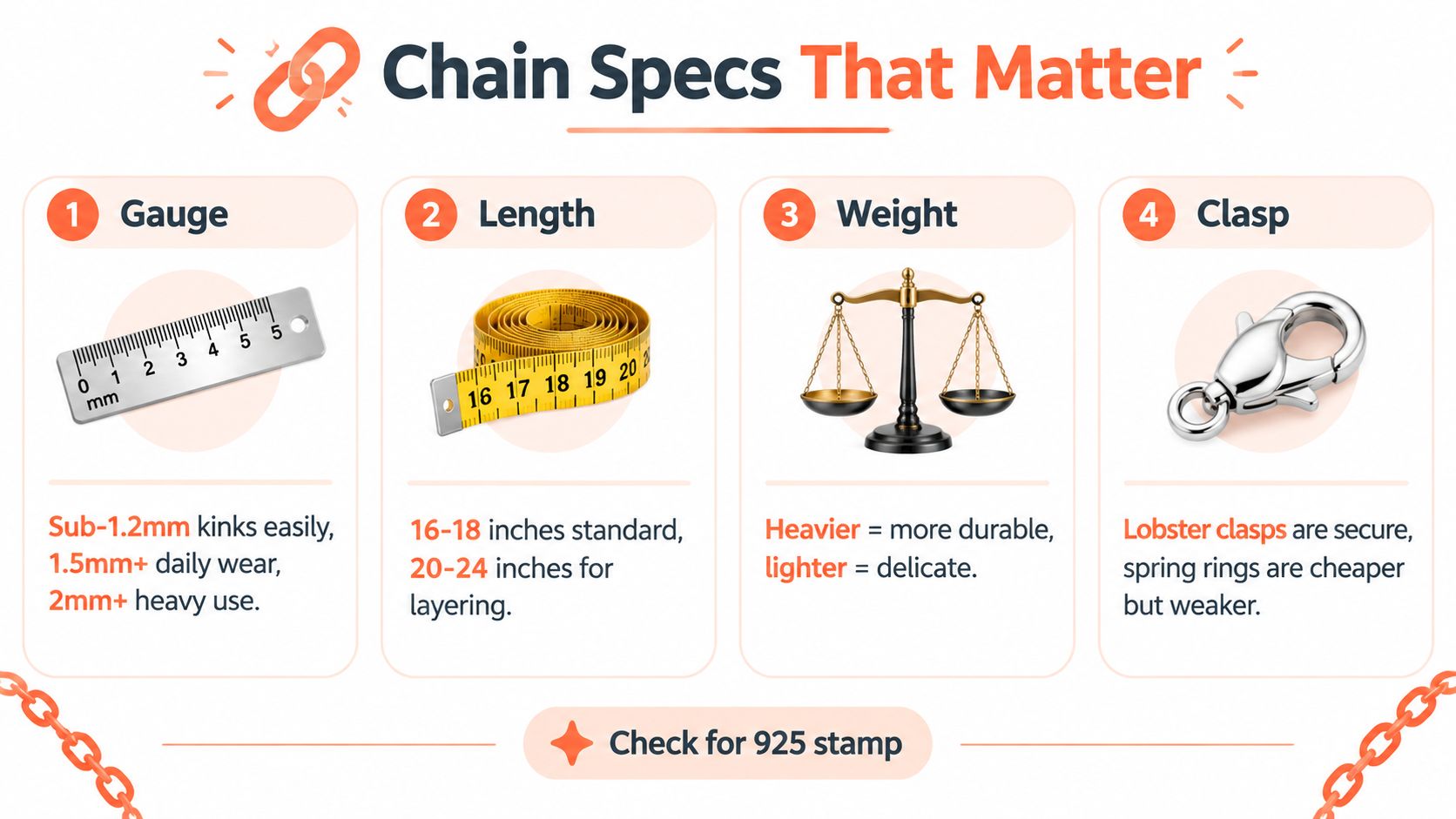
A quick visual comparison helps customers understand why two chains with the same metal content can occupy different price points. Use the display to move shoppers from “Which one is cheapest?” to “Which one fits how I'll wear it?”
Chain Specifications That Determine Durability and Comfort
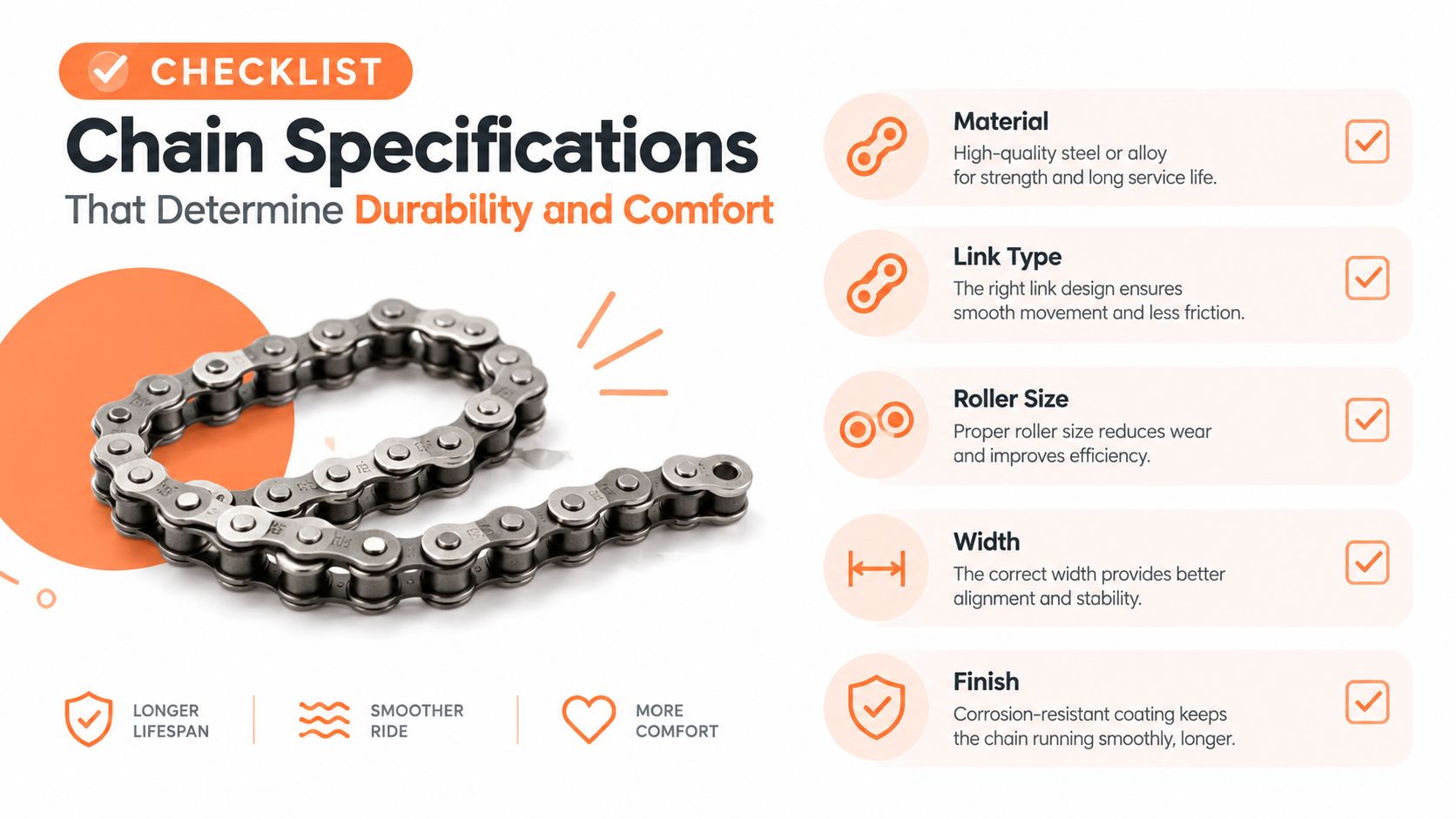
A customer choosing between two attractive chains is also choosing how reliably each piece will wear. Gauge, length, weight, and clasp type determine whether the purchase works after checkout. For a boutique, these specifications set the use-case, pendant pairing, return risk, and room for a profitable upgrade.
Gauge sets the use-case
Thin chains under about 1.2 mm are more prone to kinking and clasp fatigue. Cable or box chains at 1.5 mm or thicker suit everyday use because more metal distributes stress across the construction. Use the thinner end for light pendants, layering, and occasional fashion wear. Reserve more substantial gauges for customers who expect daily wear or plan to attach a heavier centerpiece.
Treat these thresholds as practical trade guidance, then test each supplier's construction. A chain's link shape, soldering, and actual weight affect performance as much as its stated width.
Do not sell by appearance alone. Place a sample pendant through the bail and check how the chain sits. If the pendant pulls the chain into a sharp angle, the pairing is wrong even when both pieces look attractive separately. That mismatch creates a poor customer experience and makes a thicker-chain recommendation easy to justify.
Length and weight shape the offer
Length affects neckline placement, layering, and proportion. Stock a practical spread rather than assuming one size suits every customer. Shorter options support close-to-neck styling, while longer options leave room for pendants and layered combinations. Display lengths on a bust form so shoppers can compare placement immediately. Clear comparison reduces guesswork and supports add-on sales.
Weight provides the useful tie-breaker. A chain that looks wide but feels unusually light may be hollow or contain less metal than the customer expects. Compare the supplier's listed weight with the physical sample, then record the result in your buying notes. This helps you compare like with like when setting retail prices and margins.
Clasp choice and receiving checklist
Lobster clasps usually provide a secure, familiar closure for everyday chains. Spring rings can reduce cost, but they offer less reassurance on heavier or frequently worn pieces. Match the clasp to the chain's visual and physical weight. A delicate chain with an oversized clasp feels unbalanced, while a substantial Cuban or rope style needs a closure that appears capable of supporting it.
When samples arrive, inspect five points in the same order:
- Gauge consistency: Measure several points, not only the widest visible area.
- Link movement: Flex the chain gently and check for catching, stiffness, or uneven spacing.
- End connections: Examine jump rings, end caps, and soldered areas under magnification.
- Clasp action: Open and close it repeatedly. It should engage cleanly without excessive play.
- Pendant compatibility: Test the bail, loop, and drape with the pendants you sell.
This routine turns vague impressions into a repeatable buying standard. It also gives staff a clear reason to recommend a thicker chain, tying the upgrade to wear requirements instead of an arbitrary price increase.
How to Verify Quality Hallmarks Finishing and Skin Safety
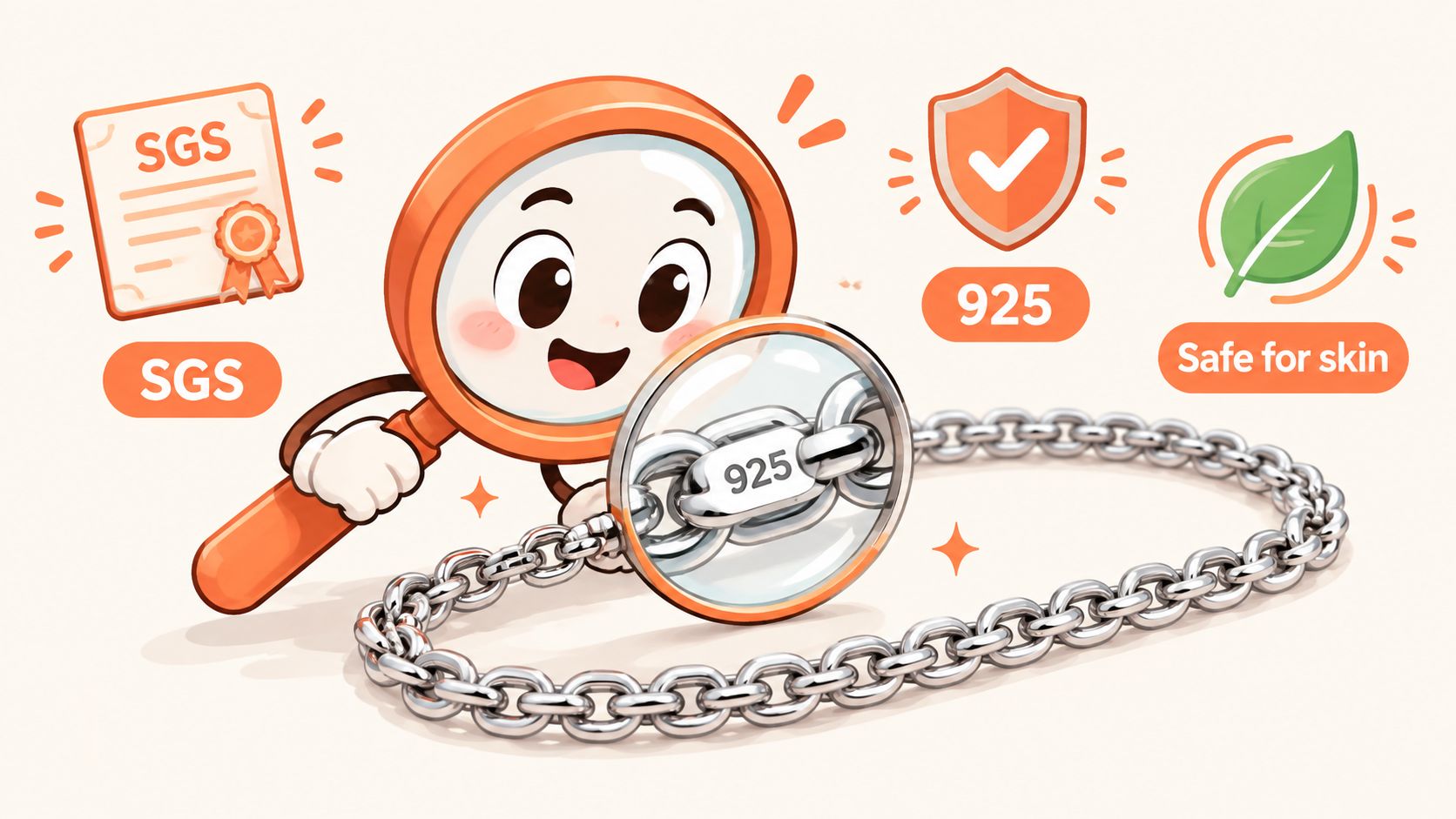
A 925 stamp confirms silver content, but it does not confirm skin comfort, durable plating, or precise construction. Treat the mark as a material standard, not a complete quality guarantee. It cannot tell you whether the alloy contains trace nickel, whether the finish will withstand daily friction, or whether a customer will tolerate the surface treatment.
That distinction matters for merchandising. “Hypoallergenic” is not a universal promise for every 925 chain. Reactions may involve trace nickel, the broader alloy mix, plating materials, or the wearer's own skin chemistry. Ask suppliers for the specific alloy and plating details before you print allergy-safe language on product cards or listings.
What to inspect when stock arrives
Hold every sample to the same receiving standard before it reaches the sales floor:
- Stamp placement: Check the clasp, end cap, or another visible finishing area for a legible 925 mark.
- Surface consistency: Look for cloudy patches, polishing lines, pinholes, rough edges, and uneven color.
- Link alignment: Lay the chain flat and check whether links twist, bind, or leave irregular gaps.
- Clasp security: Close the clasp, pull gently, and inspect the connecting jump ring.
- Plating coverage: If rhodium is used, inspect the visible surface for missed areas or inconsistent tone.
Rhodium plating can slow tarnishing, but friction eventually wears it down. Unplated sterling silver may develop visible tarnish within weeks in humid or chemically exposed conditions because copper in the alloy reacts with sulfur compounds. Use this sterling silver care guidance for customer-care context, then give buyers practical instructions: store chains dry, wipe them after wear, and keep them away from perfume, cleaning products, and prolonged moisture.
Customer-facing language: “This is genuine 925 sterling silver. It can naturally tarnish, so keep it dry and store it in a sealed jewelry pouch when you're not wearing it.”
That wording protects trust and reduces avoidable returns. It describes natural tarnish without promising permanent brightness or guaranteed skin compatibility.
Pricing Margins and Smart Sourcing for Wholesale Buyers
Wholesale pricing gives you room to build a collection, but only if you separate simple replenishment pieces from complex statement inventory. One 2025 wholesale pricing breakdown lists simple 925 chains at about $2.50 to $8.00, while more complex moissanite-set pieces reach $15.00 to $45.00. The pricing breakdown makes the key point clear: design complexity, stones, and finishing can change cost dramatically even when the base category remains sterling silver.
Independent wholesale listings also show genuine 925 link chains trading across a broad $5.4 to $23.5 range with a minimum order quantity of 2, according to this wholesale listing comparison. That kind of low minimum supports disciplined testing. You can trial a style, measure sell-through, and reorder proven widths without committing cash to a deep first order.
Build a margin ladder
Use three buying layers:
- Core replenishment: Cable, box, curb, and Figaro chains in wearable specifications. These should support pendant sales and regular restocking.
- Style expansion: Rope, wheat, and polished snake chains that add texture or a different customer profile.
- Statement inventory: Cuban links and embellished designs that create higher-ticket options but need tighter quantity control.
Don't let a low unit cost tempt you into buying too many variations. The profit comes from repeatable sell-through, not from owning every possible pattern.
For a focused assortment of bulk necklace chains, compare unit cost, MOQ, shipping, packaging, defect policy, and reorder speed together. A supplier with a slightly higher unit price may still protect margin if quality is more consistent and replacement handling is simpler.
Protect the operational side
Small-batch buying works best when your receiving process is organized. Use labeled trays, individual pouches, and a simple inspection log. If you need durable storage and shipping materials across broader retail operations, packing supplies for removal companies offers a useful reference for quantity-based packaging purchases.
JewelryBuyDirect offers factory-direct wholesale access, no minimum order quantity, and a catalog of 120,000+ SKUs, with 100+ new arrivals daily, according to the publisher information supplied for this guide. Those options suit retailers that need to test staples and respond to fashion shifts without treating every trend as a large inventory commitment.
Merchandising Photography and Care That Drive Repeat Sales
Merchandise chains by use-case, not only by style name. Put pendant-ready cable and box chains beside charms, group curb and Figaro links into an everyday collection, and give rope, wheat, and Cuban styles a separate statement story. Add length markers to displays so customers can compare placement without repeatedly trying on every piece.
Your cover image ratio is 383:204, a deliberately wide format. Preserve that ratio when preparing website artwork, or important product details may be cropped in display contexts. For product images, show a flat-lay for link structure, a close-up for the clasp and 925 stamp, and a worn image for scale. Guidance on jewelry photography tips can help you create consistent shots across collections, while AI fashion photography can support lifestyle presentation when you need more styling variations.
Care cards should be direct. Tell customers to wipe the chain after wear, store it in a dry sealed pouch, and remove it before exposure to chemicals or prolonged humidity. That message frames maintenance as normal ownership rather than a defect, which helps reduce avoidable complaints.
Track which lengths, link types, and pendant pairings sell together. Reorder those combinations first, then use slower styles as controlled tests rather than permanent assortment anchors.
JewelryBuyDirect gives boutiques and online sellers access to wholesale 925 sterling silver chains, pendant necklaces, and layering styles with no minimum order quantity, factory-direct pricing, and SGS-certified manufacturing partners. Visit JewelryBuyDirect to test a focused chain assortment, match specifications to your customers' use-cases, and build a more dependable margin strategy.