
What Is Statement Necklace and How to Style It Right
A statement necklace is a bold, oversized necklace designed to dominate an outfit as its focal point, often using large scale, strong color, or architectural construction. In current technical fashion guides, statement territory can include focal drops of roughly 40 mm+ or more than 3 inches of spread across the décolletage, and larger styles often weigh about 40 g to over 120 g.
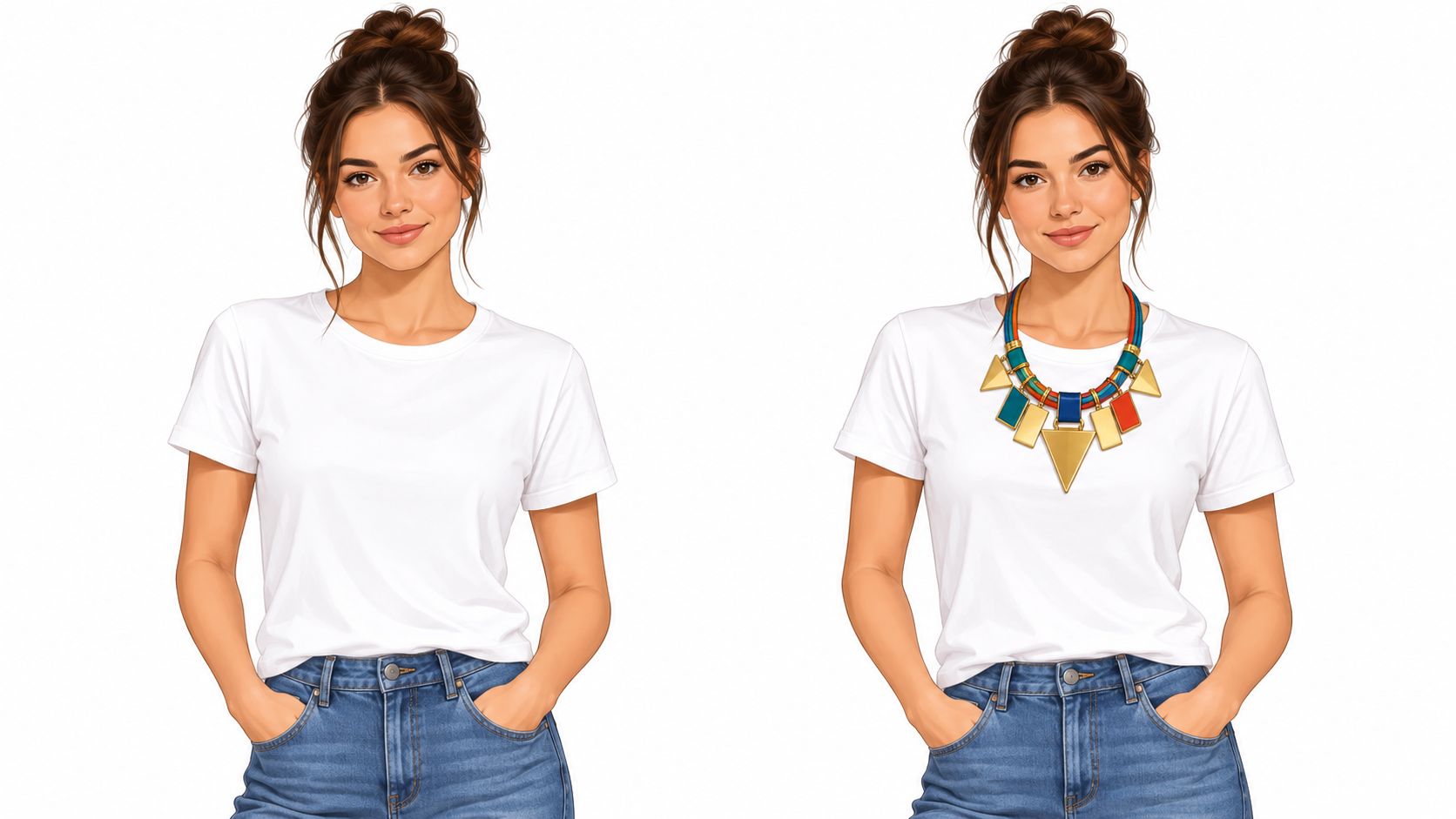
You've probably seen the difference in real life. A plain white tee and jeans can look unfinished one minute, then look intentional, styled, and ready to sell the next, just because one necklace changed the balance of the outfit.
That's why boutique owners keep asking what is statement necklace, and why shoppers keep using the term even when they can't define it clearly. It sounds simple, but the confusion is real. Some people use it for any noticeable necklace. Others mean only heavy bib styles. In merchandising, that fuzzy definition causes bad buying decisions. You overbuy pieces that photograph well but don't wear comfortably, or you miss lighter styles that move faster because customers can style them with what they already own.
If you sell jewelry, this category matters because statement necklaces don't just decorate an outfit. They anchor it. They give a customer an easy reason to buy: “I can wear this with my black dress, blazer, tank, or sweater and instantly look dressed.”
Introduction That Makes the Statement Click
A customer walks into your shop wearing a solid top, denim, and small studs. She doesn't need a whole new wardrobe. She needs one piece that changes the conversation.
That's the job of a statement necklace.
When new retailers hear the term, they often think only of flashy event jewelry. That's too narrow. A statement necklace can be glamorous, but it can also be modern, clean, and practical enough for daily wear. The key is that it becomes the visual center of the look before the eye settles anywhere else.
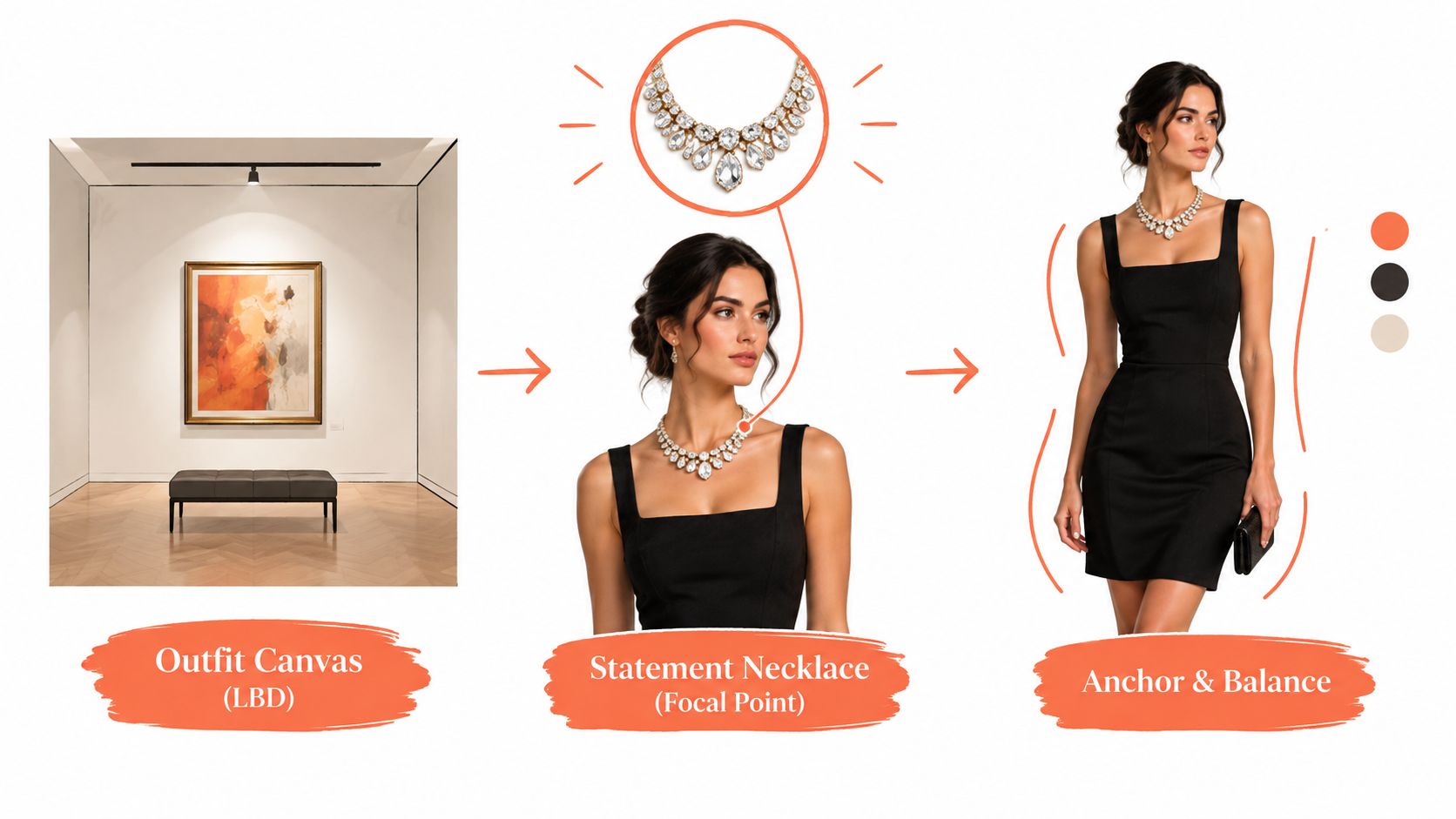
A statement necklace is the jewelry version of hanging one large artwork on a plain wall. The room may be simple, but the focal point creates the style.
That idea matters for buying, not just styling. If you understand how scale, width, weight, and neckline placement work, you'll spot the pieces that customers wear instead of the ones they admire once and leave behind.
Why this category confuses buyers
The phrase “statement” sounds subjective. One shopper thinks a chunky chain is a statement. Another thinks only crystals and bibs qualify. Both can be right, depending on scale and outfit impact.
Retailers get confused for a different reason. Product photos flatten proportion. A necklace can look dramatic on a white background but feel small on the body. The reverse also happens. A piece that seems simple in a catalog can transform a plain outfit once it's worn at the collarbone.
What sells and why
In stores and online, statement necklaces sell best when the customer understands three things quickly:
- What it does: It turns a basic outfit into a styled one.
- How it feels: It should look bold without becoming annoying to wear.
- Where it fits: It needs a clear use case, like workwear, weddings, live selling, gifting, or everyday dressing.
If you're focused on sourcing high quality and affordable jewelry and fashion accessories for business, this category deserves a sharper lens. It isn't just “big necklace.” It's a merchandising decision about visual impact, comfort, and versatility.
What a Statement Necklace Really Means
The simplest way to understand a statement necklace is to stop thinking about jewelry first and start thinking about visual hierarchy.
In a room, the eye goes to the biggest painting. In an outfit, the eye goes to the strongest focal point. If that focal point sits at the neckline, the necklace leads the look.
Focal point first
A delicate chain adds polish. A statement necklace changes the outfit's center of gravity.
That doesn't always mean sparkle. It can come from width, unusual shape, layered construction, mixed materials, or a pendant large enough to command attention. Technical fashion guidance describes statement necklaces as architectural pieces, often built as multi-strand, bib, asymmetrical, or oversized pendant styles. The same guide notes that statement scale can start around a 40 mm+ focal drop or more than 3 inches across the décolletage, with weights commonly around 40 g to over 120 g for larger styles, which is why comfort and collar compatibility matter so much in buying decisions (technical statement necklace buying guide).
What makes one feel like a statement
A true statement necklace usually checks more than one box:
- Scale: It covers visible space rather than disappearing into the outfit.
- Presence: It's the first accessory people notice.
- Structure: It often has a clear silhouette, not just a thin line around the neck.
- Styling power: It can carry a plain top, dress, or blazer on its own.
Practical rule: If you remove the necklace and the outfit suddenly looks unfinished, you were looking at a statement piece.
How to spot one fast in a catalog
Retail buyers don't have time to debate every SKU. Use a quick screen:
- Look at spread. Does the necklace visually occupy the neckline area, or is it mostly a fine chain with a small charm?
- Check the center. Is there a focal drop, bib shape, clustered stones, chunky chain, or oversized pendant?
- Ask what it anchors. Could it carry a black dress, crewneck tee, or open blazer without help from other accessories?
- Think about wear time. Will customers want it on for more than a quick photo?
The mistake is assuming “statement” means “the loudest possible piece.” It doesn't. The category includes sleek bold necklaces too. The common thread is simple. The necklace doesn't support the outfit. The outfit supports the necklace.
Where the Statement Necklace Came From
The term sounds modern because it is. The impulse behind it is ancient.
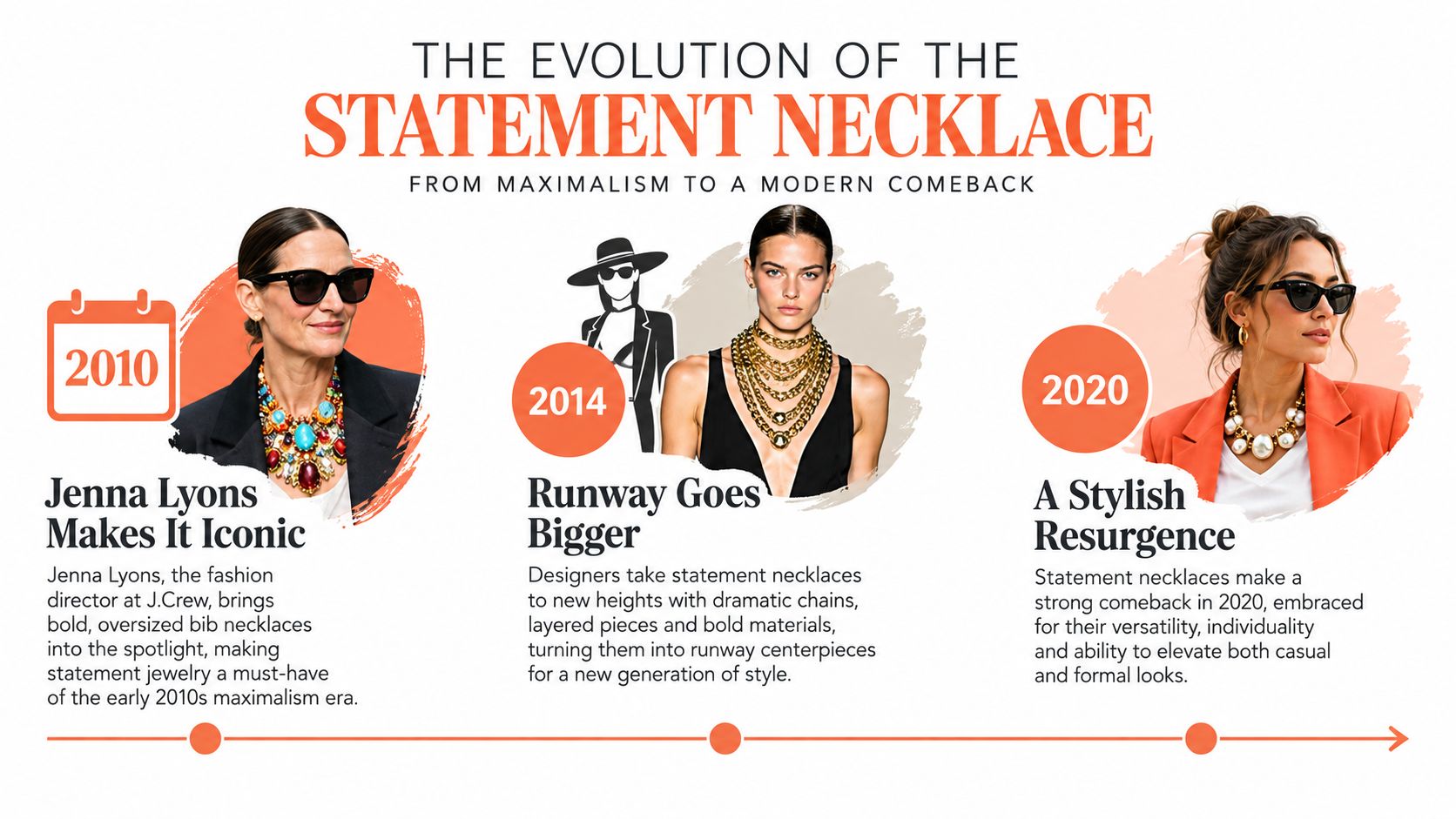
The modern fashion label statement necklace is closely tied to the early 2010s, when bold, oversized necklaces became a defining accessory and style leaders such as Jenna Lyons of J.Crew helped popularize the look. But decorative neck ornaments go back far earlier. One historical overview traces early necklaces to around 70,000 B.C., while broader jewelry history also points to shell, bone, and stone adornments evolving into metal torcs and collars 4,000–5,000 years ago (statement necklace history overview).
The old idea inside the modern term
People have always used necklaces to signal rank, taste, celebration, or identity. What changed over time wasn't the desire to be noticed. It was the material, cost, and social access.
That's why the term “statement necklace” is best understood as a recent name for an old behavior. People wear scale, shine, color, and unusual construction near the face because it broadcasts style instantly.
A broader fashion history makes that cycle easy to see. The Regency period favored choker-length necklaces with vivid gems and diamond-set foliate motifs. From the 1880s to 1910s, Edwardian pearl choker collars became a major trend. The late 1920s introduced Bakelite and other less expensive costume jewelry materials, which helped larger decorative necklaces reach wider audiences. The 1980s brought “power necklaces” with chunky proportions, then the 1990s swung back toward minimalism. By the early 2000s and 2010s, statement and bib necklaces returned strongly in resin, crystals, mixed metals, and layered constructions (historical cycle of bold necklaces).
A short visual reference helps if you want to see how fashion framed those looks over time.
Why it keeps coming back
Statement necklaces return because fashion keeps moving between restraint and emphasis. When clothing gets simple, clean, or neutral, buyers start wanting one strong accessory to do the talking.
For boutique owners, that cycle matters. It means this category isn't a random fad. It's a repeat performer that changes shape with each era. One season it's a crystal bib. Another season it's an oversized pendant, chunky chain, or mixed-metal collar. The selling principle stays the same: one necklace creates instant outfit value.
Materials and Design Types That Define the Look
A customer picks up two bold necklaces that look similar on the display. One sells in minutes. The other gets tried on, adjusted, and set back down.
The difference is usually not just style. It is how the material, shape, and weight work together on a real body.
For boutique owners, that is the useful way to define this category. A statement necklace is not only a fashion label. It is a merchandising choice about presence, comfort, and how easily the piece can anchor an outfit. If the necklace looks strong on the bust form but feels awkward after five minutes, it will struggle. If it creates visual impact without fighting the wearer, it earns repeat attention.
Materials shape price, comfort, and sell-through
Each material changes the customer's first impression.
Metal-heavy designs often read polished and current, especially in cleaner shapes like collars and bold chains. Resin creates size in a lighter way, which helps customers who want drama without neck fatigue. Crystals bring sparkle and occasion appeal, but the setting and stone density affect comfort more than many new buyers expect. Pearls soften the whole category. They make a large necklace feel more approachable, especially for shoppers who want presence without a sharp or flashy look.
Construction matters just as much. A necklace with good articulation moves in small sections, sits flatter, and feels easier to wear. A rigid piece can still sell well, but only if the neckline shape and fit are right.
That is why scale alone is a weak buying rule.
A large necklace that distributes weight well often outsells a smaller piece that twists, flips, or presses at one point on the collarbone. Retailers who watch adjacent categories see the same pattern in bold chains. This guide to chunky chain necklace styling and buying cues is useful because chain scale often overlaps with statement-necklace decisions.
Statement Necklace Materials and Designs Compared
| Material or Design | Signature Look and Feel | Weight and Comfort | Best For |
|---|---|---|---|
| Metal collar | Sleek, polished, structured | Can feel firm at the neckline if rigid | Workwear, modern dressing, blazers |
| Resin bib | Bold color, fashion-forward, playful | Often easier for all-day wear than dense metal builds | Casual outfits, vacation shops, trend displays |
| Crystal cluster | Reflective, dressy, high-impact | Can feel heavier depending on stone density | Evening, weddings, gifting |
| Pearl statement | Soft authority, classic with presence | Usually comfortable if spacing is balanced | Bridal, occasion, polished daywear |
| Mixed-media necklace | Textured, layered, versatile | Comfort varies, but often more flexible on the body | Boutiques with broad customer tastes |
| Multi-strand design | Full neckline coverage, strong outfit anchor | Can distribute weight well if strands sit flat | Plain dresses, simple tops, open necklines |
| Asymmetrical style | Artistic, directional, editorial | Needs good balance to avoid twisting | Fashion clients, social selling |
| Oversized pendant | Cleaner statement with one focal center | Often easier for customers new to bold jewelry | Everyday wear, gifting, online conversion |
Design tells customers how to wear it
Design works like packaging for the styling idea. Customers often decide how wearable a necklace feels before they even try it on.
A bib shape signals coverage and outfit focus. It usually sells best when the shopper can picture it against a simple top or dress. A collar suggests structure and a neater silhouette, which is why it pairs well with tailoring. A long oversized pendant gives a different message. It offers one focal point instead of full neckline coverage, so newer statement-jewelry buyers often find it less intimidating.
Asymmetry and mixed-media styles serve a different purpose. They attract shoppers who want something current and less predictable, but they need stronger balance and cleaner finishing because any awkward twist is easy to notice.
The most profitable statement necklace is usually the one a customer can picture with three outfits already in her closet.
That is the test smart buyers use. Not just, "Is it bold?" but, "Is the scale right, is the weight manageable, and does the design clearly anchor an outfit?"
How to Wear and Style a Statement Necklace Today
A lot of people still picture a statement necklace as a heavy crystal bib from the early 2010s. That's only one chapter of the story.
Recent trend coverage suggests the bulky bib look is fading, while the strongest 2025–2026 direction is bold but more balanced: layered chains, oversized pendants, mixed metals, and longer necklaces paired with simple outfits instead of competing prints (current necklace styling direction). That shift matters because it explains why some old inventory looks dated and why lighter, cleaner bold pieces feel easier to sell now.
Use the necklace as the outfit anchor
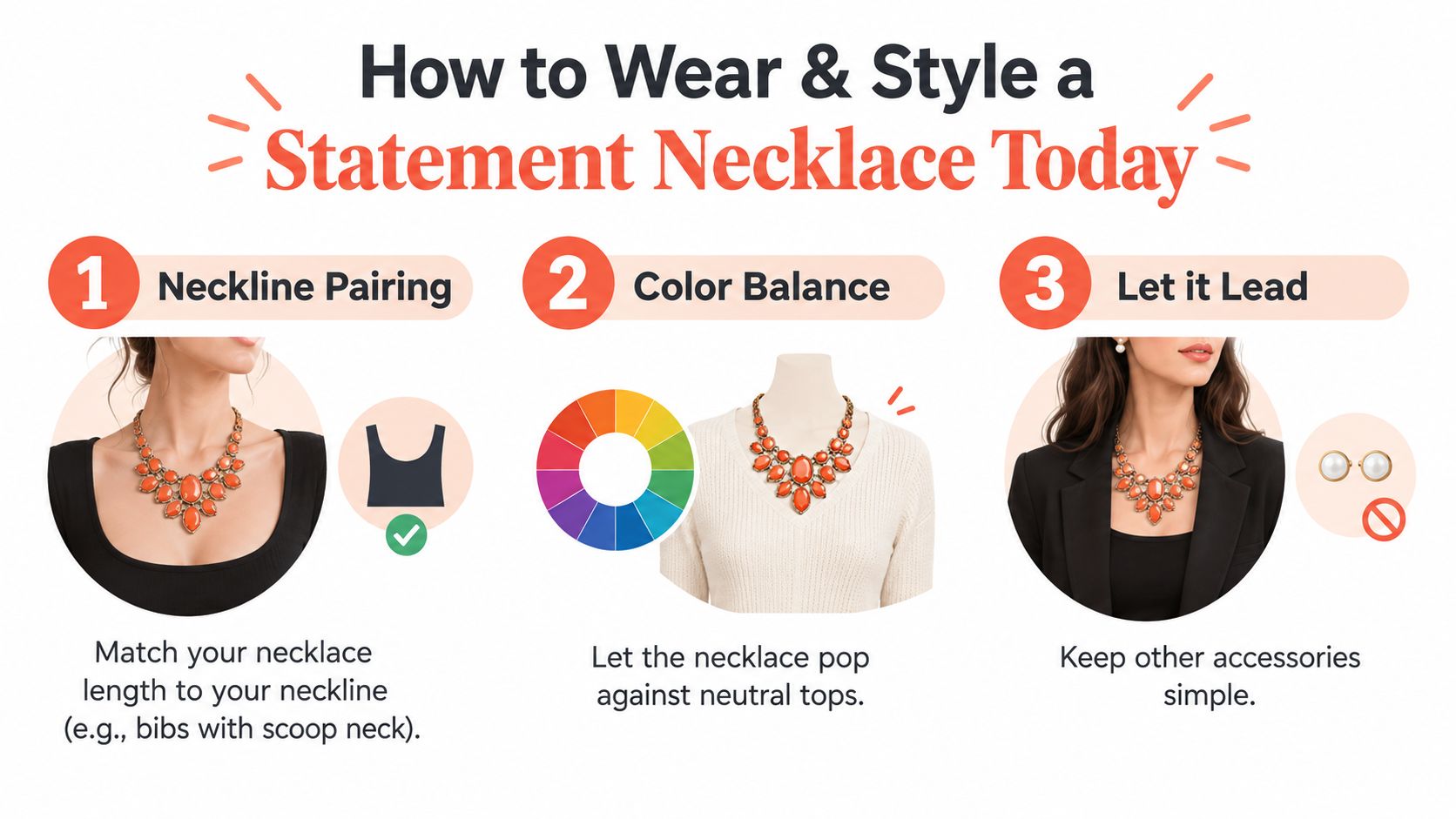
The easiest styling rule is this: when the necklace is bold, the clothing should create breathing room.
A scoop neck, crew neck, strapless dress, plain button-front shirt, or simple knit gives the necklace space to read clearly. Busy prints can work, but they're harder to merchandise because the customer has to know how to balance them. Neutrals usually convert faster because the styling idea is obvious at a glance.
If your customer likes accessories that can wake up basics in different ways, an instant outfit transformer scarf is a useful comparison. Scarves and statement necklaces solve the same wardrobe problem. They turn simple clothing into a finished look without requiring a whole new outfit.
Modern formulas that feel current
These combinations tend to feel easy, not costume-like:
- For work: A clean metal collar over a solid blouse or under a blazer.
- For casual wear: Layered chains with a plain tee and denim jacket.
- For evening: A crystal or mixed-metal focal piece with a simple black dress.
- For live selling: An oversized pendant on a neutral top so viewers can understand scale quickly.
Mixed metals are especially useful right now because they remove the “do I wear silver or gold?” hesitation. If you want a straightforward primer on combining tones, this article on wearing gold and silver necklaces together gives helpful styling context.
Small adjustments that make a big difference
Some statement necklaces fail not because they're unattractive, but because they fight the body or fabric.
- With higher necklines: Choose longer pendants or layered chains instead of wide collars.
- With delicate fabrics: Avoid overly rough backs, sharp settings, or very heavy drops.
- With fuller features: Longer vertical lines can feel balancing.
- With petite frames: Strong focal pieces still work, but cleaner shapes often wear better than extremely wide bibs.
Keep the earrings quieter when the necklace is doing the main job. Studs, small hoops, or no earrings at all often create the strongest result.
The goal isn't to look overloaded. The goal is to make the necklace look intentional, current, and comfortable enough that customers reach for it.
Quality Checks Care and Certification Confidence
A statement necklace has to do more work than a tiny chain. It has more visible surface, more moving parts, and more chances to disappoint if the build quality is weak.
When you inspect one, start with the parts the customer touches first. Open and close the clasp. Check whether the necklace hangs evenly. Look at plating consistency under bright light. If it includes stones, pearls, or resin elements, inspect how securely they're attached and whether edges feel rough against skin or clothing.
A practical quality check
Use this quick checklist before you buy or list a piece:
- Clasp security: The closure should feel firm, not loose or flimsy.
- Weight balance: The front shouldn't drag so hard that the necklace twists backward during wear.
- Surface finish: Plating should look even, with no obvious patchiness.
- Setting neatness: Decorative elements should sit cleanly, without visible glue mess or crooked placement.
- Skin comfort: Touch the back side. A beautiful front doesn't help if the underside scratches.
Care matters too. Store statement necklaces flat or with enough space so they don't tangle into each other. Wipe them after wear, especially if they've been exposed to fragrance, skin oils, or humidity. For routine maintenance, this guide on how to clean tarnished jewelry is a practical companion for retailers and end customers.
What certification confidence looks like
If you buy wholesale, don't stop at the product photo. Ask for documentation you can verify.
Independent guidance for wholesale jewelry buyers recommends checking the certificate number, issuing body, validity dates, and product scope, because a certificate may apply only to specific models or categories rather than an entire catalog (how to verify wholesale jewelry certificates). For broader product safety and quality verification, SGS operates a dedicated jewelry service area tied to testing, inspection, and certification for the sector (SGS jewelry services).
There's also a process angle worth understanding. In responsible jewelry sourcing, certification workflows often involve self-assessment, an independent audit, a formal decision, and ongoing surveillance audits. One example is RJC certification, where successful applicants receive certification that remains valid for three years before recertification is required (RJC certification workflow and validity).
Buy with two eyes open. One eye checks beauty. The other checks proof.
Smart Sourcing and Merchandising for Retailers
A new boutique owner often buys statement necklaces the same way a shopper buys candy at the checkout. The flashiest pieces go in the basket first. A month later, the display still looks exciting, but sell-through is weak because the assortment solved spectacle, not wardrobe needs.
Statement necklaces perform best when you treat them as outfit anchors. One piece should finish a blazer-and-tee look. Another should carry an event outfit. Another should give simple knitwear a focal point. That shift in thinking changes how you buy. You are not stocking “bold necklaces” as a vague fashion category. You are choosing scale, weight, and styling purpose.
A workable assortment usually covers four jobs: a polished metal piece for daywear, a sparkle style for events and gifting, a fashion-forward chain or mixed-material option for trend shoppers, and a bold but easy style that reads well in product photos and short-form video. That mix gives customers clear reasons to buy, and it protects you from filling the rack with pieces that all compete for the same occasion.
Buy for comfort, scale, and repeat wear
Retail buyers often get pulled toward drama under showroom lighting. Shoppers decide with their neck and shoulders.
Start with weight. A necklace can look strong without feeling heavy, and lighter pieces usually earn more repeat wear. Then check scale. Large links, bib shapes, and clustered stones all read differently on a petite frame than they do on a tall customer, so your assortment should include more than one visual size. Last, test neckline fit. A good statement necklace should sit cleanly with at least two common tops your customer already owns, such as a crewneck, open collar, V-neck, or simple dress shape.
Vendor flexibility matters too. Small test orders help you learn which silhouettes move before you commit more cash. JewelryBuyDirect is one example of a B2B wholesale source retailers use to compare statement styles with everyday core pieces, especially when they want room to test without building a deep inventory position too early.
Merchandising that helps shoppers say yes
Statement necklaces need space. On a crowded card or a busy model shot, shoppers cannot judge length, drop, or visual weight quickly enough.
Use clean displays and simple styling images so the necklace does the talking. A plain top works like a blank wall behind framed art. It helps the customer see the shape first, then picture where the piece fits in her wardrobe. In-store, group necklaces by outfit role rather than by color alone. “Work polish,” “event shine,” and “weekend bold” are easier for customers to shop than a mixed board of random metallics and stones.
For store planning, this fashion merchandising guide for brands offers useful outside perspective on turning product knowledge into display choices that support conversion.
The retailers who win this category do one thing well. They remove guesswork. They show which necklace suits which outfit, keep comfort in the conversation, and buy with enough variety in scale and purpose that the collection feels current, wearable, and profitable.