
How Long Does Stainless Steel Jewelry Last Explained
High-quality 316L stainless steel jewelry usually lasts 20 to 30+ years structurally with proper care, while 304 often lasts 5 to 10 years and 430 about 2 to 5 years. Visible finish changes can show up much sooner if a piece is exposed to sweat, chlorine, sunscreen, saltwater, or hard-water residue and isn't cleaned.
If you sell jewelry, you've probably heard some version of this question at the counter or in a product review: “Will this last, or will it tarnish in a few months?” Customers rarely mean metallurgy. They mean trust. They want to know whether the ring will stay presentable, whether the necklace will dull, and whether they're buying something they can wear often without regret.
That's where a lot of stainless steel advice goes off track. Retail copy often says “tarnish-free” and stops there. That sounds simple, but it doesn't help when a shopper comes back with a piece that still feels solid yet looks less bright than day one. In real life, the better question isn't just whether stainless steel tarnishes. It's how the grade, the finish, and the customer's habits shape what that jewelry looks like over time.
Retail reality: A piece can remain structurally sound for years and still show cosmetic wear far earlier if the surface finish is rough or the owner wears it through pools, workouts, and lotion-heavy routines.
For boutiques, online sellers, and anyone focused on sourcing high quality and affordable jewelry and fashion accessories for business, this distinction matters. It helps you set honest expectations, choose better inventory, and explain price differences without sounding technical.
One practical note before you publish or merchandise this content visually. Cover image ratio is 383:204. Otherwise, the content or text might be cropped when displayed on our website.
Introduction Why Customers Ask How Long Stainless Steel Jewelry Lasts
A shopper picks up a simple silver-toned ring. She likes the weight, likes the price, and likes that it looks clean enough for daily wear. Then comes the pause: “Will it rust? Will it turn color? How long will it last?”
That question sits behind thousands of jewelry purchases. People aren't only comparing styles. They're comparing risk. A low return price doesn't feel like a bargain if the finish changes fast, and a slightly higher price feels reasonable when the seller can explain why one stainless steel piece lasts much longer than another.
The confusion usually starts with the word stainless
“Stainless” sounds like “unchanging forever.” That isn't how jewelry behaves in the world. Stainless steel resists rust and corrosion far better than many fashion metals, but customers still notice surface degradation first. They may see dulling, a rainbow-like film, or light brown discoloration from residue and exposure before they ever see true structural failure.
That's why the lifespan conversation has to be more precise. A strong answer includes three parts:
- The grade matters. 316L, 304, and 430 don't age the same way.
- The finish matters. Two pieces both labeled stainless steel can wear very differently.
- The environment matters. Pool use, coastal air, heavy sweat, and skincare products all change the timeline.
What a useful answer sounds like in a store
A clear retail explanation is better than a broad promise. You can say that 316L is the stainless grade most sellers want for everyday jewelry because it lasts far longer in demanding wear conditions than lower grades, while lower-grade stainless can lose its clean surface appearance much earlier.
Customers don't need a metallurgy lesson. They need a plain answer they can remember: “Good 316L lasts decades. Lower grades can look tired much sooner.”
That kind of answer builds confidence because it's specific. It also helps you reduce the mismatch between what shoppers expect and what they experience after weeks or months of wear.
How Stainless Steel Resists Tarnish and Rust
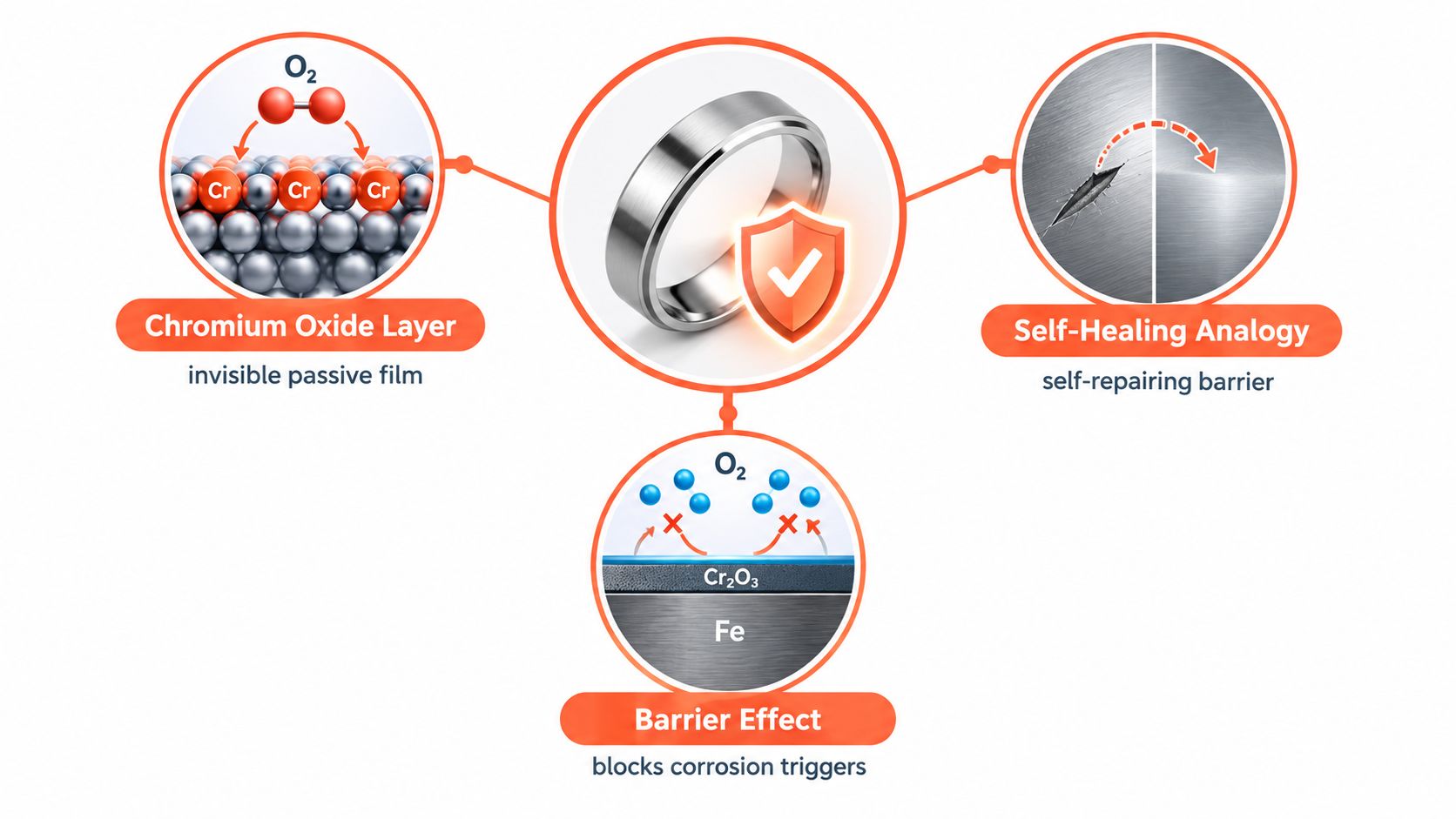
Stainless steel lasts because it protects itself at the surface. The key ingredient is chromium. When chromium content exceeds about 10.5%, the metal forms a passive oxide layer that helps prevent rust or tarnish even with exposure to water and sweat, as explained in this overview of stainless steel's passive protection.
Think of it like a clear protective skin
That passive layer is invisible, but it does important work. A simple way to explain it to customers is to compare it to a thin clear skin over the metal. It stands between the environment and the iron in the alloy, which is what helps slow down rust and visible corrosion.
If the surface gets lightly disturbed, that protective layer can reform. That's why stainless steel usually handles normal hand washing, daily sweat, and ordinary indoor wear much better than reactive fashion metals.
Tarnish resistance isn't the same as perfect appearance
Many shoppers get confused. A stainless ring may resist rust and still lose some brightness. The customer then says it “tarnished,” even when what really happened was a surface change from residue, friction, or chemical exposure.
Useful retail language sounds like this:
- Structural durability means the piece remains sound and wearable.
- Cosmetic wear means the surface can look less crisp over time.
- Daily exposure decides which of those the customer notices first.
If you want a customer-friendly example focused on rings, JewelryBuyDirect's guide on whether stainless steel rings tarnish gives a helpful plain-language framing.
Stainless steel doesn't promise a frozen, day-one finish forever. It promises much better resistance than many alternatives.
Why this matters at the point of sale
When sellers skip this explanation, customers assume “won't rust” means “will never change.” Then they interpret normal dulling or residue buildup as failure. When you explain the passive layer in plain language, you give buyers a more realistic standard.
That's especially useful for online listings. Instead of saying only “tarnish resistant,” describe what buyers can expect in real wear: good resistance to water and sweat, but visible finish changes are still possible if the piece lives through chlorine, sunscreen, or mineral-heavy water and isn't cleaned.
Expected Lifespan by Stainless Steel Grade and Composition
Not all stainless steel jewelry lasts the same length of time. The biggest separator is grade. If you're answering how long does stainless steel jewelry last, grade is where the conversation becomes useful.
Why 316L lasts longer than 304
316L stainless steel typically lasts 20 to 30+ years in daily wear when made from a certified alloy, largely because its 2 to 3% molybdenum improves resistance to chloride-driven pitting and crevice corrosion compared with 304 stainless steel, according to this 316L lifespan and corrosion comparison.
That molybdenum content matters in ordinary customer situations. Sweat contains salts. Coastal air carries chloride exposure. Occasional saltwater contact happens on vacations and summer weekends. In those conditions, 316L keeps its surface integrity better than 304.
A second materials reference notes that 316L is specifically valued in jewelry because it contains about 2 to 3% molybdenum and resists chloride-induced pitting better than 304, which lacks molybdenum and can develop corrosion spots after repeated sweat exposure. You can review that in this explanation of 316L durability for jewelry.
What changes with 304 and 430
Many retailers use “stainless steel” as one bucket. Customers shouldn't hear it that way. Recent guidance distinguishes the grades clearly: 316L can last 20+ years with proper care, while 304 may last 5 to 10 years and 430 about 2 to 5 years, especially around pools and saltwater. The same guide notes that visible pitting can appear after roughly 6 to 12 months of daily pool use without cleaning in lower-grade material. That comparison appears in this grade-specific guide to stainless jewelry longevity.
Here's the easy retail translation. 304 can still be usable and attractive, but it's less forgiving in chloride-heavy environments. 430 is even less durable for demanding wear and usually fits better in lower-stakes fashion use than in “wear it every day, everywhere” positioning.
Stainless Steel Jewelry Lifespan by Grade
| Grade | Key Composition | Chloride Resistance | Typical Lifespan with Care |
|---|---|---|---|
| 316L | Contains 2 to 3% molybdenum | Best of these three for sweat, coastal air, and occasional saltwater | 20 to 30+ years |
| 304 | No molybdenum | Lower than 316L, can show micro-pitting sooner under salt stress | 5 to 10 years |
| 430 | Lower corrosion resistance than 316L and 304 in jewelry use | Least suited to harsh wet or salty exposure | 2 to 5 years |
A better sourcing question than “Is it stainless”
Ask suppliers what grade they're using. Better yet, ask them to confirm 316L for pieces you expect customers to wear daily. If your team needs a simple explainer for shoppers, JewelryBuyDirect has a straightforward article on what 316L means on jewelry.
For wholesale buying, this is less about technical purity and more about margin protection. A grade mismatch often shows up later as customer disappointment. If the product page says “great for everyday wear,” the alloy needs to support that promise.
Why Finish Quality and Plating Change Real World Longevity
Two rings can both be 316L and still age very differently. That surprises retailers until they focus on the surface, not just the alloy.
Surface condition often decides the real timeline
A rough or poorly finished surface gives sweat, residue, and chlorides more places to cling. A smoother surface gives them fewer places to settle and less chance to start visible damage. That's why finish quality changes the customer experience so much.
One useful benchmark comes from corrosion testing. Electropolished and passivated 316L can exceed 96 hours in internal corrosion-benchmark testing, and higher-end references report no pitting after 500 hours of salt-spray testing for 316L, which suggests that finish quality and maintenance can stretch wear life from just a few years on low-grade alloys to well over a decade on properly finished pieces, according to this corrosion assessment guide for stainless steel jewelry.
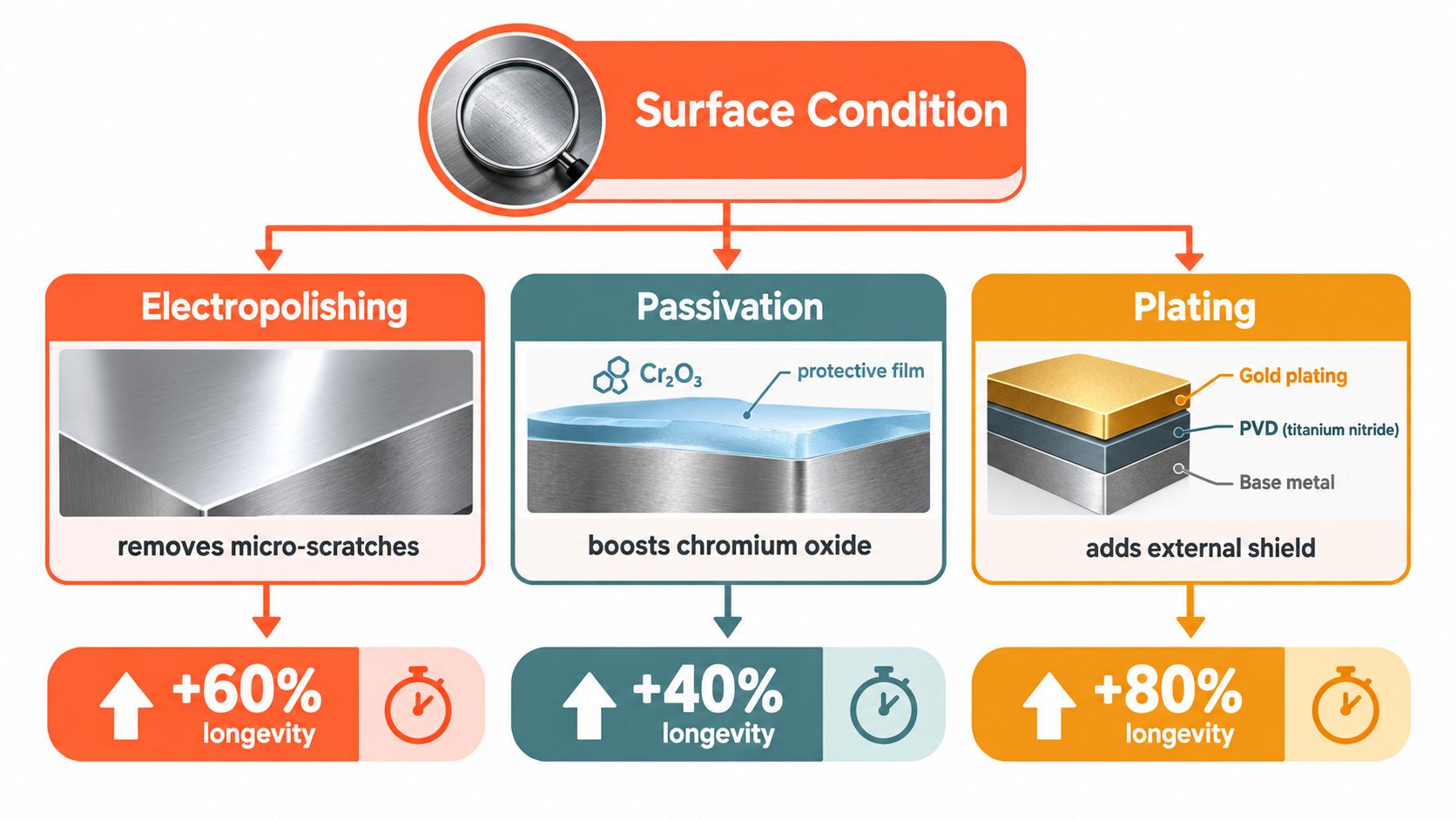
Three finish terms retailers should know
- Electropolishing smooths the surface by reducing tiny irregularities. A smoother ring often stays brighter-looking because grime and moisture have fewer pockets to hide in.
- Passivation strengthens the protective surface behavior of the steel. In practical terms, it helps the alloy perform closer to what customers expect when they hear “stainless.”
- Plating or PVD coating adds a top layer. This changes the appearance first and the base metal second.
Plated jewelry needs a different explanation
When a gold-tone stainless steel ring changes color at the edges, customers often think the whole item is failing. Usually, what's changing first is the surface finish, not the stainless core. That's an important distinction.
If you sell plated pieces, the right script is simple: the coating is the wear layer, the stainless base is the support layer, and cosmetic wear doesn't automatically mean the piece is structurally compromised. For a customer-facing explanation of wear on plated finishes, this guide on how long gold plating lasts is a useful reference point.
Buying rule: Don't evaluate stainless steel jewelry by alloy name alone. Ask how the surface was finished, whether it was polished well, and how the color layer was applied.
Retailers who understand this can explain price differences with confidence. “Both are stainless” isn't the full story. One may have a cleaner surface, better finishing, and a much longer attractive wear life even before care enters the picture.
Five Factors That Make Jewelry Last Longer or Wear Out Faster
The biggest misunderstanding in this category is that stainless steel either “lasts forever” or “fails.” Most pieces land in the middle. They stay wearable, but their surface appearance reflects the owner's environment and habits.
A recent care guide makes this point clearly: high-quality 316L pieces can last 20+ years structurally, yet still show visible finish changes under real-world exposure, including dulling, rainbow-like iridescence, or light brown discoloration from sweat, sunscreen, chlorine, or hard-water minerals. That's outlined in this guide to whether stainless steel jewelry tarnishes.
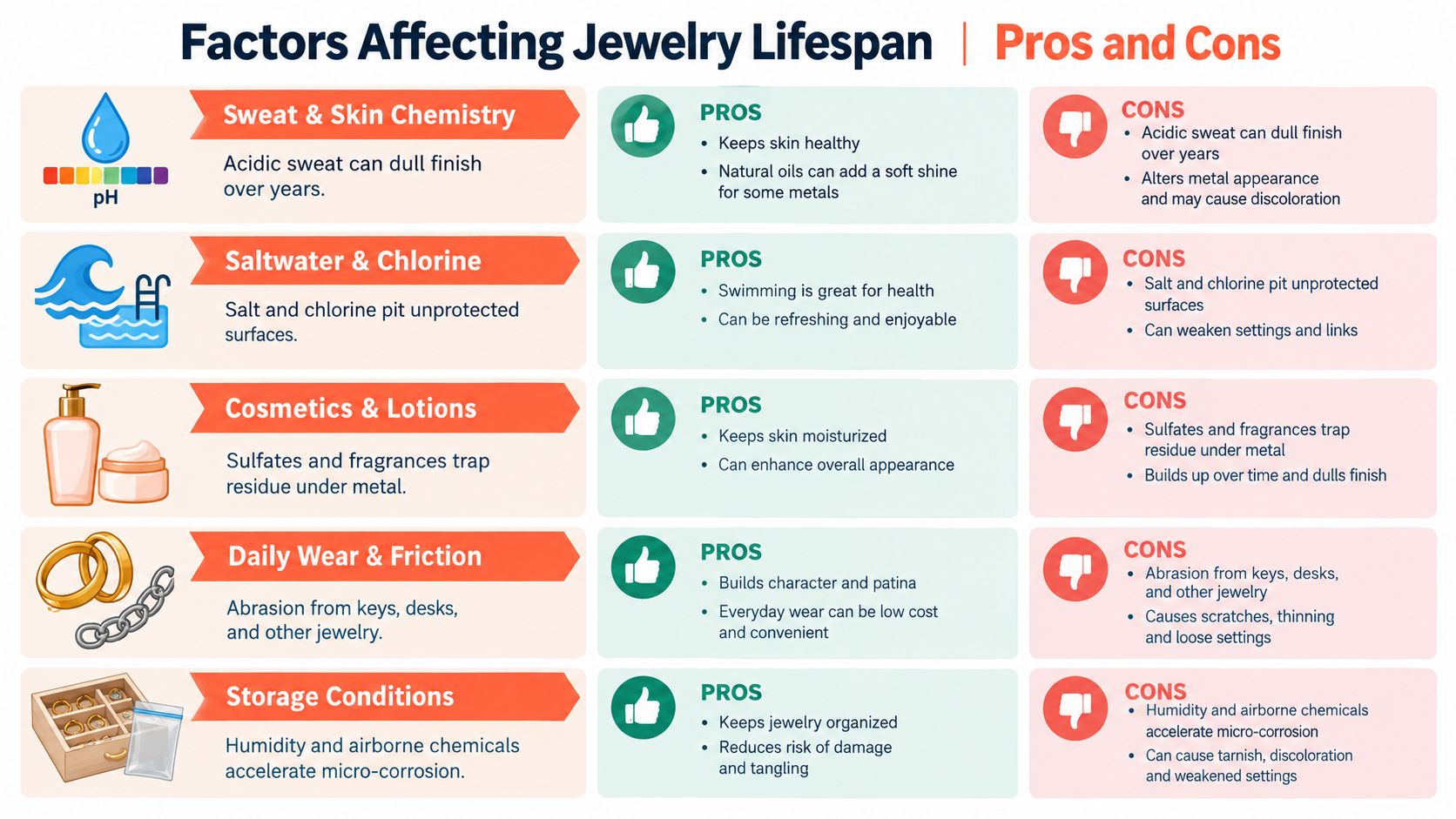
Sweat and skin chemistry
Some customers can wear the same bracelet daily and barely see change. Others leave more salt and acidity on the metal after a short workout. That doesn't mean the jewelry is defective. It means body chemistry isn't the same for everyone.
A simple store tip works well: if a customer wears jewelry to the gym, tell them to wipe it after use instead of letting dried sweat sit overnight.
Saltwater and chlorine
Lower grades usually show their weakness first. Vacation wear sounds harmless until a ring spends days around pool water, sunscreen, and ocean spray.
Retail advice should be direct:
- For beach trips: Encourage customers to rinse and dry pieces after exposure.
- For pool use: Suggest removing plated pieces and lower-grade stainless before swimming.
- For daily swimmers: Position 316L as the safer choice, not a magic shield.
Cosmetics and sunscreen
Lotions, fragrance, and sunscreen leave films behind. Customers often mistake that film for tarnish because the metal suddenly looks cloudy or patchy. In many cases, the piece needs cleaning, not replacing.
One practical example is the chain necklace worn after body lotion but before the skin dries. The necklace doesn't just face moisture. It sits against trapped residue.
Daily friction and contact
Rings scrape desktops. Bracelets knock against watch clasps. Necklaces rub against zippers and bag straps. Friction doesn't usually threaten the structure first. It changes the finish first.
That's why two customers can own the same SKU and report very different aging. The office worker and the hairstylist aren't putting the same wear on the same piece.
Storage conditions
Storage is the quiet factor people ignore. Pieces tossed together in a humid bathroom age faster at the surface than pieces kept dry and separated. The metal may still be fine, but the visual quality drops earlier.
A lot of “stainless steel problems” are really wear-pattern problems. The alloy matters, but the environment often decides what the customer notices first.
Simple Care Routine to Extend Stainless Steel Jewelry Life
Most surface problems build slowly. The fix is rarely complicated. Customers don't need a lab process. They need a routine simple enough to repeat.
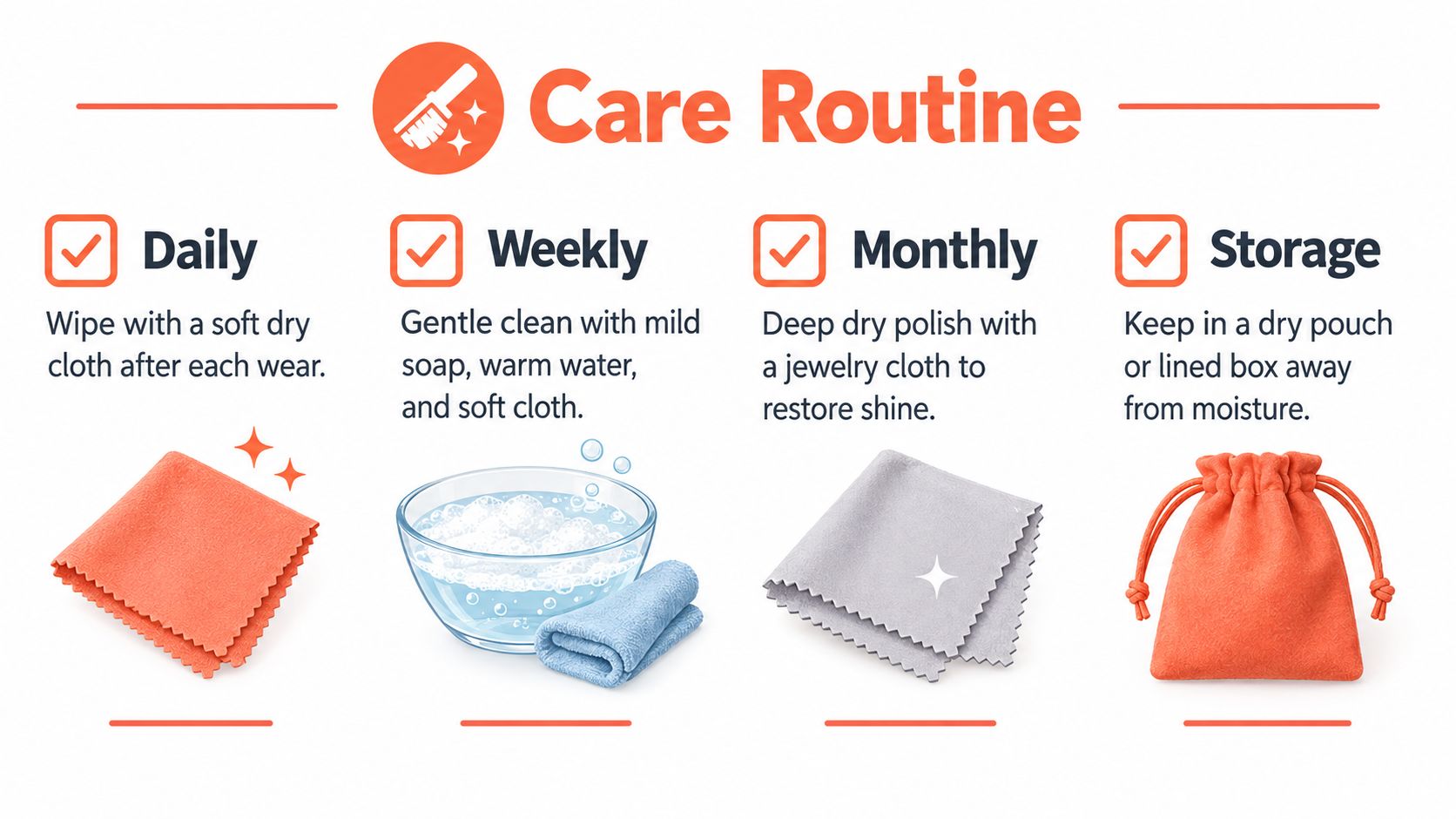
A good care script for retail teams is built around daily, weekly, and storage habits.
The daily habit that prevents most buildup
Tell customers to wipe jewelry after wear with a soft dry cloth. That small step removes sweat, skin oil, and leftover product before they dry onto the surface.
30-second rule: If a customer wears stainless steel jewelry through heat, sweat, or skincare products, a quick wipe before storing it prevents a lot of avoidable surface change.
A simple weekly cleaning routine
Once a week, or sooner for heavy wear, customers can clean pieces with mild soap, warm water, and a soft cloth. Then they should dry the jewelry fully before putting it away. That matters because trapped moisture and residue are often what dull the finish.
Use plain language at the point of sale:
- Wash gently: Mild soap and warm water are enough for most routine cleaning.
- Skip harsh products: Abrasive cleaners can scratch the surface or shorten the life of plated finishes.
- Dry completely: A soft cloth works better than air-drying in a humid room.
This walkthrough is useful for showing basic handling and cleaning habits:
When customers should remove the piece
Some sellers hesitate to say this because they don't want the jewelry to sound delicate. But honest advice creates better long-term satisfaction.
Recommend removal during:
- Swimming in pools, especially for plated items.
- Ocean swimming, if the customer won't rinse soon after.
- Intense workouts, when sweat will sit on the piece for hours.
- Heavy cleaning tasks, where chemical exposure is likely.
Storage that protects the finish
A dry pouch or lined box is enough for most customers. The goal is to limit moisture, reduce friction, and stop pieces from scraping one another.
If you want customers to feel that stainless steel is low-maintenance, this is the right message: it doesn't need babying, but it does respond well to a few consistent habits.
Smart Sourcing and Customer Advice for Longer Lasting Collections
Retailers who understand lifespan sell with more credibility. Instead of promising “won't tarnish,” they explain why 316L, strong finishing, and realistic care habits create better long-term value.
What to ask suppliers before you buy
Use a short checklist when reviewing stainless collections:
- Confirm the grade: Ask whether the piece is specifically 316L.
- Ask about finish quality: Smooth, well-finished surfaces usually wear better in real life.
- Clarify the color layer: If it's gold-tone or black-tone, ask what kind of plating or coating is used.
- Match product to use case: Everyday essentials should carry a stronger material story than occasional statement pieces.
For businesses that want factory-direct sourcing with no minimum order quantity, platforms such as JewelryBuyDirect can make it easier to compare stainless options across core basics, plated styles, and trend-led assortments in one place.
How to speak about longevity without overpromising
Good product pages don't hide the truth. They frame it clearly. Say that a piece is corrosion-resistant, suitable for daily wear, and likely to keep its structure for years when the grade and finish are strong. Then add that surface appearance still depends on exposure and care.
That kind of wording does three things. It helps customers choose appropriately, reduces avoidable returns, and positions your store as informed rather than vague.
Retailers also benefit when they merchandise by story. Build one group around daily-wear 316L essentials, another around fashion plated looks, and a third around occasion pieces. Customers understand value better when the use case is obvious.
If you're building stainless collections and want more control over grade, finish, and price point, JewelryBuyDirect offers wholesale jewelry and fashion accessories for boutiques, online sellers, and growing brands. You can use that sourcing flexibility to stock everyday 316L basics, plated trend pieces, and replacement-friendly styles that match how customers wear jewelry.