
Is 18k Gold Plated Real Gold or Just Coated Metal
Yes, the 18k plating layer is real gold, containing 75% pure gold, but the jewelry itself isn't solid gold. Its core is base metal, and the gold is a thin layer measured in microns, so the finish drives the appearance more than the resale value.
Why does a piece look like fine jewelry at the counter, yet cost and wear so differently from solid gold? The confusion comes from treating 18k as a description of the entire item. On plated jewelry, it describes only the gold used on the surface.
That distinction matters whether you're choosing a necklace for yourself or sourcing inventory for a boutique. A plated piece can be a smart, affordable fashion purchase, but it shouldn't be presented as a solid-gold asset. Buyers need to know what they're paying for, and retailers need enough construction detail to set prices, write accurate product descriptions, and reduce avoidable returns.
The most useful question isn't, “Is 18k gold plated real?” It's two questions:
- Does the surface contain real gold?
- Does the finished piece have the durability and value of solid gold?
The first answer is yes. The second is no. In the sections ahead, you'll see how the coating is made, why thickness matters, how plated jewelry compares with other gold options, and what to check before buying or stocking it.
The central idea: real gold content and real gold jewelry value aren't the same thing.
Introduction Why Everyone Asks Is 18k Gold Plated Real
A gold-colored ring or chain can look convincing enough to create an immediate assumption: the karat mark must describe the whole piece. That assumption is understandable, especially when the item has the warm color, polished surface, and familiar 18k wording associated with fine jewelry.
The label has a narrower meaning. 18k gold is 18 parts gold out of 24, or 75% gold alloyed with 25% other metals, as explained in the Federal Trade Commission's consumer guidance on gold jewelry. When the words “gold plated” follow it, that alloy is used as an outer coating over another material.
So, is 18k gold plated real? Yes, the coating contains genuine 18-karat gold. No, the jewelry isn't solid 18k gold. The distinction isn't a technicality. The underlying metal, coating thickness, finishing quality, and expected wear determine whether the item works as occasional trendwear, everyday fashion jewelry, or a long-term piece.
Why the wording causes confusion
A plated necklace may visually resemble a solid-gold necklace because the eye sees the surface first. The buyer doesn't see the brass, stainless steel, copper, silver, or other substrate beneath the finish. In many pieces, the gold layer is only about 0.5 to 5 microns thick, and some industry explainers state that plating can account for less than 1% of the item's total composition (Glozya's explanation of 18k gold-plated jewelry).
That's why the piece can have genuine gold on its surface while having little melt or resale value compared with solid gold. Its appeal comes from color, design, accessibility, and styling flexibility. The base metal and the thin coating, rather than the full mass being gold, shape its financial value.
For a boutique buyer, this difference also affects merchandising. A product page should communicate the base metal and plating clearly, not rely on “18k” alone. A customer who understands the construction is more likely to choose the right piece for their wear habits and care for it properly.
What 18k Gold Plated Actually Means
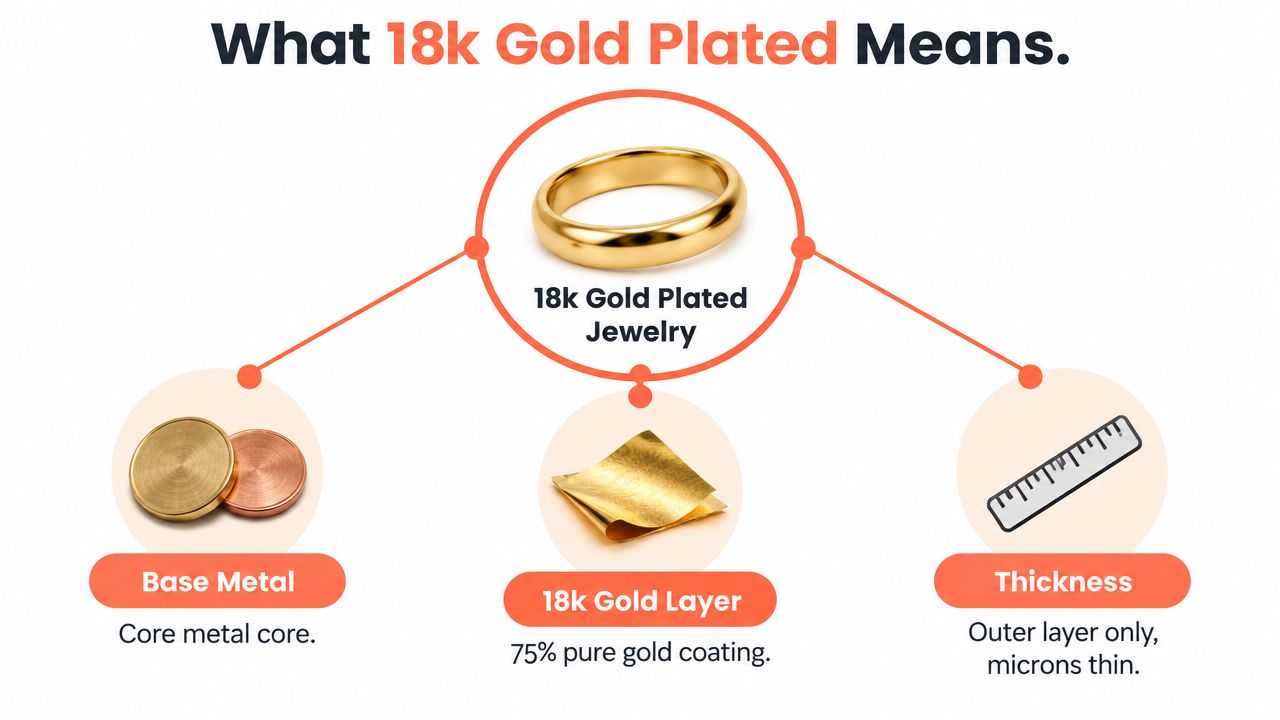
Think of plated jewelry as a layered cake. The base metal is the cake, providing the shape and structure. The gold coating is the icing, giving the piece its visible color and finish. Calling the icing 18k tells you what the icing contains, not what the entire cake is made from.
The base can be brass, stainless steel, copper, silver, or another metal. The outer layer is an 18-karat gold alloy, meaning it contains 75% gold and 25% other metals. The JewelryBuyDirect guide to 18k gold-plated jewelry describes the same basic construction: a thin 18k coating over a substrate.
The coating process in plain language
Manufacturers commonly use electroplating. First, they prepare and clean the base item. Then an electrical process moves gold ions through a solution and bonds them to the item's surface. The result is a controlled deposit of precious metal over a less expensive core.
The process became industrially important in the 19th century, when manufacturers could apply controlled, very thin precious-metal layers to cheaper substrates at scale (JewelryTrendPro's overview of 18k gold plating). That history helps explain why plated jewelry can imitate the visual effect of fine jewelry while remaining more accessible and behaving differently over time.
“Thin” is the key word. A micron is a very small unit used to describe coating thickness. You won't judge it accurately by looking at a clasp or rubbing the surface with a finger, so a supplier's specification is more useful than a karat claim alone.
What the label tells you, and what it doesn't
The label tells you about the purity of the gold coating. It doesn't tell you the core metal, the thickness, the bonding quality, or how the item will perform under daily friction.
Those details matter because the visible finish is only one part of the product. A well-made plated earring can offer attractive color and comfortable styling at a lower cost, while a thinly plated ring may show wear quickly at the edges. Both can be called 18k gold plated, yet they can offer very different customer experiences.
For sourcing, ask suppliers to separate these details:
- Gold alloy: Is the coating 18k?
- Base material: Is the core brass, stainless steel, copper, silver, or another metal?
- Thickness: What micron specification applies to the finished item?
- Disclosure: Does the product description clearly state that it's plated?
That checklist turns a vague label into a usable product specification.
How 18k Gold Plated Compares to Solid Gold and Other Options
Plated jewelry sits in a broader family of gold-look products. The alternatives aren't interchangeable because they differ in how gold is attached, how much gold the item contains, how the surface wears, and what buyers can reasonably expect at resale.
Solid 18k gold has 75% gold throughout the alloyed material. Gold-filled jewelry has a thicker gold layer mechanically bonded to a base metal. Vermeil generally refers to gold over sterling silver, so its core differs from the brass or stainless steel common in fashion plating. For a fuller explanation of that category, retailers can consult this guide to vermeil jewelry.
| Jewelry Type | Gold Content | Base Material | Typical Thickness | Value Profile |
|---|---|---|---|---|
| 18k gold plated | 18k gold on the surface, with the gold layer often making up less than 1% of total composition | Brass, stainless steel, copper, silver, or another substrate | Often about 0.5 to 5 microns | Appearance and fashion value, with minimal melt or resale value compared with solid gold |
| Solid 18k gold | 75% gold throughout the alloy | Gold alloyed with other metals | Not a surface coating | Higher intrinsic and resale value because gold runs through the piece |
| Gold-filled | A substantial gold layer bonded to a base | Base metal core | Defined by a mechanically bonded outer layer rather than ordinary electroplating | More durable and materially valuable than standard plating, but not solid gold |
| Vermeil | Gold over sterling silver | Sterling silver | Thickness depends on the product specification | A silver-based gold finish, positioned above ordinary base-metal plating in construction |
Choosing by wear cycle
A customer who rotates jewelry with outfits may value color and variety more than permanent material value. Plated pieces serve that role well, particularly for seasonal designs, statement earrings, layered chains, and trend-led collections.
Solid gold suits a different purpose. It's a stronger choice for heirlooms, meaningful gifts, frequent daily wear, and buyers who want the metal itself to carry substantial value. Gold-filled and vermeil can occupy useful middle positions, but shoppers should still verify the construction rather than assuming every gold-colored finish has the same performance.
Choosing inventory for a boutique
Retailers should match the product description to the intended use. A lightweight plated charm can be marketed as accessible fashion jewelry, while a carefully specified piece with a more substantial coating may support a higher price within that category. Neither should be described as solid gold.
A clear product page can state the base metal, the 18k surface coating, care requirements, and expected use. That language protects customer trust and helps shoppers compare products fairly.
Why Plating Thickness Matters More Than the 18k Label
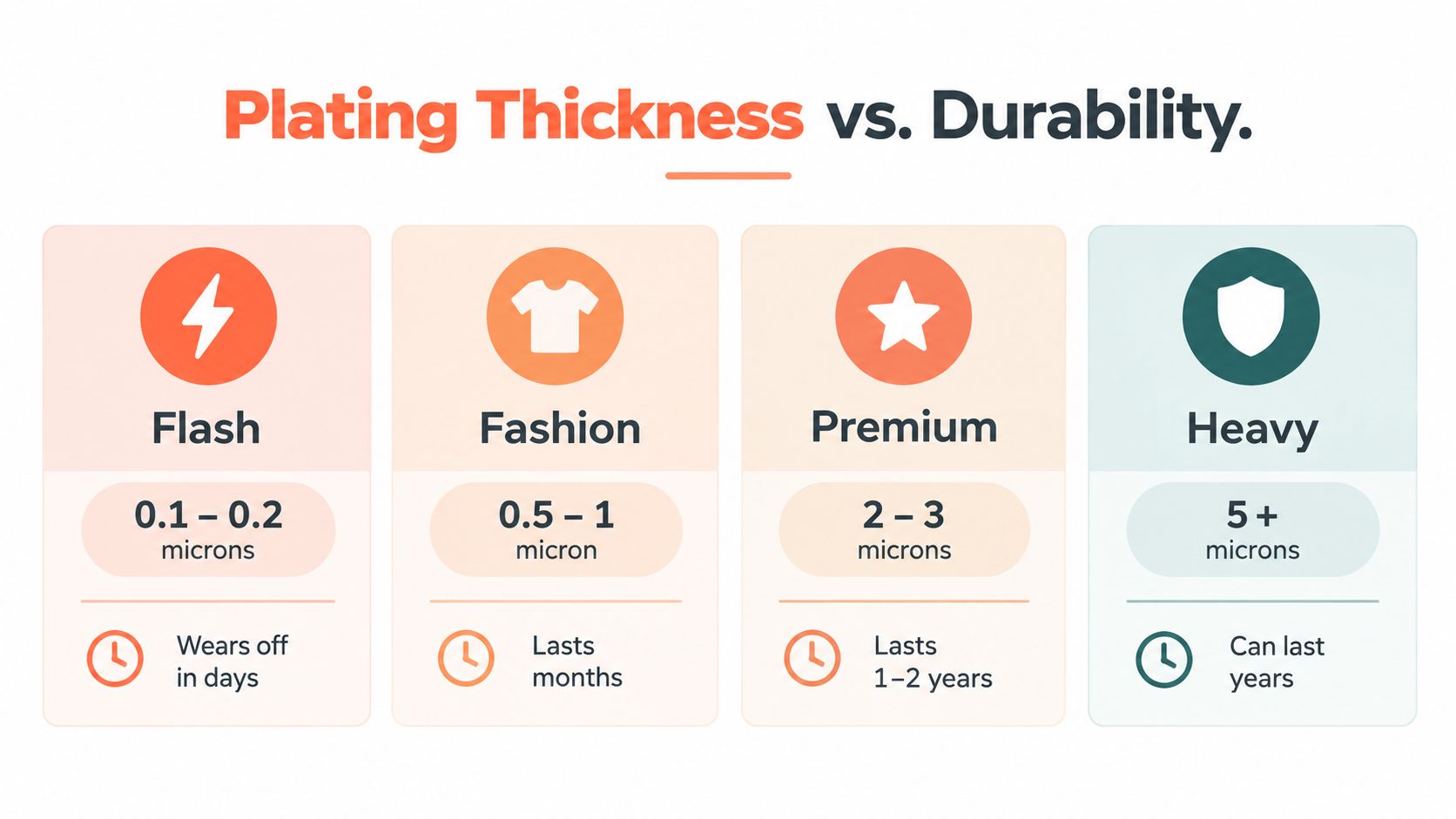
Two pieces can both carry an 18k gold-plated description and still wear very differently. Karat measures the purity of the gold in the coating. Microns measure how much coating is present. For longevity, the second measurement is usually more revealing.
Industry references commonly describe flash plating at 0.175 microns, gold plate at 0.5 microns, and heavy gold plate at 2.5 microns (UPA's plating thickness guide). Other industry examples place fashion-grade plating around 0.5 to 1.0 micron, premium plated jewelry around 1 to 2.5 microns, and flash plating as low as 0.175 micron (A Fashion Blog's discussion of 18k plated durability).
Where wear appears first
The coating faces repeated contact with skin, clothing, surfaces, sweat, soaps, perfume, lotion, and water. Abrasion gradually removes the finish, often beginning at edges, raised details, ring bands, bracelet interiors, and clasp areas. Once the base metal shows, the piece can lose its uniform gold color or develop a different tarnish pattern.
A ring usually experiences more friction than an earring because it contacts hands, objects, soap, and work surfaces throughout the day. A pendant worn over clothing may avoid some of that contact. This is why a retailer shouldn't promise identical performance across every product category, even when all pieces use 18k plating.
Retail rule: Ask for micron thickness before using the 18k label to justify a price or wear expectation.
What thickness means for sourcing
The coating's thickness should influence how you position an item. A thin fashion finish may be appropriate for occasional wear and trend experimentation. A more substantial coating can support a product description focused on improved wear, but it remains plated and still needs care.
Ask suppliers for written specifications rather than accepting terms such as “premium shine” without construction details. For a boutique, that information supports better buying decisions, clearer staff training, more accurate customer guidance, and a sensible return or warranty policy.
Thickness also helps explain margin. The lowest-cost product isn't automatically the strongest value if customers expect daily performance. Conversely, a higher-priced fashion piece may still be a poor fit if the customer expects heirloom durability. Matching coating thickness, base metal, design, and intended wear cycle is more reliable than treating every 18k plated product as one category.
How to Tell If 18k Gold Plated Is Authentic and Well Made
Authenticity begins with disclosure. A reputable seller should make it clear that the item is gold plated, identify the base material where possible, and avoid presenting the piece as solid gold. The FTC's consumer guidance distinguishes plated construction from solid gold because a base metal has been coated with gold, and the coating can be extremely thin.
Start with the product description
Look for wording such as “18k gold plated,” “18k gold electroplated,” or another clear plating disclosure. A bare “18k” mark can confuse shoppers if the page doesn't explain whether the item is solid, filled, vermeil, or plated.
For wholesale buying, request the information in writing:
- Base metal: Confirm whether the core is stainless steel, brass, copper, silver, or another material.
- Micron specification: Ask how thick the coating is and whether the figure applies to the finished product.
- Finish details: Check whether the surface is polished, brushed, textured, or protected by an additional finish.
- Skin-contact information: Ask which components touch the wearer and whether sensitive-skin concerns are addressed.

Use physical checks carefully
A magnifying glass can help you inspect stamps, clasp areas, earring posts, and visible wear. Uneven color, rough edges, exposed darker metal, or plating that stops sharply around a detail may signal inconsistent finishing, although appearance alone can't prove the metal composition.
A magnet test can sometimes reveal iron-based content if the item is strongly attracted, but it isn't a definitive authentication method. Weight and feel can also provide clues, yet hollow construction, stones, design thickness, and the base metal can all mislead you. For a deeper explanation of testing methods and their limitations, see this guide to testing gold purity.
Professional testing is the sensible route for valuable or disputed items. For ordinary plated fashion jewelry, accurate disclosure and supplier documentation usually matter more than trying to prove the coating with a destructive home test.
Caring for 18k Gold Plated Jewelry So It Lasts Longer
A plated necklace often begins its life looking bright and even. Then its owner wears it to the gym, sprays perfume over it, applies lotion, washes hands while wearing it, and stores it loosely against other pieces. Each exposure may seem minor, but sweat, moisture, chemicals, and friction gradually challenge the thin surface.
The safest routine is simple: put plated jewelry on last and take it off first. Apply perfume, lotion, sunscreen, and hair products before wearing the piece. Remove it before showering, swimming, exercising, cleaning, or doing tasks that involve repeated rubbing or handwashing.
A gentle care routine
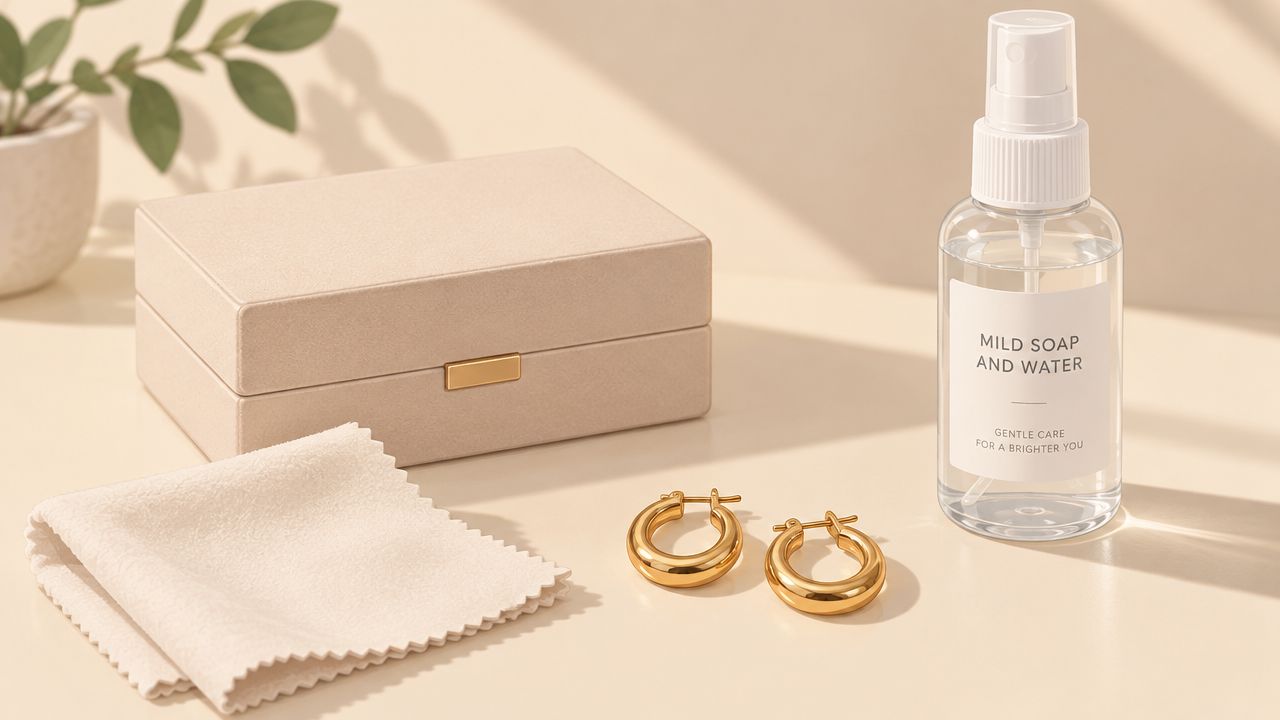
After wear, wipe the piece with a soft, dry cloth. If cleaning is necessary, use a mild approach and avoid abrasive polishing compounds, rough brushes, strong chemicals, and prolonged soaking. The gold-plated jewelry care guide offers practical guidance for preserving the finish.
Store each item in a dry, soft pouch or a separate compartment. Keeping chains, rings, and earrings from rubbing against one another reduces scratching and helps preserve polished surfaces. A bathroom is usually a poor storage location because recurring humidity adds unnecessary exposure.
Skin sensitivity after wear
Gold itself may not be the source of irritation. As the coating wears, the base material can contact the skin, and some people may react to brass, copper, nickel-containing components, or other alloys. Discoloration or discomfort doesn't automatically mean the original plating was fake. It may indicate that the protective surface has become thin or uneven.
This issue deserves extra attention for chunky everyday pieces, rings, bracelets, and earrings that experience repeated contact. Retailers should state the base metal and care instructions before purchase, especially when selling to customers who already know they have sensitive skin.
Replating can restore the appearance of a worn item, but it doesn't turn the core into solid gold. Treat it as a way to refresh a fashion piece, not as a change in its material category.
Is 18k Gold Plated Worth It for You or Your Store
For a shopper, 18k gold plated jewelry is worth considering when the priority is affordable style, variety, and trend-led wear. It works well for rotating necklaces, statement earrings, seasonal colors, and designs you don't need to preserve as heirlooms.
Solid gold is the better fit when you want long-term material value, frequent wear with fewer restrictions, or a piece intended to remain in your collection for generations. Buyers with sensitive skin should also focus on the base and alloy details rather than assuming the 18k surface alone guarantees comfort.
Boutiques can use plated jewelry strategically. Choose suppliers that disclose the core material and coating specification, group products by intended wear cycle, and train staff to explain the difference between real gold content and real gold value. That approach supports honest pricing without making plated jewelry sound inferior. It places the product in the category where it performs best.
For online retailers, presentation matters too. A clear product page, accurate photography, and an organized storefront help customers understand what they're buying. Retailers building a Shopify jewelry store may find ECORN's jewelry theme guide useful when evaluating ways to present collections and product details.
JewelryBuyDirect offers wholesale 18k gold-plated jewelry, including plated stainless steel designs, alongside other jewelry and fashion accessory categories. Its platform provides factory-direct sourcing, SGS-certified manufacturing partners, no minimum order quantity, and product information retailers can use when testing trend-focused assortments.
The decision is straightforward once the label is translated correctly: 18k gold plated means real gold on the surface, not solid gold throughout. Buy it for its finish and design, price it according to its construction, and care for it according to the wear the coating can handle.
If you're sourcing affordable, high-quality pieces for a boutique, online shop, or pop-up collection, explore the 18k gold-plated assortment and related fashion accessories at JewelryBuyDirect. Compare base metals, finishes, and product details, then choose pieces that match your customers' budgets, styling habits, and care expectations.