
Stainless Steel Permanent Jewelry Guide for Retailers
A customer arrives at your pop-up, points to a delicate chain, and asks the question you'll hear more often as permanent jewelry becomes part of everyday retail: “Can I shower, work out, and sleep in this without taking it off?” You need an answer that goes beyond “hypoallergenic.” You need to know the steel grade, the nickel-release test, the quality of the weld, and whether the finished piece fits continuous wear.
That's the core buying decision behind stainless steel permanent jewelry. The material can give retailers a durable, accessible alternative to precious metals, but only when sourcing and fabrication are handled carefully. This guide breaks down the metal in plain language, compares it with competing options, and turns technical quality checks into practical decisions for boutiques, pop-ups, and online sellers.
Why Stainless Steel Permanent Jewelry Is Winning Over Customers
At a busy event, the customer's priorities are usually simple. They want a bracelet that looks polished, stays comfortable through daily movement, and doesn't force them to remember a clasp every morning. A welded stainless steel chain answers that job directly. The chain is fitted around the wrist, the ends are joined, and the finished piece becomes part of the customer's routine rather than another accessory they have to manage.
That convenience creates a stronger retail experience than selling a standard bracelet from a display tray. The customer chooses a chain, watches the fitting, and leaves with a piece connected to a specific visit, celebration, friendship, or milestone. A permanent jewelry appointment can also bring customers back for matching anklets, necklaces, repairs, or gifts, although the product still has to earn trust through comfort and reliable construction.
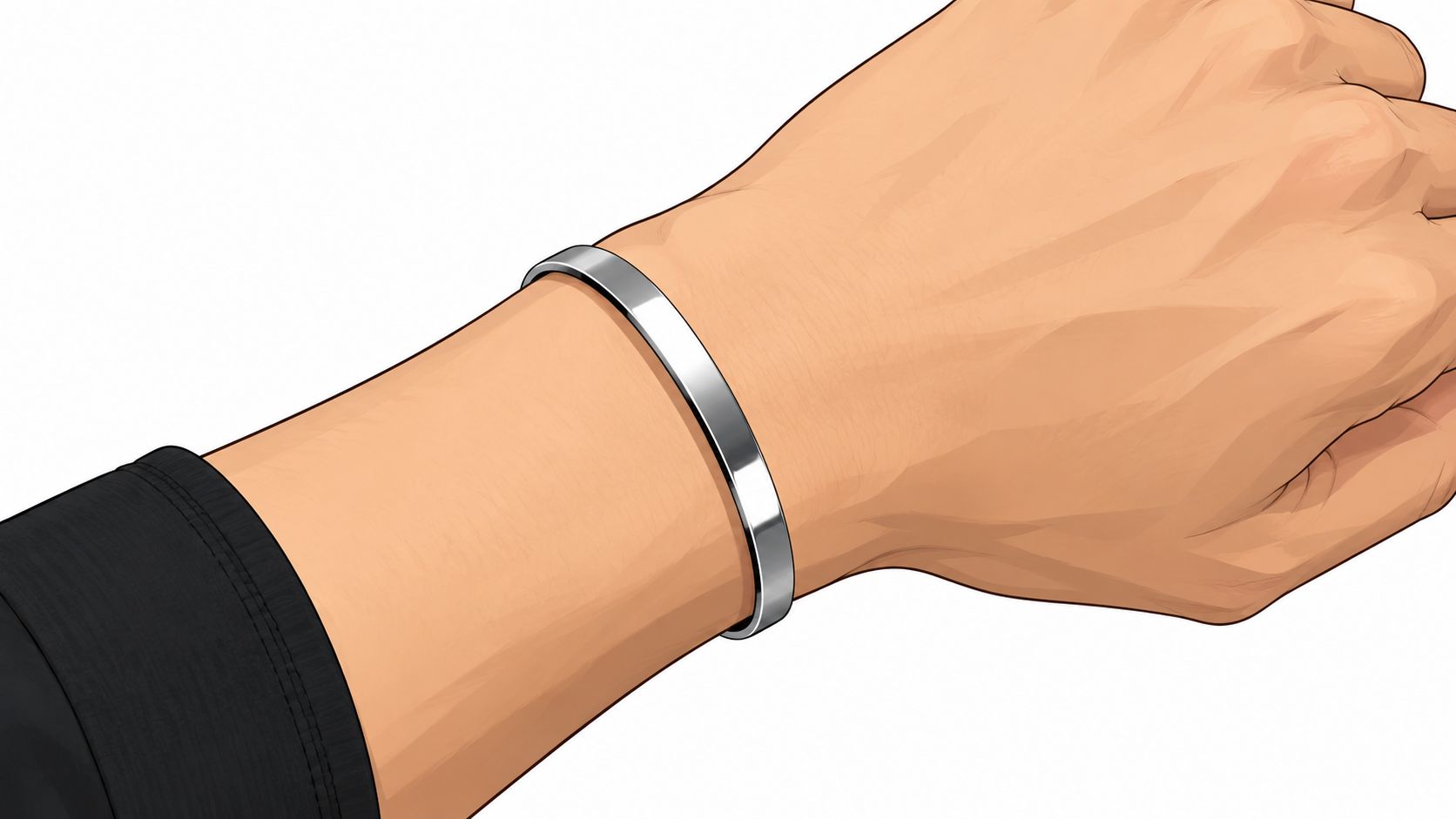
Why the material suits the job
Stainless steel has been used in jewelry since the early 1900s, first gaining traction in watches before expanding into other body-worn items, as explained by the British Stainless Steel Association's guidance on skin-contact jewelry. Its appeal comes from a useful combination of corrosion resistance, low maintenance, and accessible pricing.
The wider category also gives retailers room to build collections around proven chain shapes instead of treating permanent jewelry as a niche experiment. One 2026 market estimate values the global stainless steel jewelry market at USD 18.6 billion in 2025 and projects USD 29.35 billion by 2031, while another forecast values it at USD 9.84 billion in 2025 and projects USD 17.20 billion by 2034. These estimates differ in scope and methodology, but both point to a substantial market with continued growth, as reported in the stainless steel jewelry market research report.
Retail insight: Stainless steel works best when you sell it as a dependable everyday material, not as a cheaper imitation of gold.
Customers still need honest guidance. Stainless steel isn't automatically safe for every wearer, and “surgical” or “hypoallergenic” labels don't replace documentation. The strongest retailers explain that nickel release and weld quality matter more than a vague material description. That transparency helps you recommend the right product, avoid preventable irritation complaints, and protect the emotional value of a piece intended to stay on the body.
Understanding What Stainless Steel Permanent Jewelry Really Means
Permanent jewelry is a clasp-free chain fitted to the body and closed with a small weld. “Permanent” doesn't mean indestructible or impossible to remove. It means the customer wears the piece continuously until they deliberately cut the chain, usually with small scissors or jewelry cutters if removal becomes necessary.
A simple analogy helps. Think of a traditional bracelet as a door secured with a removable latch. A permanent bracelet replaces that latch with a small, carefully joined hinge. The chain still has a vulnerable point, but the closure no longer depends on a clasp that can open during daily movement.
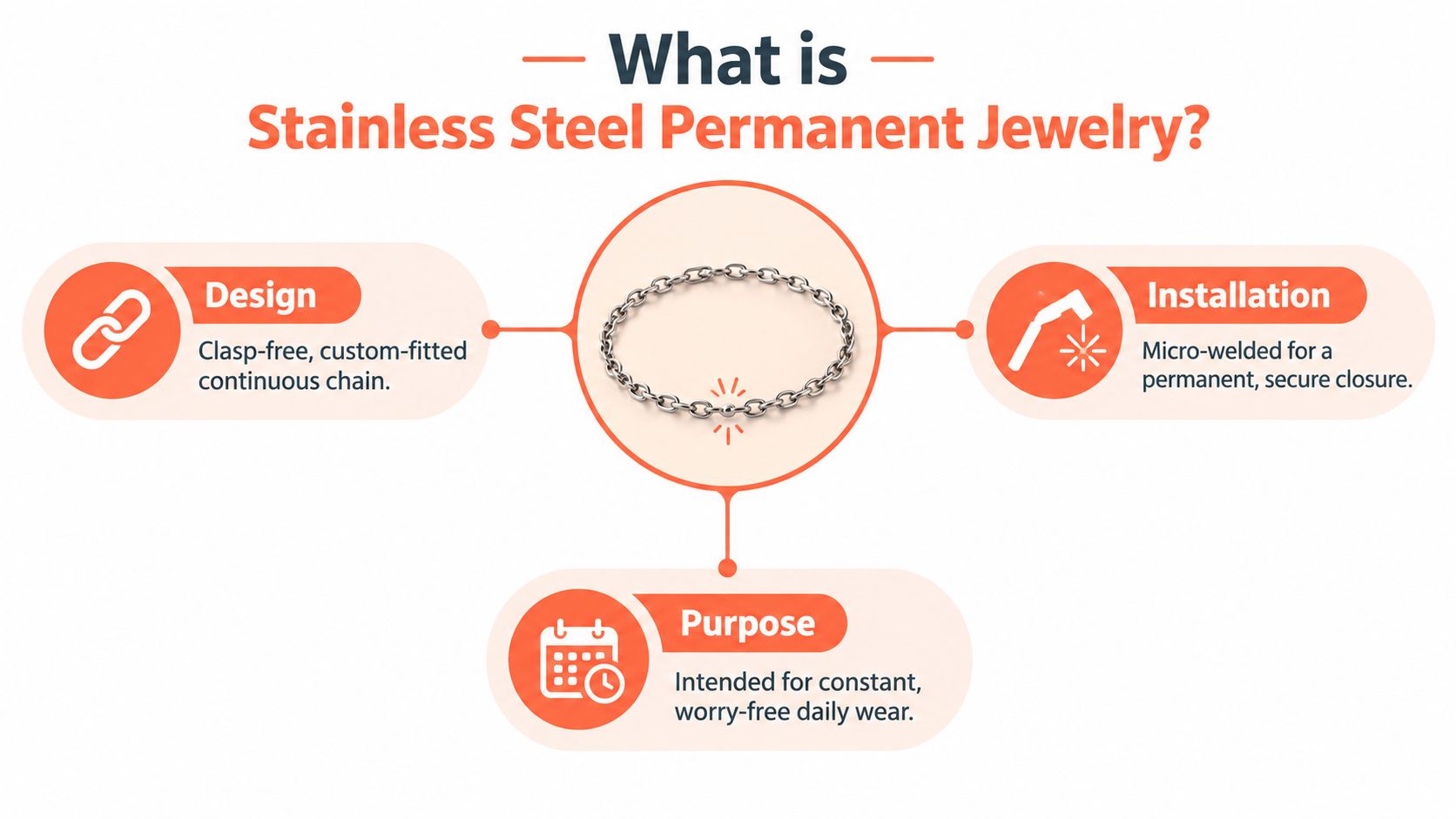
The invisible shield on the surface
The most useful piece of metallurgy is also the easiest to visualize. Chromium in stainless steel forms a thin passive chromium-oxide layer on the surface. This layer acts like an invisible shield between the metal and moisture, sweat, and other everyday exposures. Under normal wear, that shield supports corrosion resistance, but chloride from sweat and body fluids can challenge it, especially when the surface has been damaged or poorly finished.
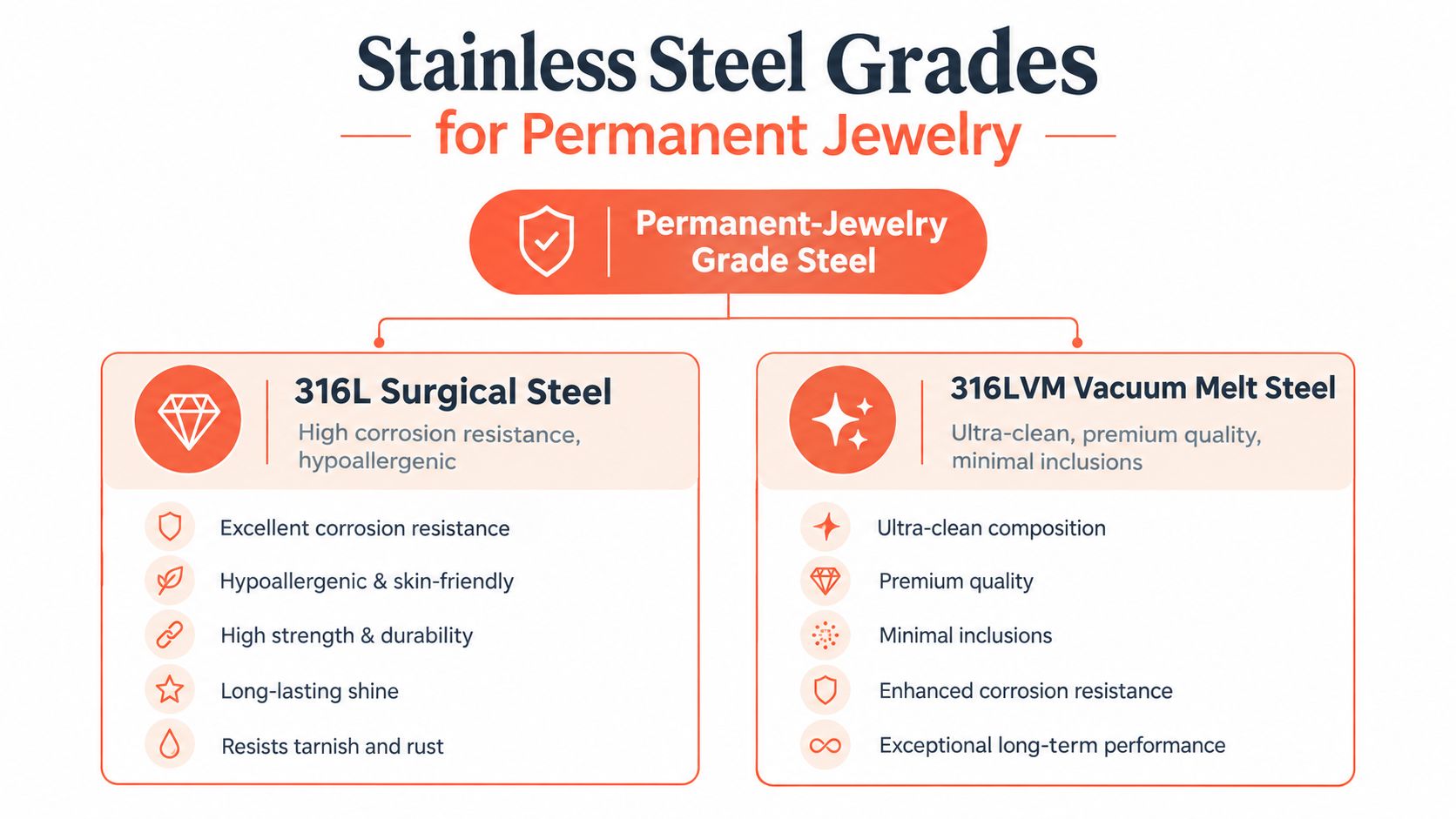
That's why the alloy label alone isn't enough. 316L is the most relevant stainless grade for permanent jewelry, and 316LVM, or vacuum-melted 316L, is used where exceptionally clean material is desired. A polished finish reduces rough areas where residue can collect, while passivation helps restore the protective surface after fabrication.
For a deeper explanation of the alloy itself, see this guide to what 316L stainless steel jewelry means.
Permanent versus traditional jewelry
A traditional bracelet is designed for repeated removal. Permanent jewelry is designed around continuous wear, so every decision becomes more demanding:
- The chain needs enough flexibility for movement.
- The fit must allow comfortable daily wear.
- The weld needs to resist ordinary handling.
- The surface must be clean and smooth against skin.
- The customer needs clear instructions about removal and lifestyle use.
The best mental model is not “a bracelet that can never come off.” It's a custom-fitted bracelet with a welded closure and a continuous-wear purpose. That distinction keeps customer expectations realistic and gives retailers a clearer sourcing standard.
How Stainless Steel Compares to Other Permanent Jewelry Metals
No single metal fits every customer or every price point. Stainless steel is often the practical choice for shoppers who want water and sweat resistance at an accessible cost, while titanium and gold-filled pieces may be better for customers with a known nickel allergy or a stronger preference for precious-metal content.
The comparison below is a retail positioning tool, not a substitute for supplier documentation. Actual performance depends on the alloy, finish, construction, and how the customer wears the piece.
Permanent Jewelry Metal Comparison for Retail Decisions
| Metal | Water and Sweat Resistance | Sensitive Skin Consideration | Maintenance Needs | Price Position |
|---|---|---|---|---|
| 316L stainless steel | Strong resistance to everyday water, sweat, salt, and chlorine when the surface is properly finished | Nickel release matters more than total nickel content. Ask for test evidence, especially for sensitive customers | Low maintenance, but rinse residue and inspect the weld and surface | Accessible |
| Gold-filled | Good for daily wear, though the bonded gold layer can wear at high-friction areas | Often preferred by customers seeking a gold-based option, but verify construction and customer history | Moderate care, especially around abrasion and chemicals | Higher |
| Sterling silver | More vulnerable to oxidation and surface change during continuous exposure | May suit some wearers, but it isn't the default choice for constant wet use | Regular polishing and cleaning may be needed | Mid-range |
| Titanium | Excellent corrosion resistance and a strong option for continuous wear | A compelling alternative for customers with known nickel sensitivity | Low maintenance | Premium |
| 201 or lower-grade stainless steel | Performance can be less predictable in sweat, salt, chlorine, and long-term skin contact | Grade and finish concerns make broad safety claims inappropriate | May require more monitoring and care | Lower |
Match the metal to the customer
For a customer who wants a minimalist bracelet for showers, normal workouts, and everyday errands, well-finished 316L stainless steel can be a cost-effective recommendation. The decision changes if the customer reports a diagnosed nickel allergy, a history of dermatitis from metal jewelry, or plans for unusually intense exposure to sweat and chlorine. In those cases, titanium or a carefully selected gold-filled option may be more appropriate.
Stainless steel also has a useful place beside, rather than instead of, gold-filled jewelry. A retailer can offer the same paperclip, curb, or fine-link silhouette in different materials, allowing shoppers to choose based on budget and skin history without changing the collection's visual language.
The strongest sales conversation starts with use case and allergy history, then moves to metal. It doesn't start with the lowest price.
Retailers should also avoid treating “stainless steel” as one uniform category. 316L and 316LVM deserve a different sourcing conversation from unspecified steel, 201 steel, or pieces with damaged coatings. A lower ticket price can lose its value quickly if a chain discolors, irritates the wearer, or fails at the weld.
Materials and Manufacturing Notes That Affect Quality
The phrase “stainless steel” describes a family of alloys, not a finished quality level. For permanent jewelry, the retailer's first question should be whether the supplier can identify the grade and support it with documentation. 316L and 316LVM are the key grades to prioritize because they combine useful corrosion resistance with suitability for prolonged skin-contact applications when properly finished.
Why 316L is the practical benchmark
316L contains nickel, so nickel content alone doesn't answer whether a piece is suitable for wear. Independent material guidance notes that 316L commonly contains about 10–14% nickel by weight, while testing can still show release below the European Union jewelry limit of 0.5 micrograms per square centimeter per week when the passive surface remains intact, as discussed in this 316L stainless steel hypoallergenic sourcing guide.
The alloy's molybdenum improves resistance to chloride-related corrosion, which matters because sweat and body fluids can challenge the passive layer. A polished, crevice-free surface gives that protective film a better chance to perform. Grinding marks, residue, and rough recesses create places where moisture and contaminants can remain trapped.
The weld is the quality checkpoint
Stainless steel is technically harder to weld cleanly than many precious metals. Heat tint, oxidation, and contamination can alter the corrosion behavior around the joint. If the supplier leaves that area unfinished, the weld becomes the likely point for discoloration, irritation, or early failure.
The preferred approach is autogenous fusion, or carefully controlled welding without a dissimilar filler that could create galvanic corrosion. After welding, the joint should be finished and passivated so the chromium-oxide layer reforms. A polished chain with a rough, dark, or contaminated weld isn't permanent-jewelry grade just because the links themselves look attractive.
Use this sourcing checklist before adding a product to your assortment:
- Grade: Request 316L or 316LVM identification, not only “stainless.”
- Surface: Confirm polishing, passivation, and the absence of grinding marks or open crevices.
- Weld: Ask how the closure is fused, finished, and inspected.
- Testing: Request nickel-release evidence for prolonged skin contact.
- Traceability: Obtain an EN 10204 3.1 mill certificate, or an equivalent document listing chemical composition, heat number, and traceability details, as recommended in this stainless steel corrosion assessment for jewelry sourcing.
Sizing Fitting and Welding for Comfort and Safety
A good permanent jewelry appointment feels personal, but the workflow should be repeatable. Start by cleaning the contact area, then measure the wrist, ankle, or neck without pulling the chain tight. The customer needs room for normal movement and natural swelling, while the chain still needs to sit neatly instead of hanging excessively.
Bracelets are usually the easiest starting point because they're visible, quick to fit, and easy for customers to discuss with friends at events. Anklets need more attention to movement and footwear, while necklaces require careful consideration of drape, hair, clothing, and the position of the weld.
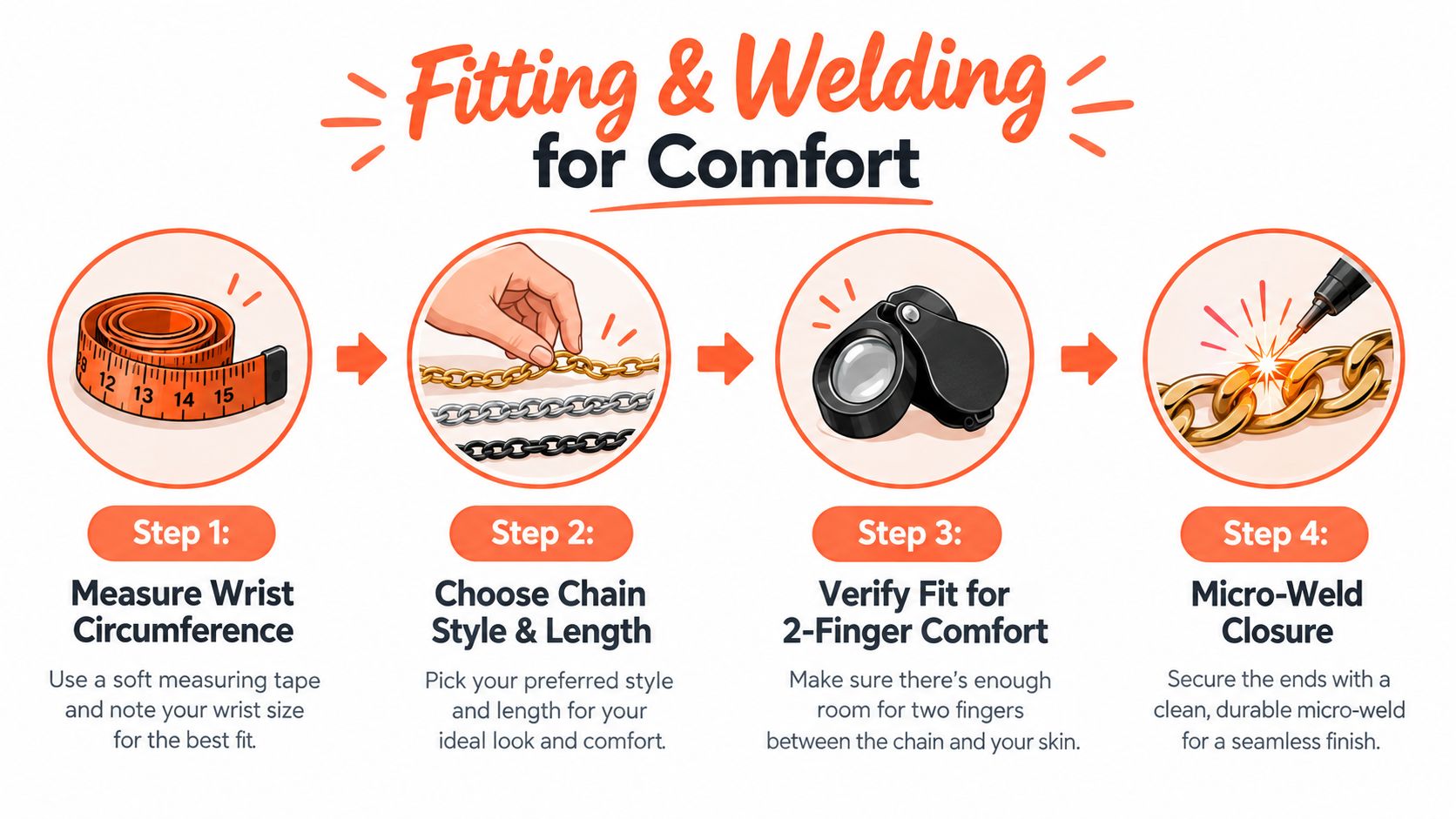
A practical fitting sequence
- Measure without tension. Place the chain around the body part and let it follow the natural shape.
- Choose the chain for movement. Fine cable styles feel different from curb or paperclip links, so explain how each will drape and flex.
- Check the fit before welding. Ask the customer to rotate the wrist or move the ankle. Look for pinching, pulling, or a chain that catches on nearby clothing.
- Position and inspect the closure. Place the weld where it looks intentional and won't sit directly against a pressure point. Shield the customer during the weld, then cool and inspect the joint before the appointment ends.
Two-finger comfort is a useful visual check, but it shouldn't replace movement testing or customer feedback. The customer should understand that the piece is intended for continuous wear, yet removal still requires cutting the chain. Discuss sports, medical procedures, work requirements, and activities where jewelry could catch before closing the link.
For a visual example of a permanent jewelry installation workflow, use the following video as a training reference:
At pop-ups, consistency protects both speed and satisfaction. Keep chain samples organized by style and gauge, use the same inspection sequence for every customer, and photograph the finished piece only after checking that the weld is smooth and secure.
Care Longevity and Quality Checks That Protect Your Reputation
A stainless steel permanent jewelry care script should be short enough for a busy counter. Tell customers to rinse away sweat, salt, pool water, and product residue, then dry the piece with a soft cloth. 316L generally handles everyday water and sweat better than brass, copper, or unspecified alloy, but that doesn't make every finish immune to abrasion or surface damage.
Chlorine deserves a clear explanation. Bare, well-finished steel can tolerate ordinary exposure better than many alternatives, while gold-toned PVD finishes can wear at high-friction areas. Scratches, damaged coatings, and poorly finished weld zones can also change how the surface interacts with skin and may increase nickel release.
More maintenance guidance is available in this stainless steel jewelry care guide.
The compliance questions buyers should ask
For prolonged direct skin contact in the European Union, REACH Annex XVII sets a nickel-release limit of no more than 0.5 µg/cm²/week. Pierced-ear and other pierced-body items have a stricter limit of 0.2 µg/cm²/week, according to this REACH nickel-release explanation for 316L and 304L jewelry. These limits concern nickel migration from the finished surface under test conditions, not the percentage of nickel inside the alloy.
That distinction changes your purchasing routine. A supplier that only says “hypoallergenic stainless steel” hasn't answered the important question. Ask for evidence tied to the finished product, ideally through EN 1811 testing or equivalent documentation.
A retailer's receiving inspection
Use a simple quality-control routine when samples or stock arrive:
- Confirm the paperwork: Match the stated grade with a mill certificate or equivalent traceability document.
- Inspect the finish: Look for heat tint, rough grinding, sharp edges, open crevices, and inconsistent polishing.
- Examine the weld: Check that the closure is clean, smooth, aligned, and free from visible contamination.
- Review the test evidence: Store nickel-release documentation with the product record.
- Test the customer script: Make sure staff can explain water exposure, cleaning, removal, and allergy limitations without promising universal safety.
Quality rule: A compliant alloy with a neglected weld is still a poor permanent jewelry product.
Wholesale Sourcing and Margin Tips for Profitable Collections
A profitable collection doesn't need dozens of unrelated designs. Start with a focused mix of fine staples, everyday curb or cable chains, and a few more noticeable paperclip or textured styles. Keep the visual language consistent so customers can compare materials and silhouettes without feeling that the stainless steel section is an afterthought.
Use stainless steel strategically. Offer it as an accessible option for customers who want durable daily wear, while reserving gold-filled, titanium, or other materials for shoppers with different skin histories and spending priorities. You can also bundle the chain with the fitting and welding service, then create separate pricing for individual appointments, matching sets, and event bookings.
Build an assortment without overstocking
A no-MOQ supplier lets a small retailer test designs instead of committing to a large first order. JewelryBuyDirect lists stainless steel necklaces, bracelets, rings, pendants, and earrings, including PVD-plated and tarnish-resistant styles, with no minimum order quantity and eligibility for free shipping on qualifying orders. Its wholesale catalog also includes 120,000+ SKUs, 100+ new arrivals daily, and factory-direct pricing stated at 15–30% below market averages, as described on its wholesale stainless steel jewelry collection.
Cash flow matters as much as unit cost. Buy-now-pay-later options can help a growing seller spread purchasing pressure, while 15% off the first three orders, free worldwide shipping on $150+ orders, 7-day returns, and damage protection are practical operating details for eligible purchases. Confirm current terms before building them into your pricing model.
Keep displays fresh by testing a small number of new chain styles, tracking which shapes customers request, and reordering proven staples rather than filling storage with every trend. If you use product photography for your website or marketplace listings, keep the cover image at a 383:204 ratio so the chain, wrist, and pricing message don't get cropped in display templates.
Source high-quality, affordable stainless steel permanent jewelry and complementary fashion accessories through JewelryBuyDirect, with no-MOQ wholesale options, documented supplier information, and a broad catalog for testing new collections. Build a focused chain assortment, verify grade and finish before welding, and invite customers to choose the material that fits both their lifestyle and skin history.