
Sterling Silver vs Silver Plated Jewelry Sourcing Guide
You're probably making this call with an open purchase sheet, a seasonal budget, and a supplier line sheet that makes everything look equally sellable. One tray is full of sterling silver basics you can keep in rotation. The other is loaded with silver plated trend pieces that let you buy broader and cheaper. Both can work. Both can also create headaches if you stock them for the wrong reason.
That's why sterling silver vs silver plated jewelry isn't just a materials question. It's a retail decision that affects your return rate, your average order value, how often customers come back, and whether they trust your store after the first wear. If you sell sterling as if it's just a prettier version of plated, you underprice real value. If you stock plated styles without planning for wear expectations, you invite complaints.
Boutique owners usually don't lose money because a product looked bad on day one. They lose money because the piece didn't perform the way the shopper expected. A silver ring that dulls at the shank, a chain that exposes base metal near the clasp, or earrings that irritate skin after a few hours can turn a low-cost buy into an expensive customer service problem.
There's also a sourcing angle most consumer guides ignore. Material choice shapes your assortment strategy. Sterling works differently in your business than plated does. One belongs in your refillable core collection. The other belongs in fast-moving drops, event styling, and lower-risk impulse inventory.
Introduction Why This Comparison Matters for Your Store
A common buying mistake is treating silver plated and sterling silver as interchangeable because they photograph similarly. They aren't interchangeable in-store, online, or after sale. They behave differently, they justify different pricing, and they attract different customer expectations.
If you run a boutique, you've likely felt the tension. You want enough variety to stay fresh, but you also need products that won't boomerang back as complaints. A plated ear cuff might help you hit a trend quickly. A sterling hoop might not move as fast on day one, but it's more likely to become a repeatable staple that customers trust.
What this decision changes for a retailer
Your material mix influences more than cost of goods. It affects:
- Return pressure: Customers react badly when they think they bought “silver” and the finish fades faster than expected.
- Brand position: A store built around quality staples can't lean too hard on plated pieces without clear merchandising.
- Reorder confidence: Sterling basics are easier to keep as steady sellers. Plated styles usually need tighter timing.
- Margin protection: Cheap inventory isn't automatically more profitable if replacements, markdowns, or complaints eat the spread.
Stock sterling when the customer expects longevity. Stock plated when the customer is buying a look, not a future heirloom.
The sourcing payoff
The smart move isn't choosing one and rejecting the other. It's buying each category with discipline. Sterling belongs in pieces customers wear often, gift confidently, or compare on quality. Plated belongs in designs where silhouette, trend speed, and entry price matter more than long wear.
That's the lens to use through the rest of this guide. Not “which one is better” in the abstract. Which one earns its place in your assortment.
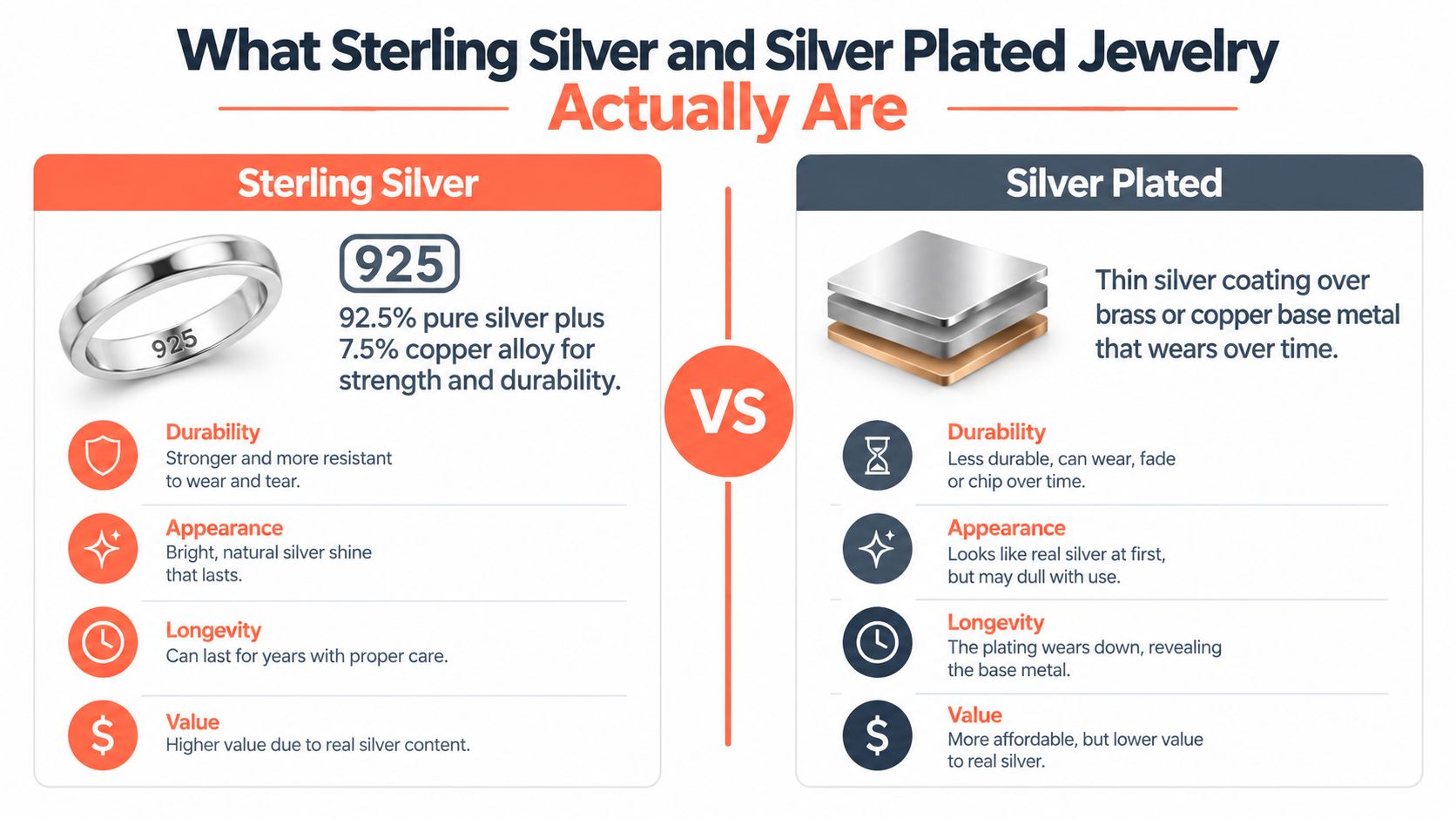
What Sterling Silver and Silver Plated Jewelry Actually Are
Before you buy, label the category correctly. If your product card, sales staff, or packaging blurs the difference between sterling and plated, you create return risk before the item even sells.
| Criteria | Sterling Silver | Silver Plated |
|---|---|---|
| Material structure | Solid alloy throughout | Base metal with silver on the surface |
| Silver content | 92.5% silver mixed with other metals for strength, based on the long-standing sterling standard history | Surface silver only, with plating thickness described as about 0.1 to 2.5 microns in this material comparison from JewelTrendPro |
| Identification | Often marked 925 or sterling | Labeled silver plated, plated brass, or plated alloy |
| Retail meaning | Precious metal category | Fashion finish category |
| Best inventory use | Core assortment and repeatable staples | Trend-led, price-driven styles |
What Sterling Silver Means in Retail Terms
Sterling silver is not a coating. It is the metal itself, all the way through. That matters at the counter and in your margins.
The standard is straightforward. Sterling is 92.5% silver, with the balance added for strength. For a boutique owner, that puts sterling in the sell-with-confidence bucket: better perceived value, clearer resale logic, and fewer arguments when a customer asks whether the piece is "real silver."
What Silver-Plated Means
Silver-plated jewelry starts with a base metal, then gets a thin layer of silver on top. The silver look is the selling feature. The base metal underneath is still doing the structural work.
For sourcing, treat plated jewelry as a finish-driven product, not a precious metal product. That affects how you price it, how you merchandise it, and how long you should expect it to satisfy the customer without complaints.
How to Read Wholesale Listings Without Getting Burned
Use plain rules.
- Sterling silver or 925 means the piece belongs in your better basics, gifting, and longer-wear assortment.
- Silver plated means you are buying look first, longevity second.
- Base metal details matter on plated items. Ask whether the core is brass, copper, or alloy, because that affects skin tolerance, wear pattern, and customer satisfaction.
- Sell the category transparently. If a plated item is merchandised beside sterling without clear labeling, customers assume more than they paid for.
For JewelryBuyDirect buyers, the distinction is simple. Sterling supports trust and repeat purchase. Silver-plated supports trend coverage and opening price points. Stock both if you want, but do not present them as interchangeable.
Durability Appearance and Everyday Wear Compared
A customer buys a silver-tone chain on Saturday, wears it hard for two weeks, then comes back pointing at the clasp and the spots where the color already changed. That return eats margin fast. Durability is not an abstract material question for a boutique owner. It is a sell-through, return-rate, and reputation question.
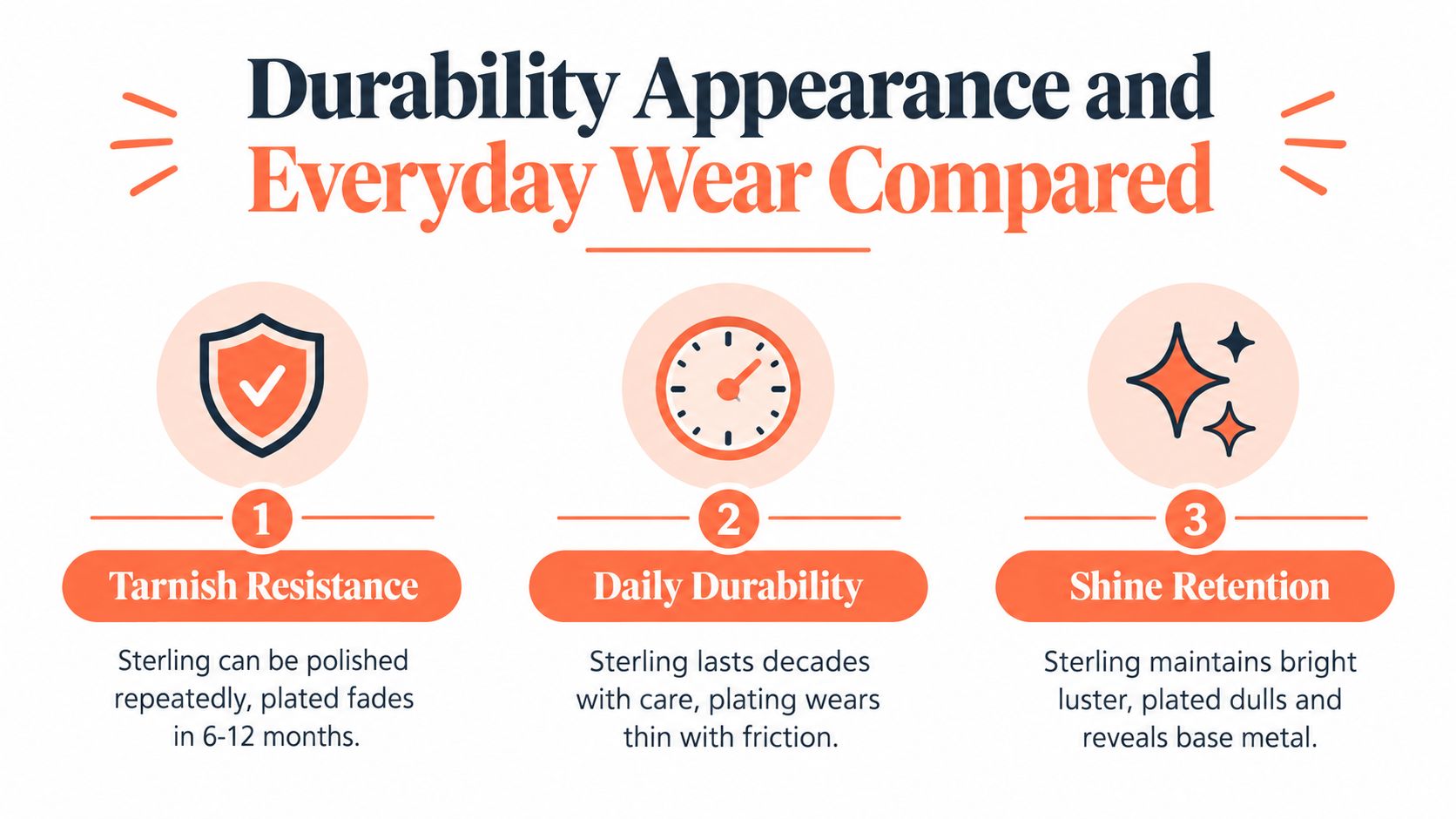
| Criteria | Sterling Silver | Silver Plated |
|---|---|---|
| Daily wear lifespan | Built for repeat wear and can stay saleable for years if the customer polishes it | Best for short-cycle wear. Daily use usually exposes wear much sooner |
| Tarnish and wear behavior | Tarnishes on the surface but the underlying metal is still silver, so appearance can usually be restored | The silver finish wears down. Once the plating breaks, the base metal changes the whole look |
| First weak points | Surface dullness, light scratching | Clasps, ring shanks, earring posts, edges |
| Best use | Everyday staples, gifting, better basics | Trend pieces, occasion styles, opening price points |
What actually holds up in a retail setting
Sterling silver ages better because the material and the finish are the same thing. If it dulls, the customer can polish it and keep wearing it. Silver-plated jewelry depends on a thin outer layer staying intact. Once friction, sweat, perfume, and storage wear that layer down, the piece stops reading as silver.
That difference should shape your assortment.
A practical comparison from this daily wear benchmark for sterling and plated jewelry lines up with what stores see at the counter. Sterling belongs in daily-wear categories. Plated belongs in fashion categories with a shorter life expectancy.
One source on silver care and identification also notes that plated pieces lose visual appeal faster because wear happens at the surface, while solid silver pieces can often recover with cleaning and polishing, as explained in this sterling silver vs silver plated overview.
Stocking rule: Tarnish on sterling is a care issue. Wear-through on plated jewelry is the end of the finish.
That is why plated chains and plated rings create more complaints than plated statement earrings. The contact points are harsher, the friction is constant, and customers notice failure early.
Where plated jewelry starts to look cheap
Do not judge durability from the front-facing product photo. Check the friction zones first.
Clasps, ring shanks, earring posts, jump rings, and pendant bails usually show the earliest wear. A plated item can still look fine in the center while the hardware already gives away the base metal underneath. Customers spot that fast, especially on pieces they touch every day.
A quick visual walkthrough helps:
What to stock if you want fewer complaints and better turns
Use sterling for categories where repeat wear is the whole point:
- Chains and everyday necklaces: These get skin contact, sweat, and constant movement.
- Hoops and studs: Customers expect these to stay presentable with frequent use.
- Rings: Shanks rub against everything. Plating fails here early.
- Giftable basics: Buyers expect a longer usable life and better resale perception.
Use plated for categories where look matters more than lifespan:
- Large statement pieces: High visual impact, lower material cost.
- Seasonal fashion drops: Good for trend testing without tying up cash in precious metal.
- Event jewelry: Suitable for one-off wear, photos, and short styling cycles.
For staff training, keep one simple explanation ready. Sterling may darken, but it can usually be cleaned and sold with confidence as a longer-wear item. Plated pieces need clearer expectation-setting. JewelryBuyDirect's guide on how sterling silver tarnish affects maintenance and wear expectations is useful for that.
Hypoallergenic Properties and Skin Sensitivity Realities
Shoppers ask this constantly, and most stores answer it badly. They hear “sterling silver” and assume safe. They hear “silver plated” and assume risky. Real life is messier.
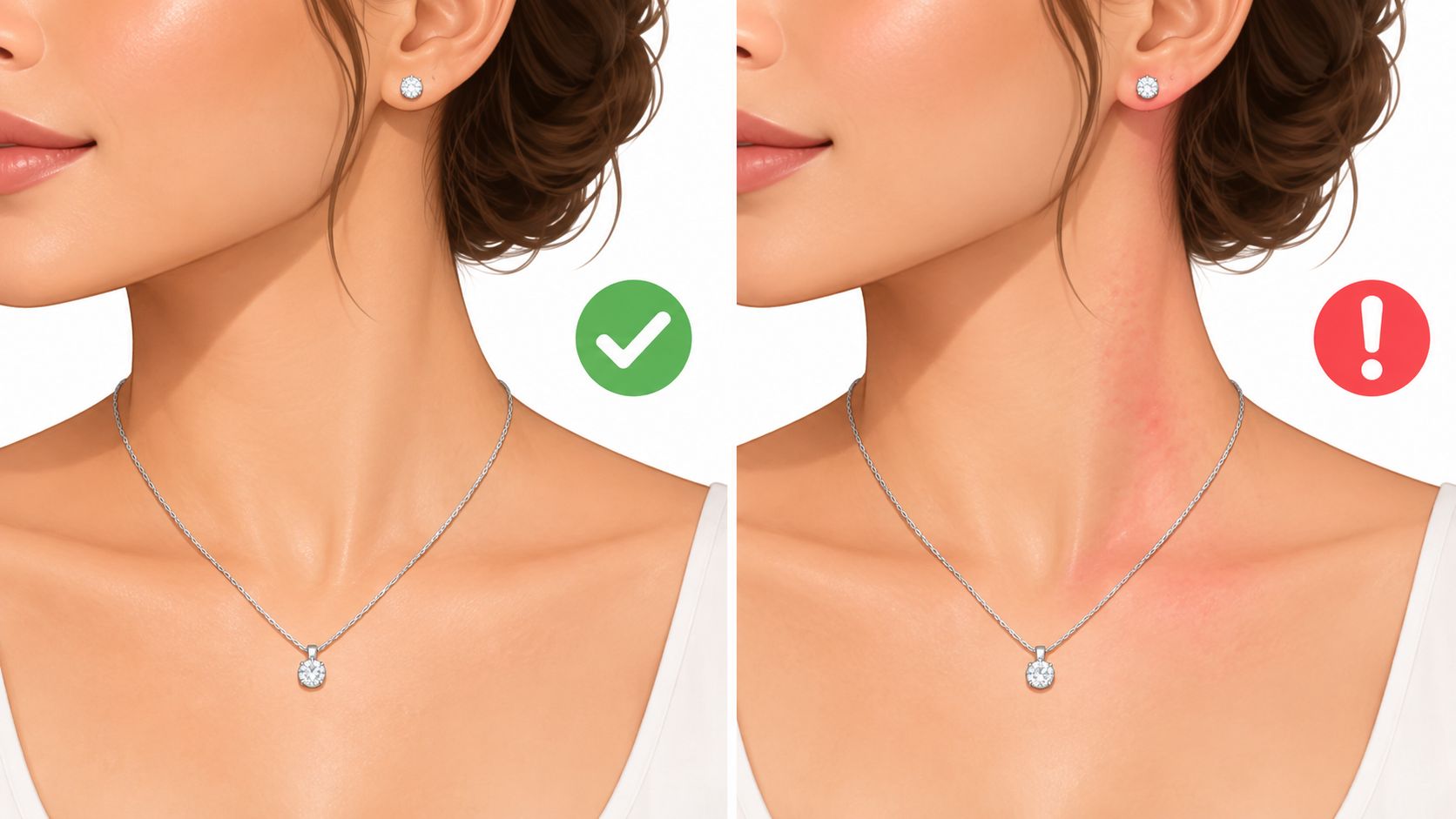
The useful answer is this: neither category is automatically hypoallergenic. Skin reaction usually comes from what's mixed into the metal, what's underneath the finish, or what happens after sweat and humidity get involved.
Where reactions usually come from
Independent jewelry guidance notes that reactions are often caused by trace impurities, counterfeit alloys, or copper oxidation rather than silver itself, and that genuine 925 sterling can still irritate some wearers in humid or high-sweat conditions because the copper alloy can oxidize and leave residue on skin, as discussed in this sensitive skin sterling silver guide.
That gives you a cleaner way to advise customers. Don't promise “hypoallergenic” unless you know the full material spec. Promise honesty instead.
What this means at the counter
A customer with sensitive skin usually cares about contact time. That matters more than category labels.
If they plan to wear a necklace all day, sleep in studs, or keep a bracelet on through heat and sweat, sterling is the safer retail recommendation because the structure is stable. But that doesn't mean zero risk. Copper oxidation can still bother some people.
If they're buying plated, position it as occasional wear unless you know the base metal and the customer understands the trade-off. Once plating wears down, the base metal has more chance to contact skin directly.
For longer skin contact, I'd rather sell a verified sterling piece than a plated item with unknown core metal.
How to reduce irritation complaints
Train staff to ask better questions:
- How often will you wear it? Daily-wear pieces need better metal quality.
- Do you sweat a lot in jewelry? Heat and humidity make reactions more likely.
- Is it for ears, neck, wrist, or hands? Pierced and high-contact areas deserve stricter standards.
And be careful with merchandising language. “Sensitive skin friendly” is better handled as a conversation than a printed promise unless your sourcing specs are airtight.
Price Value and Resale Potential for Retailers
Some boutique owners talk themselves into the wrong inventory. They focus on unit cost and ignore value structure. Cheap stock feels safe until you start discounting it, replacing it, or apologizing for it.
What the price gap tells you
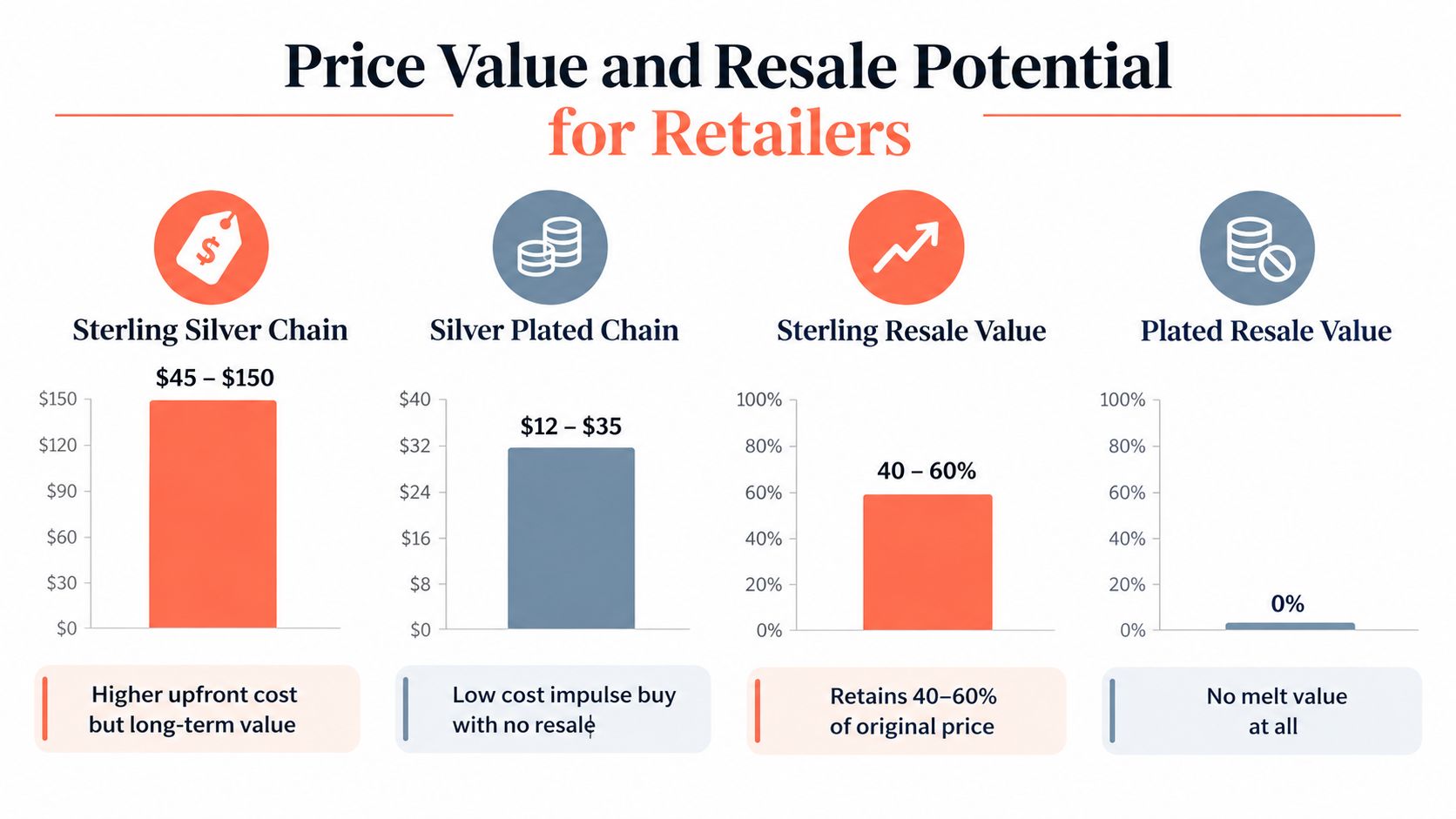
One source summarizes sterling silver chains at roughly $85 to $220 and silver-plated chains at about $12 to $48, reflecting the higher precious-metal content and production cost of sterling compared with plated alternatives, according to this pricing comparison for sterling and plated chains.
That gap isn't just about affordability. It tells you what category each product belongs in.
Sterling sits in a value-based sale. You can justify a stronger ticket because the customer is buying actual silver content and a more durable piece. Plated sits in an appearance-based sale. The value pitch is style access at a lower commitment.
How I'd position each category in a store
Use sterling when you want to support:
- Core replenishment: Clean hoops, chains, stack rings, simple pendants.
- Giftable merchandising: Customers pay more comfortably when they understand the metal.
- Longer tail sales: Sterling keeps earning after the trend spike is over.
Use plated when you want to support:
- Impulse tables: Fast yes decisions.
- Trend experiments: Test shape, motif, and styling direction cheaply.
- Content-driven drops: Social commerce often rewards visual novelty over material permanence.
Resale and perceived value
Sterling also wins on resale logic because it's a recognized precious-metal alloy. Silver plated generally doesn't hold the same downstream value because the silver is only on the surface. That matters if your customer shops with “investment” thinking, gifting intent, or resale in mind.
Market context also matters. Current market coverage says silver jewelry demand is being driven by affordable-luxury shopping, personalization, sustainability, mixed metals, and fast-growing online sales channels, with one 2025 projection calling online distribution the fastest-growing segment and another projecting a global silver-jewelry CAGR around 3.0% from 2025 to 2035, according to this silver jewelry market outlook. For boutiques, that reinforces a simple commercial split: plated fits shorter fashion cycles, while sterling fits repeat wear and longer-term customer value.
Don't sell plated as a cheaper sterling alternative. Sell it as short-cycle fashion. Customers understand that framing and complain less.
Care Maintenance and How Long Each Finish Lasts
A return usually starts with a bad expectation, not a bad product. If you stock silver, your staff needs to explain care in plain retail terms at checkout. Sterling needs occasional maintenance and usually recovers well. Plated pieces need gentler handling from day one because once that surface wears through, the finish is gone.
Sterling care is active but forgiving
Sterling gives you more room to work with after the sale. It will tarnish. That is normal. A soft polishing cloth, proper storage, and routine cleaning usually bring it back without much drama.
That matters for boutiques because a customer who sees sterling clean up well is far less likely to treat normal wear as a defect. It also makes sterling easier to stand behind in staple categories such as hoops, chains, rings, and daily-wear studs.
Plated care needs restraint
Silver plated jewelry needs a different script. Friction, moisture, perfume, and rough polishing shorten its good-looking phase fast. The finish is only on the surface, so aggressive cleaning does not restore it. It removes more of what the customer paid to see.
Put these instructions on the tag, receipt, or care card:
- Keep it dry
- Wipe after wear with a soft cloth
- Store it separately to reduce rubbing
- Skip abrasive polish and harsh cleaners
If you want a customer-friendly reference, send them to this guide on caring for gold and silver electroplated jewelry.
How long each finish lasts in real retail terms
Sterling usually wins on service life because the metal runs through the piece, not just across the top. Plated jewelry can still sell well, but its lifespan depends heavily on wear habits, storage, body chemistry, and how thin the plating is.
Use that reality in your assortment strategy. Put sterling in categories where customers expect repeat wear and longevity. Keep plated in fashion-led styles where trend appeal matters more than years of use.
Replating should be disclosed, not hidden
Some plated items can be replated, but that is a paid repair step, not routine care. For lower-ticket fashion jewelry, the service cost often makes less sense than replacing the item. Say that clearly before the sale.
That one conversation protects margin. It cuts avoidable complaints, reduces unrealistic care expectations, and helps your store sell plated jewelry for what it is: short-cycle style with a shorter finish life than sterling.
Choosing the Right Option and Sourcing Smarter with JewelryBuyDirect
If you want my blunt buying advice, here it is. Don't argue over which material is “better.” Buy according to how the customer will use the piece and how your store makes money from it.
What to stock when
Choose sterling silver for:
- Everyday staples: hoops, chains, stackers, studs, minimalist pendants
- Bridal and gifting: customers expect stronger value perception
- Higher-trust categories: rings and earrings that stay on the body longer
- Refillable basics: pieces you can reorder without explaining quality every time
Choose silver plated for:
- Fast-fashion drops: trend motifs, oversized statements, seasonal looks
- TikTok and social-selling assortments: visual impact first
- Price-led entry tables: customers trying a look without commitment
- Short shelf-life trends: styles you won't still want six months later
How I'd build the assortment
A smart boutique mix usually isn't all sterling or all plated. It's layered.
Keep sterling in the foundation. That's where trust lives. Then use plated to widen style choice and lower entry points without forcing every customer into a higher ticket. The mistake is letting plated dominate categories where wear expectations are naturally high.
If you're evaluating wholesale options, JewelryBuyDirect's wholesale 925 sterling silver jewelry guide is relevant because the platform carries 120,000+ SKUs, includes both 925 sterling and plated options, adds 100+ new arrivals daily, offers no minimum order, and publishes product imagery with a 383:204 cover image ratio that fits merchandising requirements. For boutiques sourcing high quality and affordable jewelry and fashion accessories for business, that combination makes it easier to split your buy between core silver staples and trend-led fashion pieces. Factory-direct pricing is listed at 15 to 30% below market averages, and retailer support includes free worldwide shipping on $150+ orders plus 7-day returns, based on the publisher information provided.
My final recommendation
If a piece is meant to stay in the customer's life, stock sterling. If it's meant to serve a look, test a trend, or hit an entry price, stock plated. That's the cleanest way to protect margin and customer trust at the same time.
A store with discipline in this category looks more curated, not more limited. Customers can feel the difference.
If you're balancing everyday sterling staples with plated trend inventory, JewelryBuyDirect gives you both sides of that buy in one wholesale catalog. You can source 925 silver, plated fashion styles, and matching accessories without a minimum order, which makes it easier to test what should sit in your core collection and what should move as short-cycle fashion.