
How to Buy from Wholesalers: Sourcing Quality Jewelry
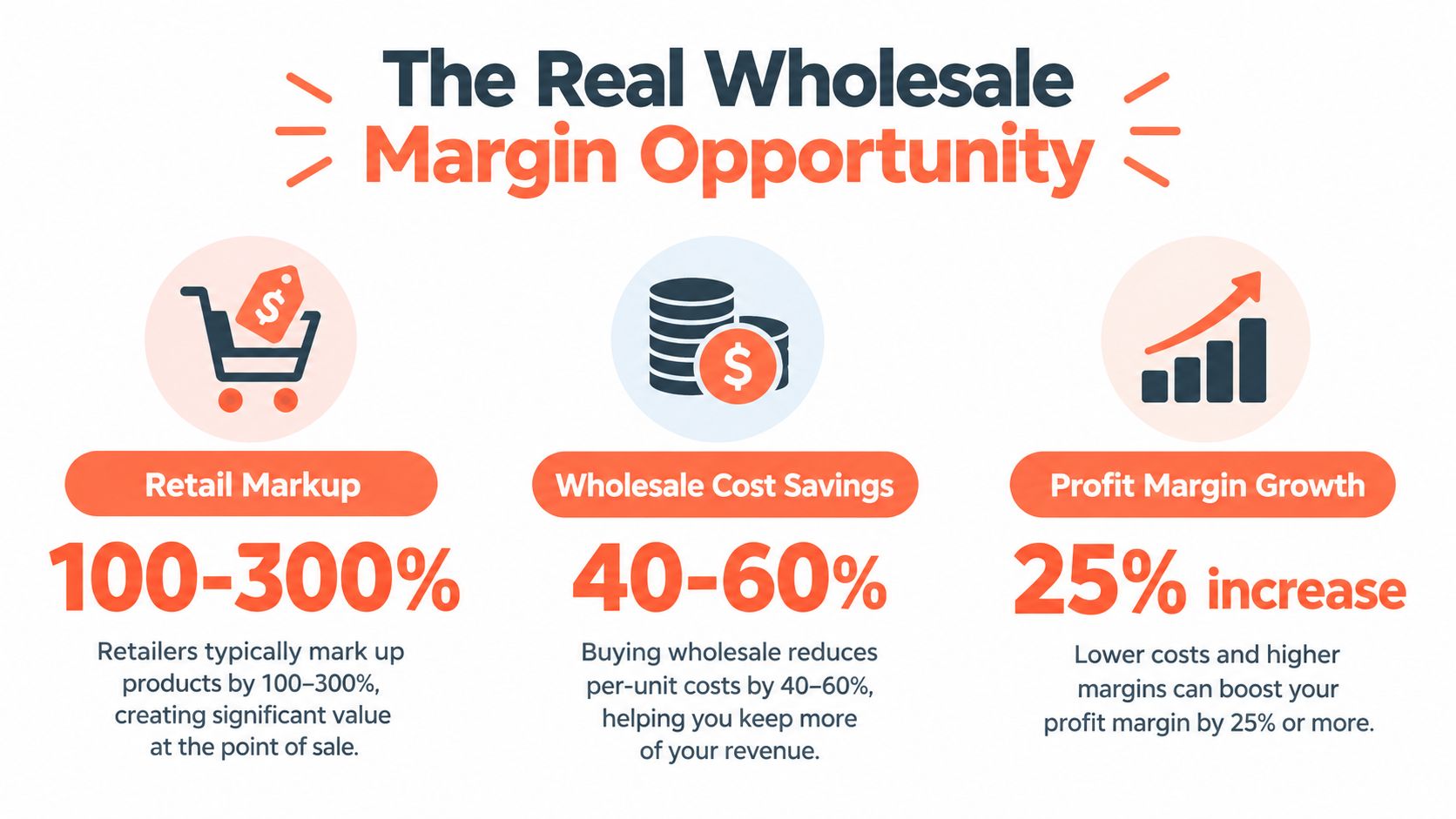
Wholesale fashion accessories are typically priced 40% to 70% below retail, creating the margin opportunity that makes wholesale sourcing attractive for jewelry and accessory businesses. To buy profitably, choose suppliers through reliable channels, validate materials with documentation, and calculate landed cost before you commit to volume.
The discount is only the starting point. A low unit price can disappear under freight, duties, damaged goods, slow replenishment, inaccurate stock records, and returns. The buyers who stay profitable treat wholesale purchasing as a supply-chain discipline, not a hunt for the cheapest catalog.
The Real Wholesale Margin Opportunity
The wholesale model works because the buyer creates a gap between acquisition cost and selling price. A buyer guide places typical wholesale fashion accessory pricing 40% to 70% below retail, although the actual margin depends on product quality, brand position, selling channel, shipping, returns, and the price customers will accept. This wholesale accessories guide also recommends comparing samples from multiple suppliers before scaling an order.
That range gives a boutique room to pay for packaging, payment processing, fulfillment, marketing, and occasional defects. It doesn't guarantee profit. A necklace that looks inexpensive on a supplier's price list may become costly once you add international freight, import duties, inspection, storage, and the units that arrive damaged or fail quality checks.
Wholesalers do more than sell at a discount
A wholesaler is also a distribution and logistics manager. The U.S. Census Bureau estimated merchant wholesaler sales at $11.3823 trillion in 2022, up from $9.6934 trillion in 2021, and reported $801.3 billion in sales in July 2026, up 13.0% year over year. Its monthly reporting tracks sales, inventories, and inventory-to-sales ratios, which businesses use for planning and economic analysis. The Census Bureau's wholesale trade report shows the scale of the system that moves products from producers toward retailers.
That scale matters to a small jewelry business. A dependable wholesaler can consolidate assortments, hold stock, coordinate transport, and make repeat ordering easier than dealing with multiple factories independently. A poor one transfers those problems to you through inconsistent specifications, partial shipments, and vague answers about replacements.
Research on U.S. manufacturing distribution found that wholesalers handled 47.4% of manufactured-goods distribution to downstream users in 2012, compared with 31.7% in 1992. The same research reported that wholesalers made 54.2% of sales within the same state, compared with 32.3% for manufacturers, which helps explain their value for regional sourcing and replenishment. The modern wholesaler research provides useful context for judging a supplier by service capability, not just price.
Before negotiating, model your target selling price, acceptable landed cost, defect allowance, and reorder timing. A wholesale profit margin calculator can help organize that analysis, but the inputs still need to reflect real freight, duties, packaging, and returns.
Finding Reliable Suppliers Through Modern Channels
The practical answer to how to buy from wholesalers starts with a supplier pipeline, not a single search result. Look through local commerce centers, online wholesale sites, specialist jewelry platforms, and B2B marketplaces. Digital catalogs make comparison faster, but convenience doesn't prove legitimacy or quality.
A useful workflow is:
- Define the assortment. Separate everyday pieces from seasonal fashion, bridal styles, body jewelry, and components. Decide which materials and price bands fit your customers before contacting sellers.
- Shortlist suppliers. Record catalog depth, stated materials, product photos, shipping origin, business credentials, return terms, and response quality.
- Ask for commercial details. Request current pricing, minimum order quantities, sample availability, lead times, packaging options, and the process for damaged goods.
- Place a controlled test order. Buy enough variety to assess finish, sizing, packaging, order accuracy, and delivery performance without exposing the business to an untested large commitment.
- Compare the landed result. The winning supplier is the one that delivers acceptable quality and reliable fulfillment at a workable total cost, not necessarily the one with the lowest listed price.
Use digital channels for speed, not blind trust
Online self-service ordering is especially useful for repeat purchases. A buyer should be able to check available stock, see pricing, submit an order, and obtain tracking without waiting for a sales representative to answer every basic question. That speed becomes valuable when a trend changes quickly or a proven item needs replenishment.
The wholesale channel is also moving toward digital purchasing. Recent industry reporting says 80% of B2B interactions happen through digital channels, while 68% of younger B2B buyers expect transactions without a sales representative. The same source reports that wholesale order-to-ship time fell from 263 days in 2019 to 102 days in 2024. This wholesale distribution trends report frames the operational reason to favor suppliers with accurate online inventory and self-service reordering.
Don't confuse a polished marketplace profile with a verified supplier. Understanding the difference between vendors and suppliers helps clarify the relationship. A vendor may only sell products to you, while a supplier relationship usually involves recurring availability, specifications, fulfillment obligations, and operational communication.
Make the first order a validation run
Samples are more useful when you test them against a written checklist. Inspect clasp strength, symmetry, soldering, stone settings, plating coverage, earring posts, chain links, packaging, and product dimensions. Photograph the shipment as it arrives, count every SKU, and note discrepancies while the evidence is fresh.
Minimum order quantities can range from the tens to hundreds of units, so ask directly whether the supplier supports samples or small test orders. This guide to wholesale jewelry suppliers can support further supplier research, but no directory replaces your own inspection and landed-cost test.
Verifying Jewelry Quality and Material Safety
A supplier's material description is a claim until you verify it. For jewelry, quality control should cover alloy composition, plating thickness, dimensions, finish consistency, and heavy-metal safety. Product photos can't establish those facts, and a sample that looks good under store lighting may still fail after wear or expose your business to avoidable customer complaints.
Request evidence for the specification
Ask the supplier to identify the base metal, surface treatment, plating material, plating thickness, and applicable safety testing. For higher-quality fashion jewelry, one buying guide recommends at least 2.0 microns of gold or rhodium coating for longevity. Vermeil should have a sterling-silver base, gold of at least 10K fineness, and at least 2.5 microns of gold plating. This jewelry wholesale buying guide explains why plating thickness and nickel content deserve attention before bulk purchasing.
For sterling silver, look for a specification of 925/1000, with the cited guidance allowing a ±5 tolerance. For gold-filled products, verify that the item contains at least 5% gold by weight and that the gold is mechanically bonded, rather than applied as a thin electroplated layer. These distinctions affect durability, customer expectations, and how accurately you can describe the item.
Third-party laboratory reports provide stronger evidence than a supplier's verbal assurance. Reputable facilities such as SGS and Bureau Veritas can test alloy composition, plating thickness, and heavy-metal content. Request reports that match the actual SKU, material, and production specification, rather than accepting an unrelated certificate from another product.
A clear explanation of what hypoallergenic jewelry means also helps your team avoid careless product claims. “Hypoallergenic” isn't a universal material guarantee. Confirm nickel and other relevant content through documentation, then use product descriptions that match the evidence.
Inspect samples like a buyer, not a browser
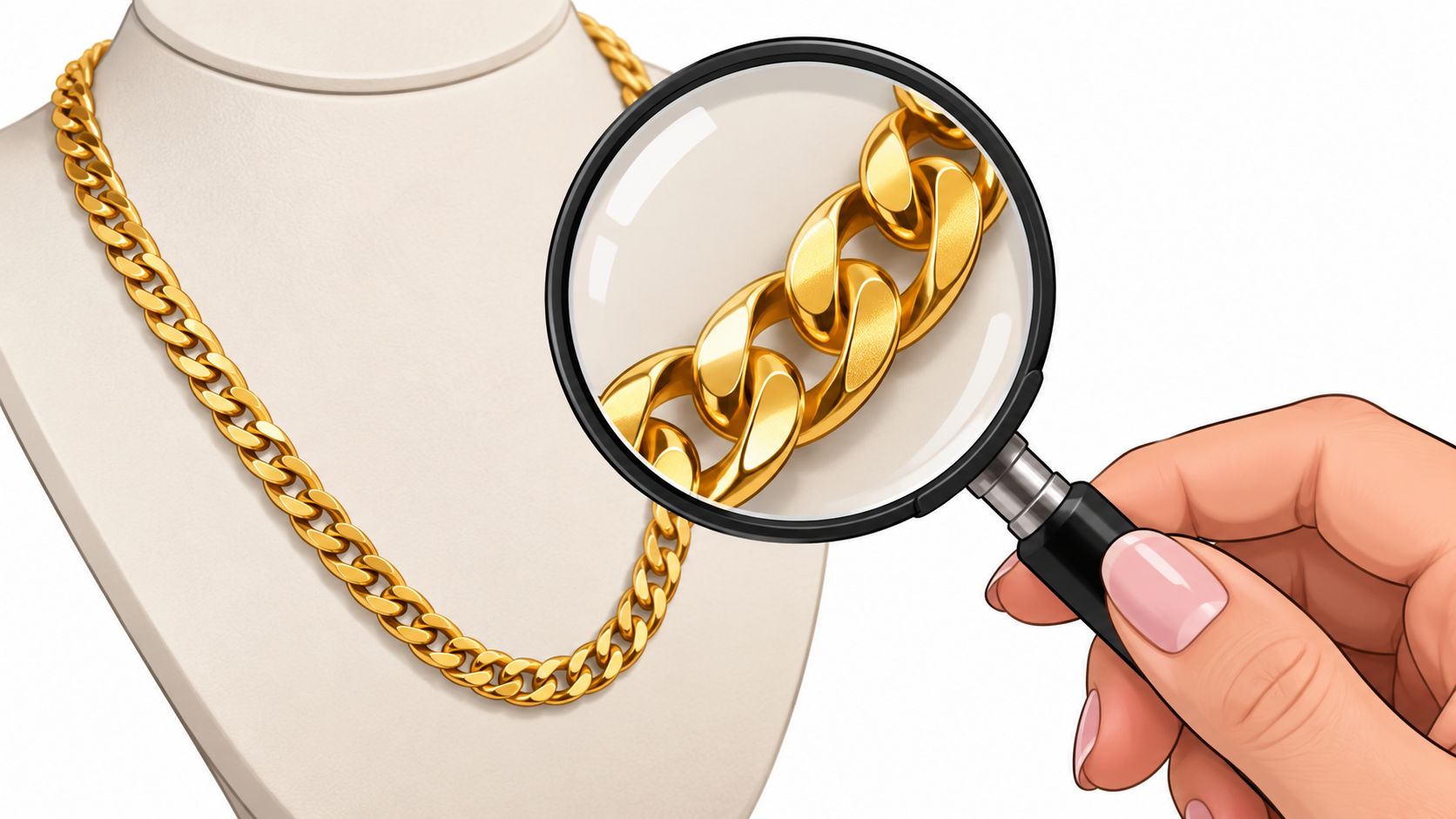
Use calipers or a micrometer where dimensions matter, weigh representative pieces, and compare the sample against the listing. Check whether plating reaches edges and recessed areas, whether stones sit securely, and whether posts, clasps, and jump rings operate smoothly. For chains, inspect links at several points instead of checking only the display-facing section.
The following video can supplement a written inspection process, but it shouldn't replace supplier-specific reports or physical testing.
Keep a retained sample from every material or finish that you approve. If a later shipment changes color, thickness, or construction, you can compare it against the approved reference before putting the stock on sale.
Choosing Between Dropshipping and Bulk Buying
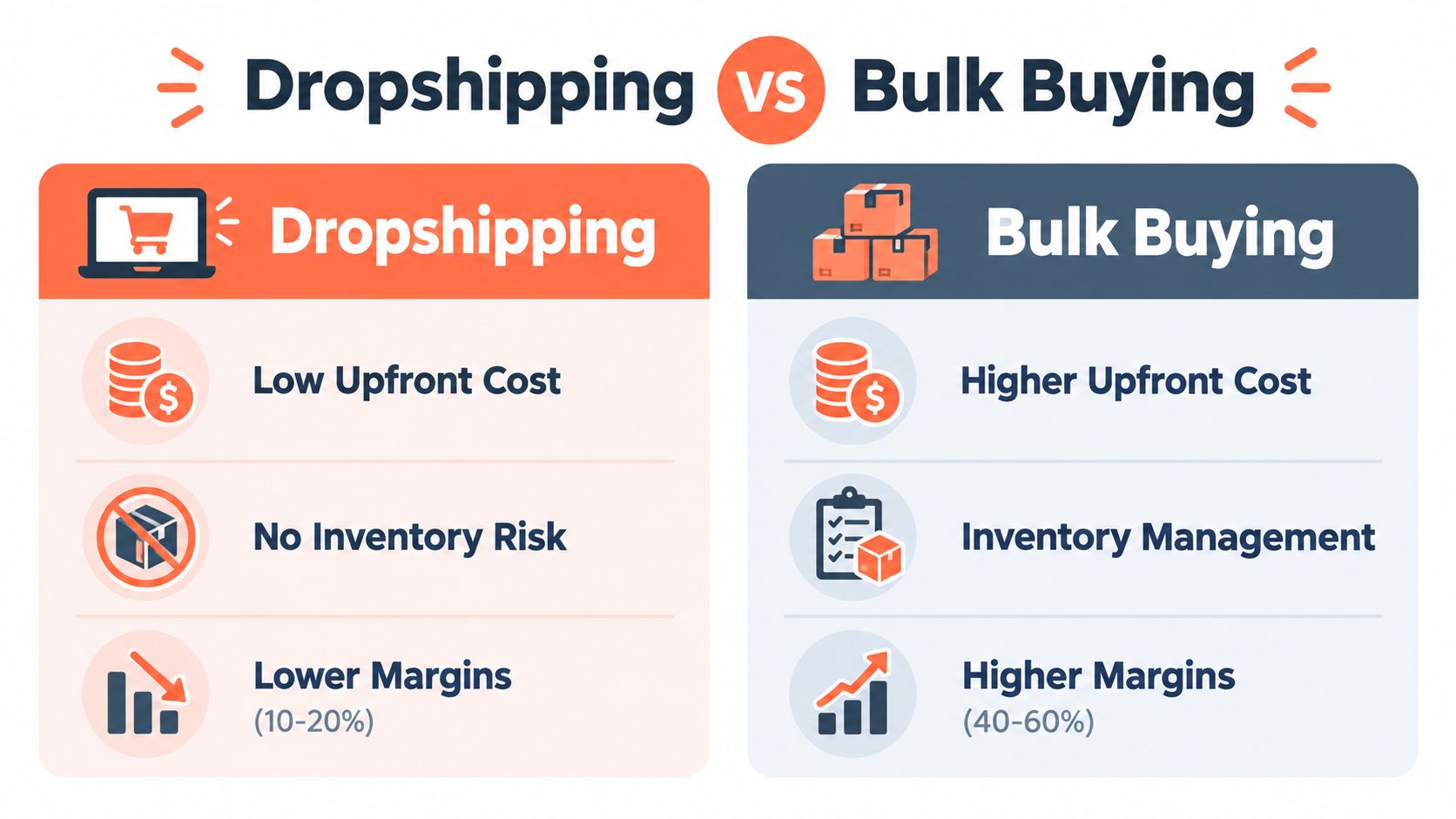
Dropshipping and bulk buying solve different operational problems. Dropshipping minimizes the need to hold inventory, while bulk buying gives you control over the product before it reaches the customer. The right choice depends on cash flow, demand confidence, storage, customization, and how much of the customer experience you want to own.
Dropshipping favors testing and breadth
With dropshipping, the supplier stores and ships the item after your customer places an order. You avoid committing cash to every SKU, which can make it easier to test styles, colors, and price points. The trade-off is control. You may not inspect each piece, customize packaging, combine products in one branded shipment, or resolve a supplier's fulfillment error before the customer sees it.
Dropshipping also requires careful confirmation of inventory synchronization. If the catalog says an item is available but the supplier's warehouse is empty, your store may accept an order you can't fulfill. Ask how stock updates work, how returns are handled, whether tracking is issued promptly, and what happens when an item is discontinued.
Bulk buying favors control and repeatability
Buying wholesale inventory gives you possession of the goods before sale. That lets you inspect pieces, photograph them yourself, add branded packaging, bundle complementary accessories, and choose the shipping method. It can also improve delivery speed when the stock is already near your customers.
The cost is exposure. Your cash is tied up in inventory, and slow-moving designs can consume shelf space or require markdowns. Jewelry trends change, so a bulk order should reflect actual demand signals, not excitement generated by a supplier's catalog.
| Decision factor | Dropshipping | Bulk buying |
|---|---|---|
| Upfront cash | Lower commitment per SKU | Larger commitment before sale |
| Quality control | Mostly dependent on supplier | Direct inspection is possible |
| Packaging | Often limited to supplier options | Brand-controlled packaging is possible |
| Fulfillment | Supplier ships to the customer | You or a fulfillment partner ships |
| Best fit | Broad testing and low inventory exposure | Proven products and repeat demand |
A hybrid model often works well. Use dropshipping or samples to test uncertain designs, then move proven styles into controlled stock once the quality, sell-through, and landed cost make sense. Do not choose bulk just because the unit price is lower. Choose it when the extra control and margin justify the inventory risk.
Calculating Landed Costs and Managing Risk
A supplier's unit price is only one input. Landed cost is what it takes to place one sellable unit in your operation, including the product, freight, duties, tariffs, applicable insurance, payment fees, inspection, packaging, and an allowance for damage or returns.
Calculate it before approving a purchase order:
Landed cost per sellable unit = product cost + freight + duties and tariffs + other import costs + receiving and inspection costs, divided by the units you can sell.
Use sellable units in the denominator. If part of a shipment arrives defective, goes missing, or is delayed because of incorrect documentation, dividing the invoice by the ordered quantity understates the actual cost of every unit available for sale.
Treat tariffs as a margin variable
A 2026 wholesale inventory report found that 39% of trade professionals were absorbing tariff costs instead of passing them through, up from 13% in 2024. The same report found that 58% of businesses operate below an 80% inventory accuracy threshold. The wholesale challenges report illustrates why tariff exposure and stock accuracy belong in the buying calculation, rather than being handled after the order is placed.
Ask which party pays duties, how tariff changes are handled, and whether quoted freight is fixed, estimated, or subject to adjustment. Record those terms in the purchase agreement. A low unit price with unclear import responsibility can produce a high delivered cost.
Currency movements, carrier surcharges, customs delays, and residential delivery fees can change the final figure. Request a complete shipping estimate and preserve the assumptions behind it. Businesses that need to track shipping expenses in Odoo can compare suppliers using recorded shipping and landed-cost data instead of a spreadsheet that captures product price alone.
Build inventory accuracy into the reorder decision
Count every unit at receiving, reconcile damaged pieces, and record stock adjustments immediately. Set reorder points from verified available units and actual lead times, not the supplier's catalog balance. If a supplier regularly delivers late, increase the stock buffer to reflect that exposure or reduce reliance on the SKU.
Keep purchase records tied to the physical count. A mismatch between ordered, received, damaged, and available units can make a product appear profitable while quietly reducing its margin.
Before placing a large order, confirm the return window, damage-claim deadline, replacement process, payment terms, and shipping responsibility. These conditions protect cash flow when the shipment fails to match the agreement. They also show whether the quoted margin can survive ordinary problems, rather than only working under perfect delivery conditions.
Building a Sustainable Wholesale Relationship
A good supplier relationship is built through repeatable behavior on both sides. You communicate clearly, pay according to the agreed terms, provide evidence when a shipment is wrong, and share useful feedback about quality and demand. The supplier responds with accurate information, consistent specifications, and a practical remedy when problems occur.
Start with a small validation order. Measure order accuracy, response time, packaging, delivery condition, and the handling of damaged pieces. Keep the results in a supplier record so future decisions rely on performance rather than memory or a persuasive sales call.
Practical rule: Never negotiate a larger order based only on a lower price. Negotiate after the supplier has proved that the goods, documentation, and fulfillment match the agreement.
Negotiate from evidence
Once the supplier has delivered consistently, discuss terms that improve the entire operation. These might include better pricing at a sensible volume, priority allocation for fast-moving styles, consolidated shipments, replacement procedures, packaging changes, or more flexible reorder quantities. Ask for changes that reduce your real cost, not concessions that look attractive but create more operational work.
Give the supplier precise feedback. “The quality was poor” doesn't help a factory correct production. Explain which clasp failed, where plating was uneven, whether measurements differed from the listing, how many units were affected, and what evidence accompanies the claim.
Supplier diversification still matters. Keep alternatives for important categories, especially when one factory controls a style that drives a meaningful share of sales. At the same time, spreading every order across too many vendors can make quality standards, shipping coordination, and communication harder to manage.
Protect the boutique before you scale
Long-term viability depends on two controls working together. Material verification protects customers and your reputation, while landed-cost discipline protects the cash required to reorder. One without the other creates a fragile business. A product can be technically excellent but unprofitable, or highly profitable on paper but unsafe to sell.
Document approved materials, lab reports, sample comparisons, supplier terms, inspection results, and damage resolutions. That record turns each order into operational knowledge and gives you bargaining power in the next negotiation.
For jewelry and fashion accessories, JewelryBuyDirect offers an online B2B catalog with factory-direct wholesale sourcing, no minimum order quantity, and options for both small test orders and larger purchases. Visit the platform to compare jewelry and accessory assortments, review wholesale pricing, and test a controlled order before building a repeatable buying program.