
Wholesale Baroque Pearls Buying Guide for Boutiques
A boutique buyer sits down to reorder classic round pearl earrings and discovers that the cost leaves almost no room for packaging, marketplace fees, or a healthy retail margin. An Etsy seller faces the same problem from another angle: customers want pearl jewelry with personality, but perfectly matched spheres make every design look familiar and every purchasing decision more expensive.
That's where wholesale baroque pearls become a practical business choice. Their irregular shapes create visual variety, give designers more freedom, and let small retailers build distinctive collections without treating round pearls as the only measure of value. The opportunity isn't that baroque pearls are fashionable. Their supply profile, grading realities, and pricing structure can help buyers manage cost pressure while creating products that feel intentional rather than generic.
This guide approaches baroque pearls as a buyer would. You'll learn what the shape means, how to inspect quality when standard grades become unreliable, how sorting affects wholesale pricing, and which supplier questions protect your margin. You'll also see how to turn unusual shapes into sellable bracelets, necklaces, earrings, and accessories, then support repeat purchases through appropriate care guidance.
Introduction to Wholesale Baroque Pearls for Growing Jewelry Businesses
A small jewelry business usually doesn't lose money because the owner can't find attractive products. It loses money because attractive products arrive with hidden costs. A round pearl may need close matching, careful sorting, and a higher purchase price before it ever becomes an earring or necklace. If the finished piece looks similar to dozens of competing listings, the retailer has little room to charge more.
Baroque pearls change that equation. Each irregular pearl can act like a small design feature, not merely a lower-priced substitute for a sphere. A curved freshwater pearl can become the focal point of a pendant, while a group of related but non-identical shapes can give a bracelet a handmade appearance without requiring a fully custom production process.
For a boutique, this creates a useful middle ground. You can offer a pearl collection with accessible pricing and visible character, rather than choosing between expensive classic styles and low-cost products that look interchangeable. For an online seller, the natural variation also gives you a stronger merchandising story. Customers can understand why two pieces look slightly different, provided the product photographs and descriptions explain that individuality clearly.
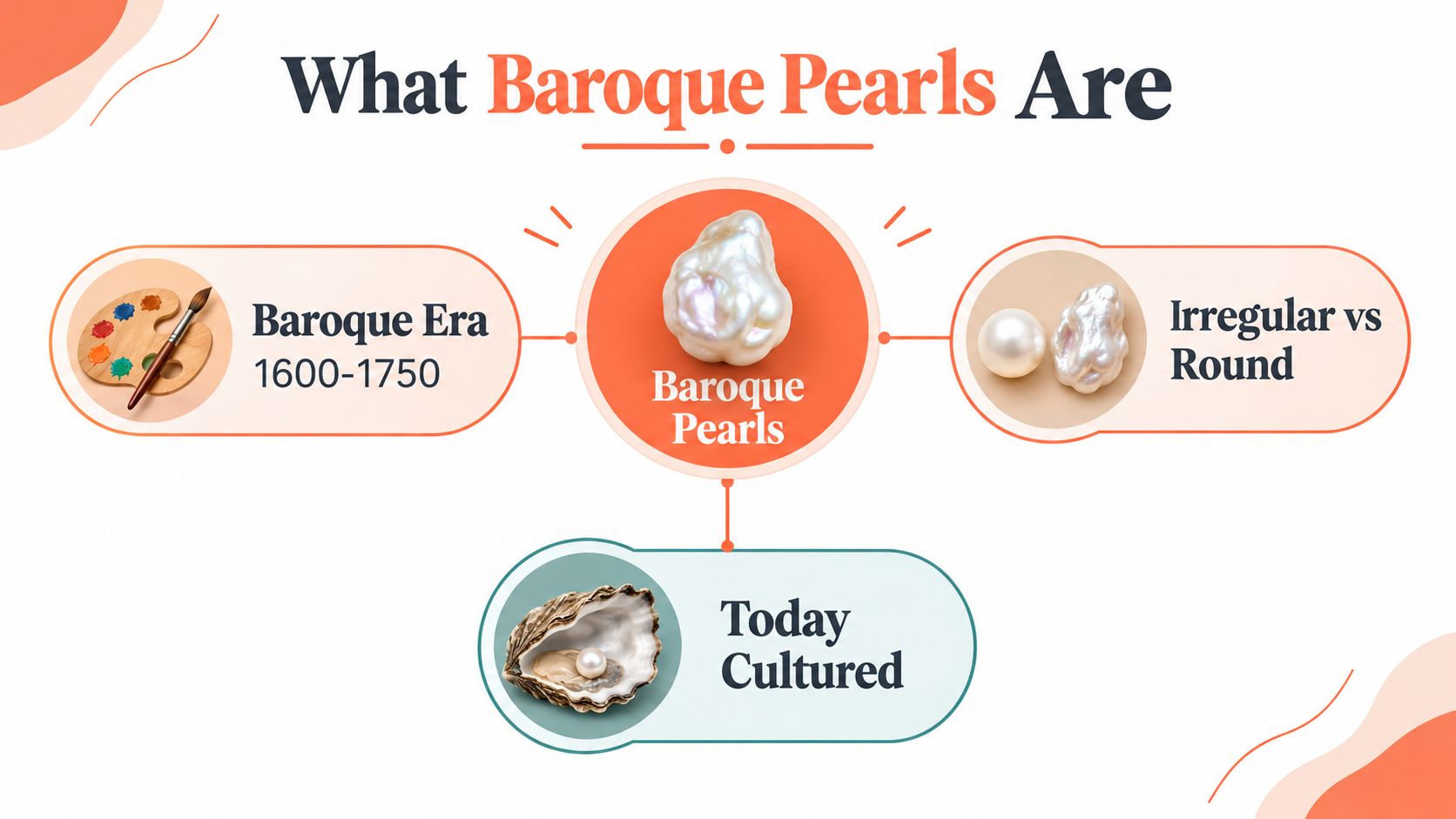
The commercial case has historical depth. Baroque pearls have been used in jewelry since the Baroque Era, 1600–1750, and irregular forms remain part of modern cultured-pearl supply. A buyer who treats them as a temporary novelty may miss their role as a recurring category.
The most important shift is mental: don't ask whether a baroque pearl is “perfect.” Ask whether it has the right luster, surface, color, size, nacre, and shape for the product you plan to sell. That approach turns an uncertain-looking lot into an assortment you can evaluate, price, photograph, and reorder with confidence.
What Baroque Pearls Are and Why They Dominate Modern Supply
The word baroque connects these pearls with the Baroque Era, 1600–1750, when irregular pearl forms appeared in jewelry and decorative arts. The name points to an aesthetic tradition that valued movement, ornament, and dramatic form. It doesn't mean that every baroque pearl belongs to one historical style, but it does explain why asymmetry has long had a place in jewelry.
Start with a simple comparison. A round pearl is like a marble. Buyers can compare its symmetry from several directions, match it with another pearl, and place it neatly into a conventional strand. A baroque pearl is more like a snowflake or a piece of naturally shaped stone. It may have bends, flattened areas, ridges, drops, rings, or soft organic contours. Those features affect how it hangs, reflects light, and works with a setting.
The useful distinction: irregular does not mean unusable. It means the buyer has to evaluate the pearl for its intended design.
Why irregular forms are common
Cultured pearl production doesn't produce only identical round shapes. The growing environment, the mollusk, and the formation of nacre all influence the final outline. As a result, baroque and semi-baroque pearls can represent a substantial portion of a farm's harvest rather than an unusual exception.
Most Tahitian pearl farm harvests produce more than 40% baroque and semi-baroque pearls, according to the Journal of Early Modern History discussion of pearl culture and trade. Freshwater baroque cultured pearls from China have also become widely available and influential in designer jewelry markets, giving wholesalers and small brands a broad source of organic-looking material.
That supply matters for business planning. A retailer isn't buying a rare accident every time they select a baroque lot. They're choosing a category that farms regularly produce and that designers can use in many ways. You can explore the design language further through this guide to baroque pearl jewelry.
Treat the shape as part of the product identity. A pearl with a strong ridge may suit a sculptural pendant. A smooth drop may work better in an earring. A flatter pearl can sit comfortably against the wrist or become a subtle centerpiece in a mixed-material bracelet. The buyer's job is to match the form to the design, not force every pearl into a round-pearl standard.
How to Evaluate Baroque Pearl Quality Without Standard Grades
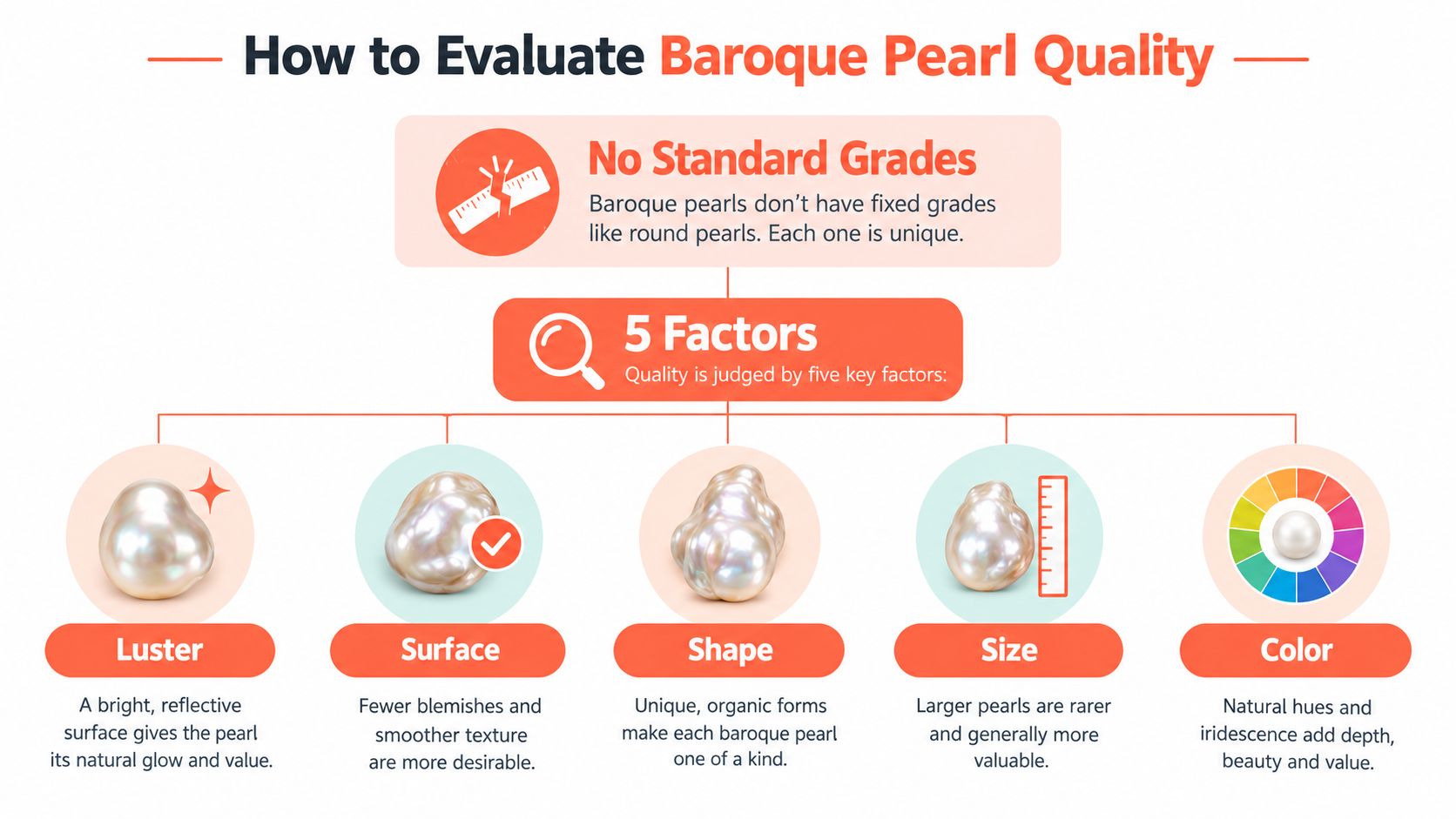
The familiar AAA, AA, and A labels don't translate cleanly to irregular pearls. Baroque forms lack a universal grading convention, so a supplier's grade label shouldn't replace your own inspection. A piece marked “AAA” may still differ from another supplier's AAA lot because the label can conceal differences in surface, luster, shape preference, and nacre.
A more reliable method uses five factors. Think of them as a buyer's inspection lens rather than a rigid scorecard.
The five inspection factors
Luster comes first. Rotate the pearl under direct, diffuse, and angled light. Strong luster produces a bright, reflective glow that makes the surface look alive. A beautifully unusual shape won't rescue a dull appearance, especially in a pendant or earring worn close to the face.
Surface condition needs context. Look for pits, chips, cracks, deep marks, and areas that interrupt the nacre. Minor surface variation can be acceptable in a natural-looking design, but damage around a drill hole deserves more attention because it can weaken assembly and create returns.
Size affects the design and the price. Measure consistently, especially when a supplier quotes a range. For earrings, closely related dimensions can help a pair feel deliberate. For a necklace or charm assortment, a broader range may create visual rhythm.
Color should be assessed across the whole lot. Compare pearls under the same lighting and note whether the color is consistent enough for your product plan. A mixed-color lot may be useful for creative assortments, but it shouldn't be sold as a uniform collection.
Nacre quality supports durability and appearance. Inspect whether the surface looks substantial and evenly formed. Nacre quality matters because the pearl's visible finish and long-term appearance depend on the nacre layer, not on shape alone.
The pearl quality guidance for baroque assessment also highlights “hammering” as a surface texture that can belong to the visual assessment rather than count as a defect by default.
A hammering texture isn't automatically a flaw. Decide whether it supports the design, then separate intentional texture from damage.
Turn inspection into a repeatable buyer brief
Before requesting samples, write down what your finished product needs. A minimalist drop earring may prioritize luster, clean drill areas, and compatible sizes. A sculptural necklace may accept more surface variation if the color and overall silhouette are strong.
Use sample photos and videos to confirm the same details you'll inspect in person. Ask the supplier to show the lot under consistent lighting, include a ruler where size matters, and identify whether the images represent the exact lot or a general catalog example. Your QC record should describe visible standards in plain language, not rely on a grade abbreviation alone.
This process prevents a common mistake: paying for a label that doesn't match your customer's buying experience. Your customer sees brightness, shape, finish, and comfort. Your purchase decision should begin with those same qualities.
Wholesale Pricing Benchmarks and How Shape Affects Value
Wholesale pricing becomes easier to understand when you separate material cost from sorting labor. An unsorted lot may have a lower price per kilogram, but you'll need time to separate usable pearls, identify rejects, match related shapes, and decide which pieces belong in premium products. A pre-sorted lot costs more, yet it can shorten production time and reduce uncertainty.
One wholesale breakdown lists unsorted freshwater baroque lots at $200–$280 per kilogram, with 120–150 pieces per kilogram and a mix of 30% AAA, 50% AA, and 20% rejects. Pre-sorted lots are listed at $350–$420 per kilogram, with 100–120 pieces per kilogram and about 95% AAA grade. These figures come from the wholesale baroque pearl pricing breakdown.
| Lot Type | Price per Kilogram | Pieces per Kilogram | Grade Mix |
|---|---|---|---|
| Unsorted | $200–$280 | 120–150 | 30% AAA, 50% AA, 20% rejects |
| Pre-sorted | $350–$420 | 100–120 | About 95% AAA |
The lower-priced option can make sense for a maker with reliable sorting skills and enough labor capacity. The pre-sorted option may suit a boutique that needs consistent production and can't afford to spend staff time inspecting every pearl. The cited sourcing guide says unsorted purchasing can cut costs by 40%–60%, but it also adds sorting labor, so the saving is only real if your team can process the lot efficiently.
Shape creates a different value curve
Baroque pearls also show why auction value and retail value aren't identical. One pearl-market comparison gives an example of a first-grade round pearl selling for $66 per momme, while a first-grade baroque pearl may sell for about $40 per momme. An average first-grade baroque pearl may fall to about $15 per momme, depending on quality and appeal. The same source estimates that roughly 40% of pearls end up baroque, with the share changing from year to year. See the comparison of baroque pearl value by shape.
That discount doesn't automatically mean weak retail potential. It can give a small brand room to spend on better findings, stronger photography, packaging, or a more considered design while keeping the finished piece accessible. A baroque pearl's commercial value depends on how well you present its character, not only on what a round pearl would command.
Margin rule: Compare the total usable output of a lot, not just the supplier's price per kilogram.
For each sample, estimate how many pearls fit your intended products, how many need downgrading, and how much sorting time your team can absorb. This turns a tempting quote into a practical purchasing decision.
Sourcing Checklist and Order Logistics That Protect Your Margin
A low quote can become expensive if the supplier sends inconsistent color, weak drill holes, poor packaging, or a lot that doesn't resemble the sample. Small businesses need a sourcing process that catches those problems before the first large order.
Begin with the supplier's production evidence. Ask whether the pearls are sourced from a consistent farm or pooled from multiple channels, how the supplier separates grades, and whether the factory or manufacturing partner can provide relevant SGS certification. Certification doesn't replace your inspection, but it can help you distinguish a documented production partner from a seller using generic images.
A practical first-order checklist
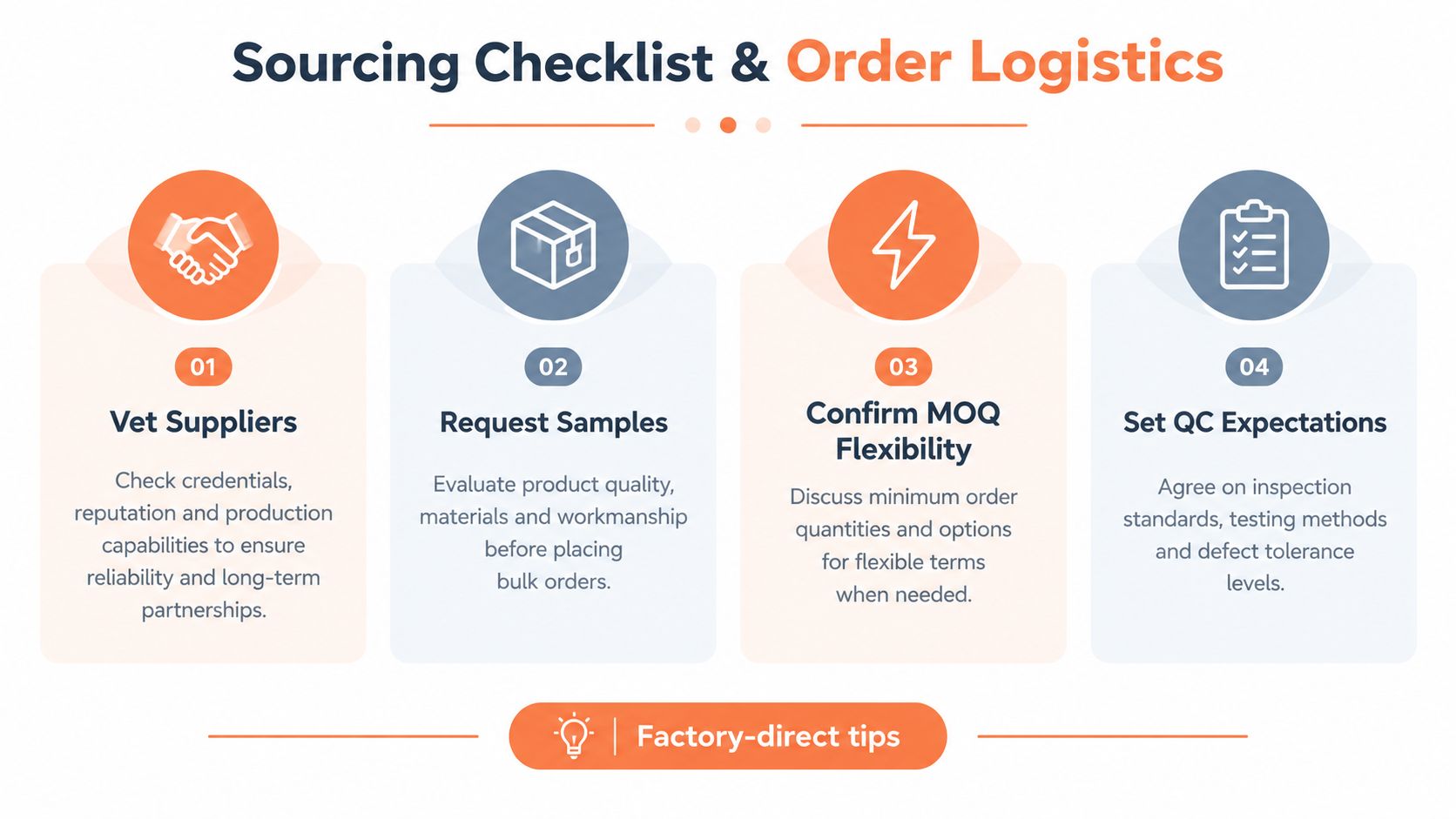
- Vet the supplier. Review product consistency, communication, manufacturing documentation, and the supplier's stated process for sorting and packing. Ask direct questions rather than accepting a broad grade label.
- Request samples. Order representative samples before committing to a repeatable assortment. Compare luster, surface, color, nacre appearance, drill placement, and shape range against the product you intend to make.
- Confirm MOQ flexibility. Small boutiques and dropshippers often need to test demand before carrying depth. A no-MOQ option or a flexible minimum lets you validate a design without tying up cash in an unproven assortment.
- Set QC expectations in writing. Define acceptable variation, reject conditions, color tolerance, size range, packaging requirements, and the process for reporting damage. Include photos from the approved sample when possible.
For delivery, ask whether shipping can be tracked and whether free-shipping thresholds fit your normal reorder pattern. A threshold that works for a large seasonal purchase may not help a shop that replenishes in smaller batches. Packaging should also protect nacre from scratches and prevent strands or loose pearls from rubbing together during transit.
Why supply conditions matter
Recent industry coverage reports that environmental regulation in China has cut freshwater pearl production by about 18%, while Japanese Akoya prices reportedly rose 25%, encouraging buyers to consider higher-grade freshwater baroque alternatives. The same 2026 coverage places high-quality baroque wholesale lots around $30–$100 per 50 grams. Review the industry coverage on raw pearl supply and pricing, and treat those figures as market context rather than a substitute for a current supplier quote.
These shifts strengthen the hedge argument. If a preferred pearl category becomes more expensive, baroque freshwater alternatives can help you preserve product variety and price flexibility. You can also compare broader freshwater sourcing options through this wholesale freshwater pearl resource.
Product Ideas and Merchandising That Sell Baroque Character
Baroque pearls work best when the design gives their silhouette room to speak. A heavy setting or crowded arrangement can hide the very irregularity that makes the pearl interesting. For a small collection, start with a few product roles rather than buying one large mixed lot and hoping a design emerges later.
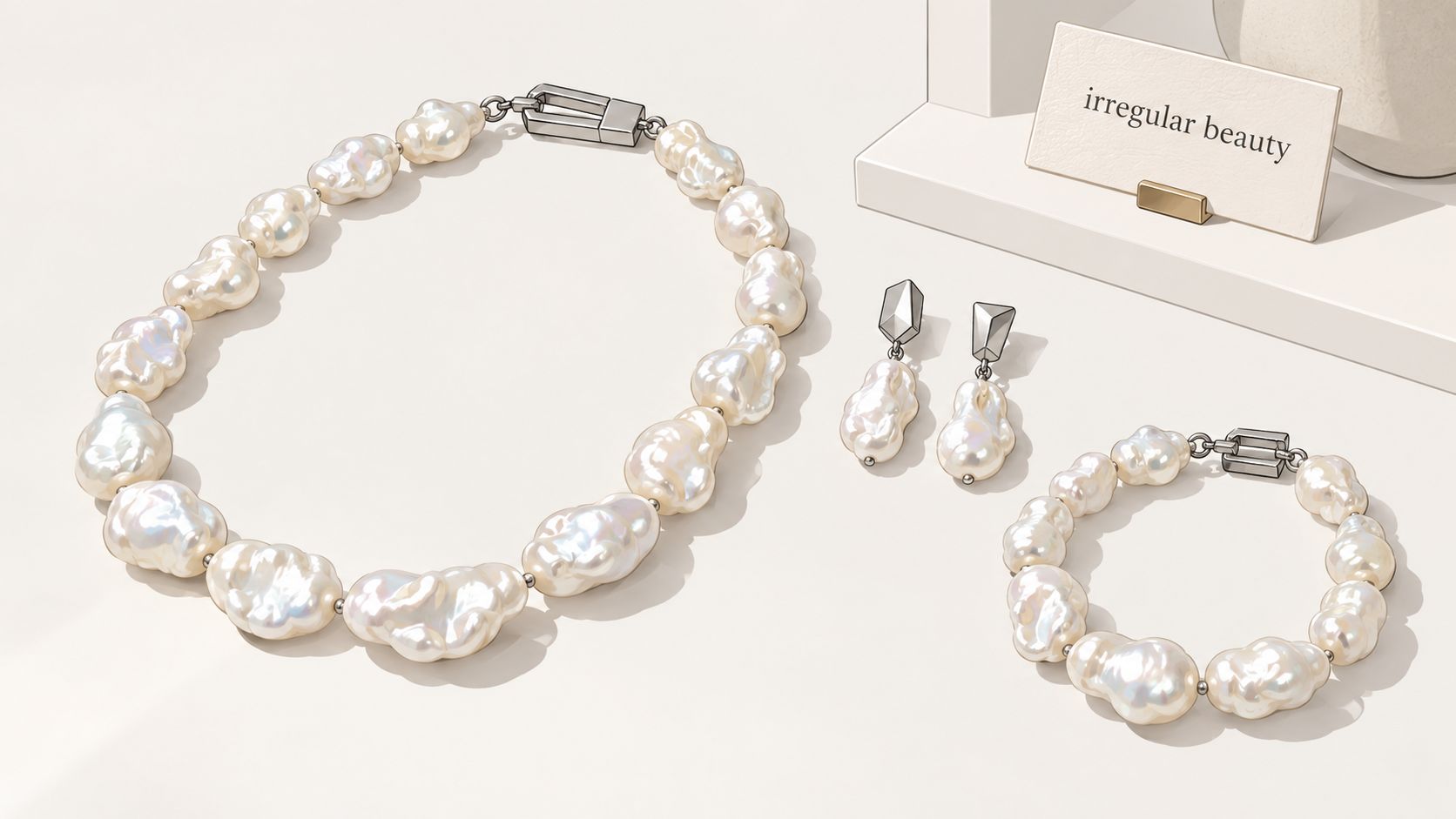
A clean pendant can use one expressive pearl as the focal point. Earrings can pair related drops without demanding perfect symmetry, provided the difference looks intentional. Bracelets benefit from mixed textures, including baroque pearls with geometric stainless steel, gold plating, rectangular link spacers, minimalist beads, or other restrained findings.
A baroque-inspired geometric stainless steel bracelet with 18K gold plating and rectangular link spacers shows how contrast can make an irregular pearl feel modern. The metal creates structure, while the pearl adds softness and individuality. Mixed-material designs also give you room to create several price tiers from the same broad sourcing category.
Make the irregularity easy to understand
Product pages should describe variation positively and accurately. Explain that each pearl has an organic outline, then show close-up photographs that let shoppers see luster and surface detail. Don't use one polished hero image for every item if the lot has visible differences. Customers accept individuality more readily when the listing sets a clear expectation.
Photography needs technical planning too. A web cover ratio of 383:204, mathematically about 1.877:1, is much wider than it's tall, according to this aspect-ratio calculation reference. Keep the necklace, bracelet, or model's face centered in the safe area. Content near the top, bottom, or edges is more likely to crop when the image is fitted to that ratio.
For merchandising, group pieces by visual promise: sculptural drops, everyday freshwater bracelets, mixed-metal statement styles, and giftable pendants. That structure helps shoppers browse by use rather than forcing them to understand pearl terminology first.
Care Finishing and ROI Guidance to Scale With Confidence
Baroque pearls can support repeatable margins, but the finished product needs protection from avoidable damage. Give customers simple care instructions: wipe pearls gently with a soft, slightly damp cloth after wear, keep them away from harsh chemicals and cosmetics, and store them separately from harder jewelry that can scratch the surface. Plated findings also need appropriate care, so explain that moisture, friction, and chemicals can affect the metal finish.
Your product margin should include more than the pearl and finding. Account for sorting time, assembly, packaging, shipping, platform fees, damaged units, and customer service. An unsorted lot may look inexpensive at checkout, but the usable cost rises if your team spends too much time separating rejects or repairing drill-related issues.
A practical scaling path starts small. Test a focused assortment, record which shapes sell, and reorder the combinations that customers understand quickly. Keep a sample card or photo reference for each approved quality level so the next purchase matches your original product promise. This makes baroque pearls a controlled category rather than a random collection of unusual pieces.
For customer-facing guidance, link your care instructions to this complete freshwater pearl jewelry care guide. Clear care advice can reduce disappointment, support confidence at purchase, and help shoppers enjoy the luster they paid for.
Baroque pearls deserve a place in a core assortment because their value comes from both supply flexibility and design character. Inspect samples carefully, price usable output without exaggeration, and build products that frame irregularity as the feature.
JewelryBuyDirect offers factory-direct wholesale jewelry, pearl styles, components, no minimum order quantity, and trackable fulfillment options for boutiques, online sellers, and makers testing baroque-inspired collections. Visit JewelryBuyDirect to review available styles and choose a small sample order before expanding your assortment.